3 months ago
33
3 months ago
33

January 23, 2026 — 4:00pm
When Laila Lalami was growing up in Rabat in the 1970s and ’80s, Morocco was enduring a notorious era known as the Years of Lead. Kidnappings, surveillance and using people as spies for the government were commonplace. “Any time anybody brought up anything political,” she says, “my mother would say shh – the walls have ears.”
Nowadays, it’s the smartphones that have ears and eyes. Lalami discovered this one morning when she woke up, reached for her phone, and found a Google notification she hadn’t scheduled, reminding her not to be late for yoga.
“It was very unsettling,” she says. She joked to her husband that soon only our dreams would remain private. And that got her thinking: suppose the algorithms could snatch away our last shreds of privacy by invading our dreams?
That was in 2014, and it was the seed of her sixth book, The Dream Hotel. “It’s not even a question of whether our thoughts are private,” she says via Zoom from her home in Los Angeles. “It’s quite easy for a company like Google or Amazon to follow your train of thought. Even when you take measures to try and protect yourself, it’s never enough.”
The tech companies have laid claim to our private lives: “They have decided that the data is theirs to command however they see fit. It really does feel to me as if we’re entering a new era of data colonialism.
“It’s vast and terrifying. So this book is a way for me to work through those anxieties and see where they would take me.”
Lalami is heading to Australia to discuss her book, but she won’t be going to Adelaide. Our interview took place before Palestinian-Australian writer Randa Abdel-Fattah was dropped from the 2026 Writers Week (a decision for which the Adelaide Festival has since apologised). Lalami was one of the many guests who withdrew in protest, leading to the writers’ festival being cancelled. She has declined to comment on her decision.
She had wanted to be a writer ever since she thrilled to the adventures of Tintin. But when she grew up she realised she was not Tintin in the story, but the native. At a French school in Rabat she studied French books where Arab characters were exoticised or demonised, and had nothing to do with the life she lived.
Lalami wanted to write in Arabic but doubted she knew the language well enough. But when she went on to college and a PhD in linguistics at the University of California, she realised English could be her chosen language as a writer.
Since then, her books have been translated into 20 languages. She’s been awarded prizes and fellowships and has been a finalist for the Pulitzer Prize, the National Book Award and Booker Prize. But it took 11 years from that first thought for The Dream Hotel to take shape.
Lalami’s initial idea was that a tech company would come up with a new device to ensure a good night’s sleep. She’s an insomniac, and she’d certainly get such a device. “It led me to invent this tech company, Dreamsaver Inc, and a naive programmer who is just given a job. But I started losing steam 70 pages in. I was not terribly interested in what was happening inside a tech company. Many years ago I worked for one, and it gave me PTSD visiting it in the form of fiction.”
She set the book aside and worked on another project, which became her bestselling and highly acclaimed novel The Other Americans. “I didn’t get back to it until 2020, during the pandemic. I pulled out the two pages I thought were salvageable. My main character was a man, so I took it from there and invented a place for him to live, a retention centre. Then I stepped back and realised if I really meant to explore surveillance in all of its forms, I’d have to think about who is the most surveilled person in our society. It’s a woman.”
Women internalise rules about their own surveillance. “We absorb rules about fashion, or what our hair should look like. I thought it would be really interesting if the character was a woman. Then it was off to the races.”
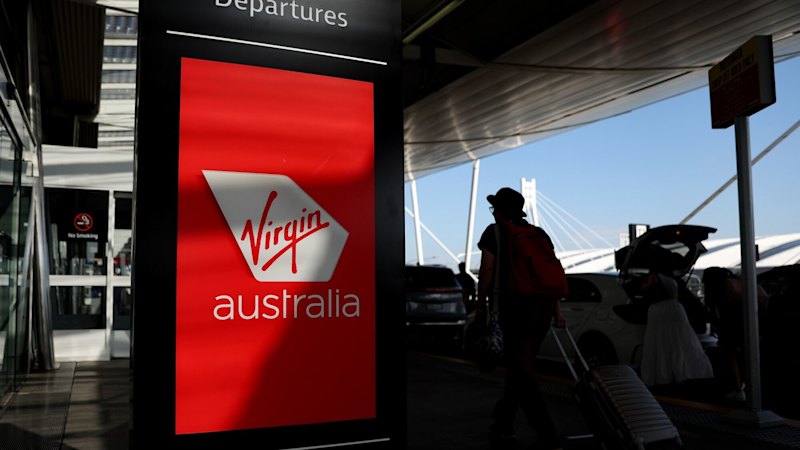
So the story is about Sara, who, like Lalami herself, is a highly educated professional woman living in the US, but she comes from Morocco, which adds a racial element to her surveillance. Her problems begin at the airport while returning from a regular work trip, where she is pulled aside to see an immigration agent. Lalami has given Sara some of her own experiences as a migrant: “Airports for me are places of great anxiety. Sometimes the officer can be having a bad day. What if I say the wrong thing? What if I make a joke?”
Airports for me are places of great anxiety. Sometimes the officer can be having a bad day. What if I say the wrong thing? What if I make a joke?
Sara is told her risk score is too high – as determined by an algorithm that can see into her thoughts and dreams. To her amazement and horror, she must spend 21 days in a retention centre, a prison for people deemed to be at risk of committing a crime. And gradually she finds out that if her score is still high, that 21 days can be extended, again and again.
As Margaret Atwood did in The Handmaid’s Tale, Lalami never gives us any detail about this sinister bureaucracy which hasn’t been used in reality, either in the US or in other countries such as Israel and South Africa. She read up about the US criminal justice system, particularly immigrant detention run by private companies.
Writers such as Kafka and Orwell come to mind, and perhaps particularly Philip K. Dick’s short story Minority Report, which was made into the 2002 film starring Tom Cruise. “When you see a film like Minority Report set in a far future, you feel this isn’t going to happen in your lifetime. But the way I approached it in the book was to make it a lot less comfortable. Readers think ‘this could happen while I’m still alive’.”
Nor is this prison a Guantanamo Bay-style hellhole where inmates are raped and tortured. The reality is more subtle and banal, and the worst weapon is the humiliation peculiar to women: deprived of access to children, sometimes forced to go without washing and to wear filthy, bloodstained uniforms, or to confront the nasty supervising officer who finds out that Sara has dreamt of having sex with him.
Sara and the other inmates internalise their suffering, doubting the nature of reality, wondering what they have done wrong, trying in vain to follow all the complicated rules. “Essentially, the story is the process of her waking up to her reality, to make her realise she has a lot more in common with the people inside than with the people outside.”
The Dream Hotel was finally published in 2025. More than a dozen publications named it a best book of the year and it was hailed as being both thoughtful and gripping. Lalami agrees that after 11 years, her story has become even more realistic. “I saw that a tech CEO wanted to have a zero-crime future. I thought, Oh God, I bet I know how he thinks that could happen.
“In the novel I had to make things feel very plausible. But believe me, reality is under no such constraints. I knew tech CEOs had a lot of influence over governments but I couldn’t imagine Elon Musk would be wandering the halls of the White House, walking into the Oval Office and giving speeches to reporters … It was really, really strange, almost farcical. I kept shaking my head.”
The Dream Hotel (Bloomsbury) is out now.
Laila Lalami appears at The Wheeler Centre in Melbourne on March 4 and the All About Women festival at the Sydney Opera House on March 8.
The Booklist is a weekly newsletter for book lovers from Jason Steger. Get it delivered every Friday.