3 months ago
15
3 months ago
15
Bill Bryson is visibly startled to see himself back. “Oh my god, I’m in a cave,” he says, grinning at the bearded face emerging from the gloom of his home office in Hampshire. A desk plaque in the computer glow reads, “BILL BRYSON — RETIRED AUTHOR”.
“I got that for Christmas a year ago,” he says jovially. “I am really, really trying to be retired. I love being retired. I can’t recommend it too highly.” What’s in his way is nearly everything. A Short History of Nearly Everything 2.0, ostensibly the great travel writer’s final book, returns him to Australia this month.
“When I sat down to do it, I thought it would mostly be a question of tinkering with dates and numbers,” he says of updating his popular science masterwork of 2003. Back then, “the number of known exoplanets — planets outside our own solar system — was maybe a couple of dozen. Now it’s almost 6000.”
Not that space or time permits him to list them all. Not when there’s a shiny new Higgs Boson particle to detonate, or an archaeologist’s smorgasbord of ancient human species to flesh out our skeletal understanding of Homo sapiens’ twisted road to here.
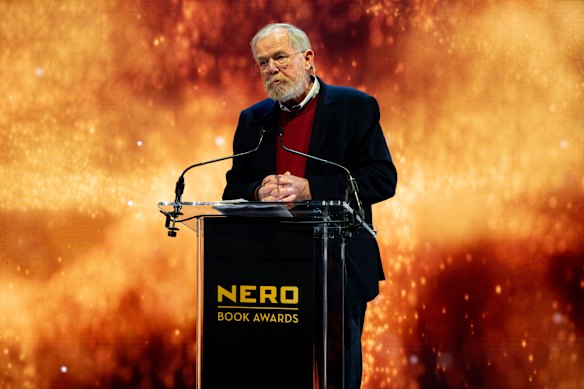
Say hello, for instance, to the Denisovans, the so-called “hobbits” of Flores, and Homo naledi: small-brained cave-dwellers whose burial rituals have upended old assumptions about intelligence. “There are four major lines of humans that were not suspected at all when I wrote the book a little over 20 years ago,” Bryson marvels. “The great thing,” he adds, is a far more recent act of evolution. “Now there’s an internet. I used to have to get dressed and go to a library and hunt through books and hope that I could find something that was less than five years old. Now I can find out your middle name, probably, in 30 seconds.”
This mildly unsettling truth throws into quaint relief the very act of writing a 600-page non-fiction book about anything at all in this age of infinite instant infobytes. But any reader acquainted with Bryson’s wry, genial, infectiously curious voice will know that the telling is a big part of the story.
Born in Iowa but long resident in Britain, he became a bestselling author in the 1990s with a series of travelogues — The Lost Continent, Neither Here Nor There, Notes from a Small Island — that put small-town America, Europe and the UK under his wry gaze. Down Under brought the everyman explorer’s sharp eye for human behaviour and identity to Australia in 2000.
With the 20-million-selling and multi-award winning Short History of Nearly Everything, Bryson turned science into another landscape to wander: a story told not just through facts but through the flawed, obsessive, often hilarious people who discovered them.
“I love the way that scientists can be so brilliant on the one hand, and then such idiots on the other,” he says. “Isaac Newton was probably one of the half-dozen smartest people who ever lived on this planet. The things he came up with are just mind-boggling. But then as a grown man, he stared at the sun for as long as he could stand it, just to see what would happen.”
TAKE 7: THE ANSWERS ACCORDING TO BILL BRYSON
- Worst habit? Since I was a young boy, I have pretended to be able to vapourise people that annoy me. That’s not a very noble way of going through life.
- Greatest fear? I’ve got a big family and I’ve never had to deal with real grief.
- The line that has stayed with you? ”A writer is someone for whom writing is more difficult than it is for other people” — Thomas Mann.
- Biggest regret? When I got married and we came to England, my first job was working at The Evening Echo in Bournemouth, and it was the most boring job I ever had. I wished I’d gone to London first – but on the other hand, my first two kids were born there and if we’d been in London, they would have been different kids.
- Favourite book? The reading experience I most powerfully remember was when I was about 13 years old. It was a hot summer night in Iowa, and I took a book down randomly off a bookshelf. Lost Horizon by James Hilton: a book of no great distinction, but the best reading experience I ever had.
- The artwork/ song you wish was yours? Stand By Me by Ben E. King.
- If you could time travel, where would you choose to go? In an Australian context, I would love to go and stand on the beach and watch the Indigenous people arrive. I mean, how did you get a breeding population across all that water tens of thousands of years ago? The problem is, I wouldn’t know which beach to stand on and I wouldn’t know what year.
Bryson also relates the slightly nauseating tale of 17th-century German alchemist Hennig Brand’s attempts to transmute his urine into gold. Then there’s the “large mass of ego named Edwin Hubble”, an astounding overachiever and groundbreaking astronomer who was not just “an inveterate liar” but also largely ignorant of a potentially useful contemporary named Albert Einstein.
The most brilliant scientists, Bryson says with delight, were “capable of this kind of idiocy inside a fantastically expansive mind. And I love that. I think that kind of thing helps to humanise these people and make you feel a little bit less daunted by their achievements.”
Which is not to suggest that human brilliance is the most daunting element in the known universe. Bryson’s descriptions of menacing astronomical and geothermal possibilities are sobering. “We live in a world,” he quips during a litany of meteoric, volcanic and atmospheric threats, “that doesn’t altogether seem to want us here.
“Not much that we learn scientifically these days is encouraging,” he concedes. “It’s heartening that knowledge goes on and on and on and there’s still always so much more to learn …” including, he notes, climate change and melting polar ice caps. “It’s very easy to get discouraged by the world we live in. Science is helping us understand how discouraging that is. But science itself seems to matter less and less – not least in my native country – where it’s being sidelined in ways I find shocking.”
He cites the recent closure of Duke University’s herbarium in North Carolina, with its collection of 800,000 biological specimens, as emblematic of a broader retreat: “a sense that science isn’t worth supporting unless it’s economically productive. I find that discouraging.”
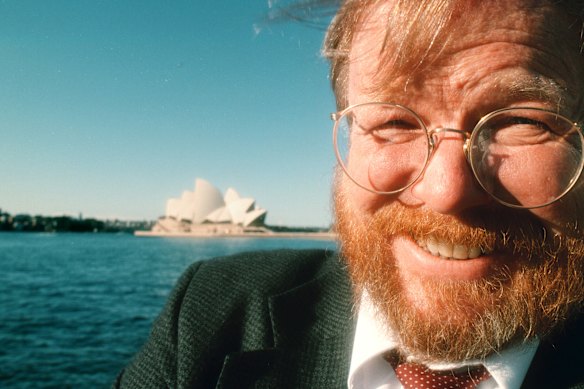
Idiocy, it seems, is not to be underestimated. “I don’t think nature is the great threat. I think we’re the great threat; the fact that we just take our existence for granted and act as if somehow the Earth will always sustain us, no matter what we do. I’m not completely gloomy about climate change. I think life may get pretty uncomfortable, but I don’t think we’re going hell-for-leather for extinction. But the idea that Earth is somehow inexhaustible is just foolish.”
Bryson seems essentially drawn to this elastic grey zone between existential dread and plucky optimism. His 2006 memoir The Thunderbolt Kid describes a 1950s Des Moines childhood teetering between the perils of playground Darwinism and nuclear annihilation and sheer boyish joy, a world of cheerful survival “built on innocent ignorance”.
“One of the saddest things about the age in which we’re living now is the absence of optimism,” he says. “When I was a kid, the future was just so exciting. We were all going to have helicopters in our driveways and jetpacks to take us to school and vacations would be in outer space. Now when you think about the future, it’s always dispiriting and negative, and it’s a shame that pendulum has swung so far in the other direction. I think maybe it’s not so extreme. Perhaps (it’s) going to swing a bit, and then back again. There will always be encouraging developments as well as discouraging ones.”
Which column Homo sapiens will ultimately occupy in the cosmic spreadsheet is a question far beyond any one traveller. But in a professed absence of spiritual faith, how does a man of science stare down the infinite blackness of his own inevitable demise? “I don’t look at it as a blackness,” he replies. “I’ve had the most wonderful life, I’ve had far more success than I ever dreamed of having, and it seems to me perfectly natural that people will start to forget me.
“If they remember me 10 years after I’ve died, that’ll be fantastic. If they remember me 100 years after I died, well, that’s just so improbable. I mean, you have a better chance of becoming fossilised and ending up in a museum. The world constantly moves on. Just think of the number of non-fiction writers who would have been famous 50 or 60 years ago that nobody knows about any more because they’ve been overtaken by events.”
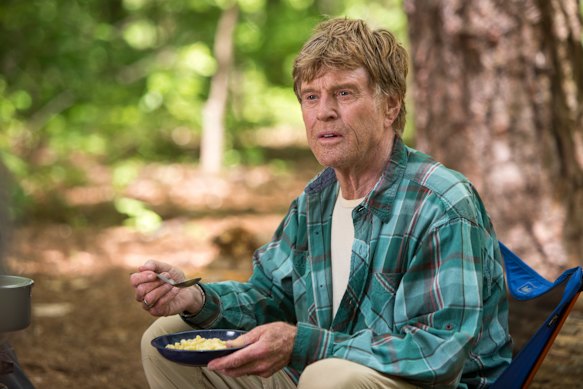
At least this one has the distinction of having been played by Robert Redford. The 2015 comedy-drama A Walk In the Woods was based on Bryson’s 1998 book about walking the Appalachian trail. Did the Sundance Kid get him right?
“No. I can say it more freely now that the poor man has died. I didn’t think they got a lot of the aspects of a writer’s life right. There was a whole sequence about an author being on tour and dealing with readers in the public, and I thought they got that completely wrong.
“I wrote a long memo, and Robert Redford was a fantastic guy, really smart and very kind and learned and he read it and responded very politely and then completely ignored it. There’s also one scene in the movie where they’ve stopped overnight in a motel, and he’s wearing a dressing gown. Nobody has ever packed a dressing gown to hike the Appalachian trail. It was kind of a shame they didn’t think that one through.”
Bill Bryson appears at Hamer Hall, Melbourne, on Feb 20. A Short History of Nearly Everything 2.0 (Penguin Random House Australia) is out now.