2 months ago
13
2 months ago
13
The Reserve Bank has left official interest rates steady at its final meeting of the year but signalled there may be mortgage pain for home buyers in 2026 if inflation is not brought under control.
Going into the new year, the official cash rate will remain at 3.6 per cent where it has been since August. The bank has cut the cash rate three times this year.
Announcing the decision, the bank noted that while there had been a lift in underlying inflation due to “temporary factors”, there was some cause for concern.
“The data do suggest some signs of a more broadly based pick-up in inflation, part of which may be persistent and will bear close monitoring,” it said.
“The recent data suggest the risks to inflation have tilted to the upside, but it will take a little longer to assess the persistence of inflationary pressures.”
The bank noted that economic activity was recovering, with a lift in the private sector drive by both consumption and investment.
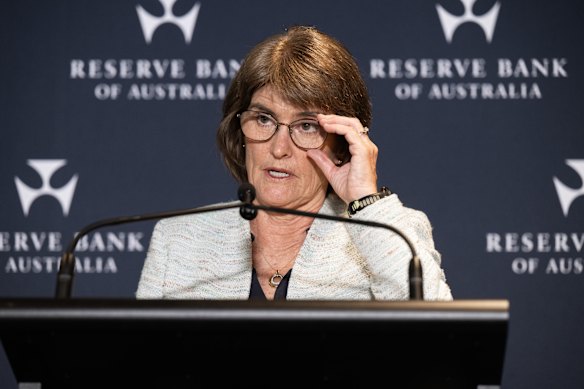
Reserve Bank governor Michele Bullock.Credit: Louie Douvis
It also said the jobs market remained “a little tight” with a significant share of businesses “experiencing difficult sourcing labour”.
But it also said there were uncertainties around the domestic economy, inflation and the tightness of monetary policy.
“On the domestic side, the pick-up in momentum has been stronger than anticipated, particularly in the private sector. If this continues, it is likely to add to capacity pressures,” it said.
“Uncertainty in the global economy remains significant but so far there has been minimal impact on overall growth and trade in Australia’s major trading partners.”
The decision came after the latest NAB monthly business survey showed a fall in both confidence, by five points, and trading conditions, three points, last month. Business confidence is now at its lowest level in seven months.
Weakness was across all industries and regions of Australia, with forward orders and exports down.
However, capacity utilisation businesses lifted for its fourth consecutive month and is now above its long-term average in most industries tracked by the survey.
NAB chief economist Sally Auld said capacity utilisation was now at an 18-month high.
“This will add to concerns that the domestic economy is close to pushing up against capacity constraints,” she said.
Loading
The ANZ-Roy Morgan weekly measure of consumer confidence showed shoppers are also increasingly concerned about their situation, with sentiment down two points over the past week.
The biggest fall in the survey was on the question of whether it is a good time to buy a major household item, while confidence in household finances slipped to its lowest level since November 2023.
ANZ economist Sophia Angala said the recent October monthly inflation report, which showed a lift in price pressures, was weighing on consumers.
“On a four-week moving average basis, inflation expectations are now at their highest level since late 2023,” she said.
Cut through the noise of federal politics with news, views and expert analysis. Subscribers can sign up to our weekly Inside Politics newsletter.
Most Viewed in Politics
Loading