3 months ago
36
3 months ago
36
January 23, 2026 — 3:59pm
The Victoria Police declaration to search people without a warrant or direct anyone to remove a mask in Melbourne’s CBD was invalid and unlawfully breached the human rights charter, the Federal Court has found.
Using the Weapons Control Act, police can randomly search people or their cars without a warrant, or direct them to remove a mask, in any area designated by the force. The declarations can be made for six months at a time, up from 12 hours, under changes by the Allan government last year in response to knife crime.
There is no legal need to have any suspicion the person has a weapon or is engaging in any wrongdoing when a declaration is in place.
Police used six-month-long powers for the first time to declare Melbourne CBD and surrounding neighbourhoods a designated area, covering East Melbourne, the MCG, Shrine of Remembrance, Carlton Gardens, Southbank and South Melbourne.
The powers would have been in force until May 29, but Victoria Police suddenly revoked the declaration prematurely two weeks ago in the days before the Federal Court was due to hear a legal challenge to it.
Justice Elizabeth Bennett found on Friday that police made the declaration erroneously. “That erroneous approach had the dual effect of meaning that the decision maker did not apply the correct statutory criteria and did not, as a matter of fact, reach the necessary state of satisfaction,” she said.
The Federal Court found the declaration was incompatible with the Victorian Charter of Human Rights and Responsibilities and that police failed to properly consider these rights, particularly the right to privacy. The designated area was therefore unlawful, the court said.
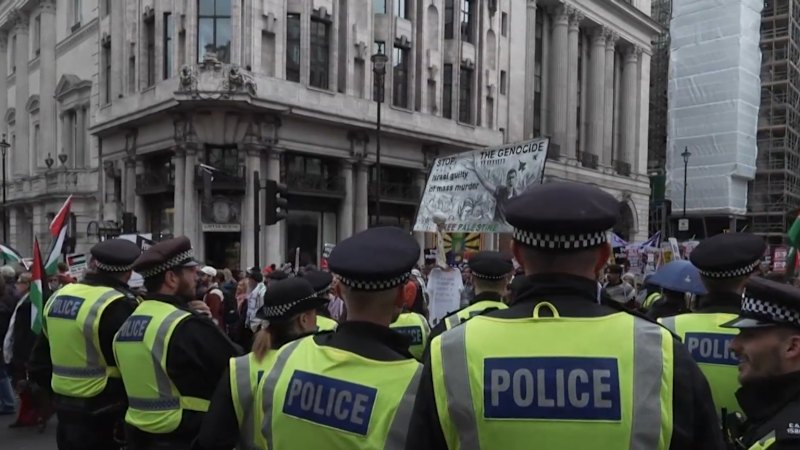
The case was expedited to be finalised before Monday’s planned Invasion Day rally.
The Human Rights Law Centre brought the case on behalf of Aboriginal activist Tarneen Onus Browne and environmentalist and anti-war protester Benny Zable.
A third applicant, David Hack, was added to the challenge after being searched in the CBD.
The centre argued the declaration was invalid by failing to reach the legal threshold that the designation was “necessary”, particularly given its wide-ranging scope and time frame, and breached the rights charter.
The centre was also seeking a judgment that designated areas should not give police the power to direct someone to remove a face mask at protests, arguing it contravened implied constitutional freedoms to political communication. The court dismissed that claim.
Assistant Commissioner Brett Curran, in an affidavit to the court, said he considered a police brief for several hours on November 24 before he signed off on the six-month search zone.
Curran conceded few weapons were seized under similar, shorter and smaller declarations in the year beforehand, but argued this was a sign the powers were working as a deterrent.
The assistant commissioner said he considered the new broad area necessary as weapons could be carried between high-risk locations – like the MCG and Federation Square – and the expansive zone would be easier for police to enforce and for the public to comprehend.
Curran said the six-month period covered a busy season in Melbourne’s CBD and that a longer declaration would further avoid the need for repeated designations over the same period.
Onus Browne – a Gunditjmara, Yorta Yorta, Bindal and Meriam person – is from the Warriors of the Aboriginal Resistance and an organiser of the annual Invasion Day rallies.
Onus Browne said organisers encouraged those rallying to wear face masks to protect vulnerable people such as elders from illness, and worried First Nations people could be deterred from exercising their right to protest.
Zable, 80, has worn his “Greedozer” costume to protests for 45 years and argues his performance art is political expression. In his affidavit, Zable said an officer had forcefully removed his mask while he was trying to comply with their direction.
“For me, the costume and props are essential to express my opinions and messages.”
Hack, the third applicant, said being searched outside Melbourne Central station while on his way to a protest in December was an invasion of his privacy.
“I wasn’t doing anything wrong,” Hack wrote in his affidavit. “It made me feel like a criminal.”
Two years of data obtained by Liberty Victoria revealed just over 1 per cent of the searches in designated areas resulted in any “objects or substances” being found.
The Centre for Racial Profiling Network, using freedom of information to examine all police search powers where that data is recorded, found Indigenous people were 11 times more likely to be searched than white people in 2023. People perceived to be African were six times more likely to be searched.
Victoria Police has always maintained the force has zero tolerance for racial profiling and that designated areas are an invaluable tool to deal with knife crime.
Under further reform brought to parliament last year, police can direct someone to remove a mask when they believe the person is about to or has committed a crime.
Start the day with a summary of the day’s most important and interesting stories, analysis and insights. Sign up for our Morning Edition newsletter.