3 months ago
40
3 months ago
40
Everywhere you turn these days, one thing seems inescapable: trauma. Trauma in the very real sense, with ongoing wars, terror attacks, natural disasters, genocide and police violence; and in the hyperbolic way, with the word becoming shorthand in our therapy-speak world for enduring life’s most minor inconveniences.
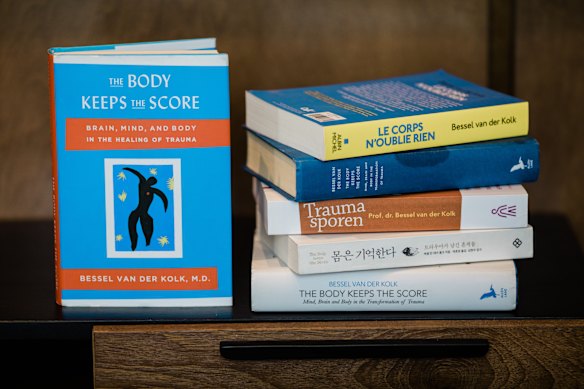
So what does Dr Bessel van der Kolk, one of the world’s foremost trauma experts and author of cultural sensation, The Body Keeps the Score, make of this?
For the octogenarian whose lifework has been devoted to healing lives touched by horror – particularly victims of child sexual abuse – it’s not necessarily that there’s more trauma, but that we’ve become less adept at weathering it.
“There’s a tremendous amount of danger and violence going on in the world, and you need to face it; that’s just part of being a human being. People do terrible things to each other. It’s more about teaching people to be resilient rather than cushioning the world,” he says.
The Dutch-born, Boston-based psychiatrist was at the forefront of early research into Post Traumatic Stress Disorder, or PTSD, starting with his treatment of Vietnam War veterans in the 1970s.
But it’s his 2014 bestseller – The Body Keeps the Score – that has made him the poster boy for capital “T” trauma, and how we think and talk about our psychological and physical ailments.
The book has sold millions of copies, been translated into 38 languages and spent almost seven years on The New York Times Bestseller List. Sales spiked during the pandemic, a time when mental distress hit record highs.
No stranger to Australia, van der Kolk will be back again in April. (He has visited since early in his career, and more recently to explore the emerging field of psychedelics, of which he says Australia is at the forefront.)
While he initially wrote his blockbuster with psychiatry students, clinicians and survivors in mind, it’s become an (unexpected) runaway success with the broader reading public.
Many will have at least a passing familiarity with its thesis: that the echoes of trauma are imprinted not just in the mind, but deep within the body (van der Kolk’s friend and collaborator Judith Herman explores many such ideas in her groundbreaking 1992 book Trauma and Recovery).
Trauma, van der Kolk argues, scrambles our body’s inbuilt stress response.
It’s why a survivor might have a fight, flight or freeze response to a trigger, years after the fact, even when their rational self knows they’re safe. Traumatic memory, he argues, doesn’t follow a coherent narrative, but lies dormant in the body as a series of images, sensations and emotions.
Meanwhile, its title has become a common refrain in popular culture, jokingly and sincerely – Monica Lewinsky, for example, made reference in an interview withVanity Fair last month.
“It must mean something to people,” he suggests as a reason for its enduring popularity. “People get these diagnoses, labels, but it doesn’t really tell them who they are. I think the book really allowed people to know, ‘Oh, that’s what’s going on. I’m not crazy. I’m living with the imprint of terrible things that have happened to me’.”
It’s been over a decade since its release, but unlike other celebrities in the booming self-help field (Gabor Maté, Esther Perel and Phil Stutz) he has not published another book – until now.
In October, van der Kolk signed an eight-figure, multi-book deal, that includes Come to Your Senses, a workbook that expands on the ideas put forth in The Body Keeps the Score.
“I guess I have become a celebrity in a way from the book. [But] I’ve been pretty prominent in psychiatry for a long time, so I hardly consider myself one ... in some ways my life hasn’t changed all that much,” he says.
Professor Alain Brunet, director of the National PTSD Centre and the University of the Sunshine Coast’s Thompson Institute, says van der Kolk “has been one of the important leaders and pioneers in our field. That cannot be denied”.
Dr Bonnie Quigley, senior lecturer in trauma and translational research at the Thompson Institute, says, “the field has really moved to understand that trauma is a whole body response”.
“As a molecular biologist looking at biochemistry and genetics, I see the effect stress [causes]… With my neuroimaging colleagues who are looking at the brain with things like MRIs, you can see the physical changes that that trauma has on the brain,” she says.
“I think that’s one thing that really helps people accept and deal with their trauma – the fact that it does have a physical component.”
But while the mind-body approach to trauma has become broadly accepted, it wasn’t always that way.
“People would laugh me out,” says van der Kolk of the mainstream medical establishment’s initial reaction to his ideas.
“We had a conference in Melbourne in 2000, and I first introduced the notion that we need to work with the body … when I left, everybody said, ‘he has gone off the deep end. He has gone crazy.’ And today, people wouldn’t say that.”
Brunet thinks one of van der Kolk’s most valuable contributions is his work to distinguish PTSD – typically arising from a single traumatic event, like war, a terror attack or a natural disaster – from complex PTSD, which generally involves compounding trauma over time, often starting in childhood. (The Diagnostic and Statistical Manual of Mental Disorders, which van der Kolk calls a “miserable diagnostic instrument”, still does not recognise complex PTSD as a distinct diagnosis.)
Given trauma’s corporeal effect, van der Kolk has long argued the “top-down”, rational approach to healing, through treatments like medication or talk therapy, is not enough.
“Bottom up” treatment, including yoga, somatic therapy and Eye Movement Desensitisation and Reprocessing (EMDR) therapy, are needed to dislodge trauma’s sticky residue from the flesh.
“Talking, reflecting upon yourself and learning to be honest with yourself are all terribly important,” he says. “Language is a wonderful part of being human. But oftentimes it’s not enough.”
“I was very inspired working with the Truth Commission in South Africa and Bishop [Desmond] Tutu, who would sing and dance a lot with people and get this rhythmical, interconnection going.
“In China, too, people are not allowed to talk about what happens [to them], but it’s unbelievable how many do Qigong and group dancing everywhere.”
But some experts have criticised van der Kolk’s promotion of PTSD treatments they say lack evidence.
Professor Paul Fitzgerald, director of the Australian National University’s School of Medicine and Psychology, says, “physical therapies like [yoga and massage] are useful adjuvants – they’re not bad things to do.
“But would I expect somebody with profound clinical PTSD to effectively get better just doing yoga or physical therapy? Frankly, I would think the strike rate of that is going to be very, very low,” he says, pointing out sample sizes for studies on such therapies tend to be small and evidence is still thin.
Van der Kolk himself isn’t without controversy. In 1994, Harvard closed the trauma clinic he had founded more than a decade earlier in Boston. Van der Kolk maintains the break-up was due to payback for his testimony about the nature of trauma memory as an expert witness in cases of abuse by Catholic priests in the 1980s. He moved the centre to Brookline, Massachusetts.
Van der Kolk moved the centre to Brookline, Massachusetts. Then in 2018, he was fired from this very same trauma centre following allegations of employee mistreatment (van der Kolk says they were false allegations made by another staff member accused of mistreating female colleagues “trying to pin the tail of that donkey on me”.)
And in 2025, he was banned from the Omega Institute, a healing centre in New York, for comparing Israeli actions in Gaza to those of the Nazis (he has since apologised to participants).
Others have argued the book presents an “individualised” view of trauma, disconnected from the social and political forces that produce it. The first patient van der Kolk introduces in his book is “Tom”, a Vietnam War veteran who, after seeing his best friend killed on the battlefield, murders and rapes local Vietnamese villagers in an act of revenge, and is suffering from PTSD.
Does van der Kolk present an overly sympathetic view of his patient, ignoring the Vietnamese victims of war at the hands of US imperialism? “When you see your best friend being killed, it’s unlikely you’re going to be very thoughtful about the next person you kill,” he says.
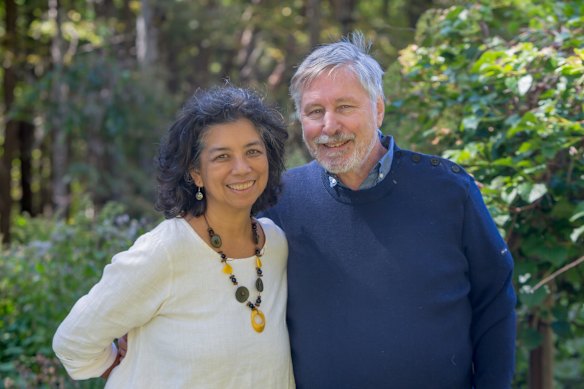
Despite all the pain he has helped process throughout his career, van der Kolk says he maintains a sense of hope “by seeing people get better.”
Accompanied by his wife, bodyworker and somatic educator Licia Sky, he hopes to go to the Great Barrier Reef – a place that might offer some much-needed perspective in our violent world.
“If all you do is work and try to make money. You don’t cultivate that sense of awe; ‘I’m just a little part of a gigantic beautiful universe’. And so it’s very important that people have experiences that can activate that imagination.”
Dr Bessel van der Kolk will visit Sydney, Melbourne, Adelaide and Brisbane in April to present a series of live talks and workshops.
Make the most of your health, relationships, fitness and nutrition with our Live Well newsletter. Get it in your inbox every Monday.