3 months ago
33
3 months ago
33
Everybody wants to rule the world. Well, not quite, but when it comes to sporting competitions, nothing aggravates fans more than archaic or incomprehensible rules that impact the contest.
We gave our journalists the opportunity to change one rule to improve a sport.
Cricket: Proper penalties for slow over rates
We didn’t get enough play during the just-completed Ashes series. And only part of the blame for that can fall at the feet of England’s hapless batsmen.
Both sides were at fault for repeatedly falling short of the mandatory 90 overs per day. The sluggish over rate, which shortchanged the ticket-buying public, was variously described as a “joke”, “ridiculous” and “unheard of” – but despite the outcry early in the series, nothing changed.
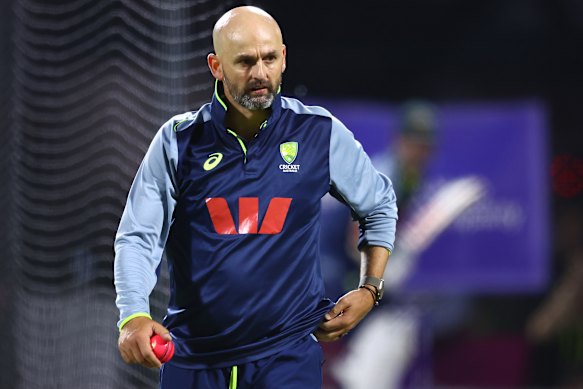
A ‘filthy’ Nathan Lyon was left out of the Australian side for the second Test – predictably, the over rate suffered.Credit: Getty Images
Was it a natural consequence of the reduced role of spin bowling, or was it gamesmanship? Dunno. But what we do know is that the existing punishments – the docking of World Test Championship points and reduced match fees for players – have little to no effect on resolving the problem. Especially when most of these blokes are trousering millions from playing T20 cricket; a fine won’t touch the sides.
So hit them where it really hurts: on the scoreboard. For every over not bowled, an additional six runs should be added to the batting team’s total. No exceptions. Put that in place, and watch how games magically speed up. Thank us later.
Vince Rugari
Rugby league: Try, and try again
You’ve just scored a try and could take the obligatory conversion attempt. But what if, instead of increasing your score by just two points, you had the option to wave away the conversion for the chance to score another try straight afterwards?
This is how it works: the attacking team gets one play to score a three-point “conversion” try. Play begins with a tap in the middle of the 20-metre line and ends when a tackle is complete or a try is scored.
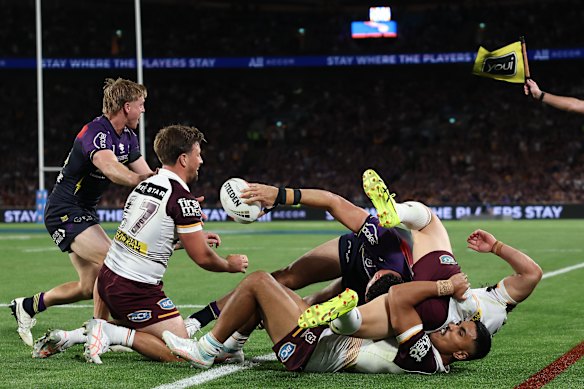
The chance to score a three-point conversion try could bring more glorious chaos to rugby league.Credit: Getty Images
There is huge upside for all parties: the attacking team gets the chance to go even further in front, the defenders are rewarded if they can hold out the opposition, and the fans get to see more attacking footy. We’ve already seen the excitement a two-point field goal generates, so you can imagine the rush a seven-point “double-try” would create.
Best of all, teams that go for the bonus point will have worked on set plays, which could include towering bombs that get the game’s best leapers involved. It’s a win, win, win.
Adrian Proszenko
AFL: The Sherrin needs some pimples
In 1880, Thomas William Sherrin invented an Australian icon bearing his last name. The hand-crafted leather Sherrin has been a beloved mainstay of Australian Football ever since. US President Obama was even photographed hand-balling one to then Prime Minister Julia Gillard in the White House. Traditions matter, but so do fans, especially prospective ones.
To the uninitiated – and, some would argue, ignorant – the AFL often appears an unmitigated fumble fest. The red or yellow leather pill bounces maniacally as players fight for possession on the ground like pigeons squabbling over a chip.
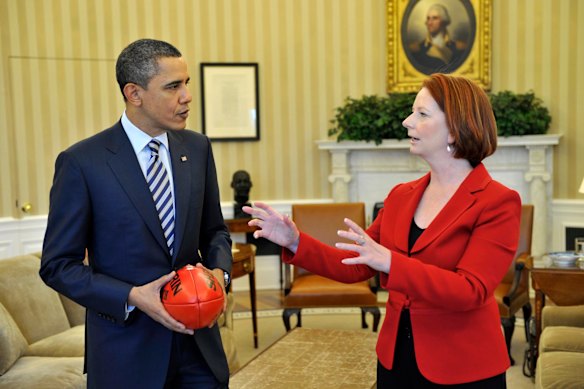
Barack Obama, Julia Gillard and the Sherrin.
What would make the game better as a spectacle? More marks and cleaner possession, particularly in inclement weather.
The AFL has never feared innovation, even when patently unwise – who can forget AFLX and its Zooper goals? Why not experiment with a light-dimpled rubber grip on the Sherrin, not dissimilar to that on rugby balls, to ensure a better spectacle?
If this sounds like sacrilege, the AFL could at the very least undertake a period of breaking in the new ball, making it not only easier for the players to grip under pressure, but also the umpires trying to get a perfect centre bounce.
In American Football, the ball is lovingly “mudded” for days to ensure the quarterback has a far better grip. The AFL could look at a standardised process to get more purchase on the ball to create an infinitely better viewing experience.
Jonathan Drennan
Tennis: Let’s get physical
There’s nothing more disappointing than watching a player send down a 220km/h serve on match point, only for the umpire to call, ‘Let, first serve’ when it tips the net cord.
Let? Are you kidding me? The crowd is already on their feet, and the ball barely skimmed the net.
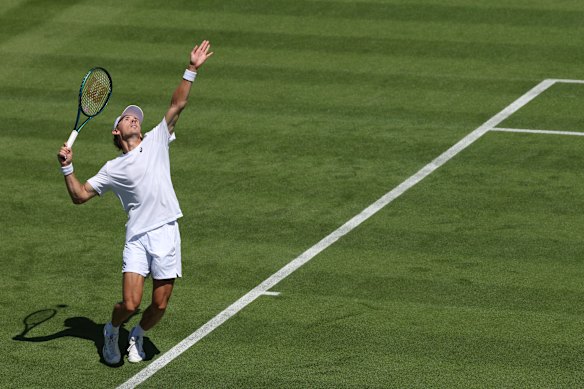
Should tennis put an end to the let?Credit: Getty Images
Let’s (see what I did there) get rid of it. Players don’t stop a point mid-rally if the ball clips the net – in fact, it can often be the moment that draws ‘oohs’ and ‘ahhs’ from the crowd because it throws a spanner in the flow of play. So why have it on the serve?
Not only would it speed up the game, but it would also make play more exciting and unpredictable for fans.
Billie Eder
Soccer: Pull the trigger on new shootouts
First, a disclaimer: soccer is essentially perfect – or rather, it was as close to perfect as we were ever going to get before VAR and the recent reforms to the handball rule. But going back to the way things were isn’t really in the spirit of this exercise. Scrapping VAR is too easy.
If I had to tinker with the laws of the game in a new way, I would change penalty shootouts to the ice hockey-style variation introduced to the soccer world by our American friends in the 1970s.
Broken clocks are right twice a day. Accordingly, the Yanks’ sacrilegious experimentation with the world game during the North American Soccer League era (and the early days of Major League Soccer) wasn’t all bad. This sadly short-lived format saw the penalty-taker given five seconds to score from 35 yards out. How they did it was up to them: they could take a ping with their first touch, or they could try to dribble around the goalkeeper, or chip it in, or whatever took their fancy.
It was a much more even battle between penalty-taker and goalkeeper, and a lot more fun to watch than a stock standard 10-yard shootout. I’d personally retain the ‘traditional’ spot kick for in-match penalties, and only use the American method in games that haven’t been decided after 120 minutes of football – to make it less of a lottery and more of a test of skill.
Consider, too, the following take from former Los Angeles Aztecs and Washington Diplomats midfielder Johan Cruyff: “I thought it was fantastic. I still think Europe should try it.” If Cruyff thought it was worth a look, who are you to argue?
Vince Rugari
Rugby: Ban the Bomb Squad
How long have we got? With a lawbook that runs to 150 pages, rugby is comfortably the most confusing sport for outsiders to grapple with. Such is the soup of laws that applies at any one time (ever seen a breakdown?), a referee can select from a multitude of sins to blow a penalty, or choose to ignore them all.
If our late colleague Wayne Smith was penning this, it’d be a feisty argument about banning his pet hate: the rolling maul (which he argued is legal obstruction). There’s a fair argument in that space, at least, for the ball to be played after the maul stops once, not twice. Or you could scrap the deliberate knock-down law, or be even stricter on the dreaded lingering caterpillar ruck, which facilitates those endless box-kicks.
But let’s poke the bear and ban the “Bomb Squad” – the moment when up to seven fresh forwards come off the bench in the last 20-30 minutes. Naming six or seven forwards on an eight-person bench – and deploying most of them at the same time – was a tactic started by South Africa and which is now being used by England, too.
It’s essentially an all-new, fresh-legged forward pack. Stacking a bench with impact players is now increasingly a must in this “finishers” arms race.
And in a game where players are bigger and stronger than ever, defences are attritional and running the ball is ditched for the safe options of contestable kicking and rolling mauls, games don’t even open up late due to fatigue.
So here’s the solution: you get eight reserves but with a maximum of five forwards. You still can roll all five forwards on at the same time, if you want. But if there are injuries after that, no replaced player can return. A prop can come back on, but only with uncontested scrums and the loss of a player elsewhere.
The more tired players on the pitch in the last half-hour, the better. Fitness will matter, and teams will try to run the ball and exploit tired legs for gaps. It may even start resembling, you know, rugby again.
Iain Payten
Golf: Get into the swing
Golf might already be the slowest sport on Earth, but just about every weekend hacker knows what it means to despise the slowest player of the slowest sport on Earth. The one who takes an age to select a club, an absurd number of practice swings and then stands over the ball for so long that the grass has grown 10 centimetres before they have actually hit the ball.
This is mostly a predicament for amateurs, but the problem with the rules around pace of play is that they seem to be more of a suggestion. Rule 5.6 addresses prompt pace of play and states, “it is recommended that you make the stroke in no more than 40 seconds after you are [or should be] able to play without interference or distraction”. There are pro players out there who have taken far longer than this, especially while on the green negotiating a tricky putt. The penalties range from one stroke to disqualification, but the actual dishing out of them on the pro tour has been rare.
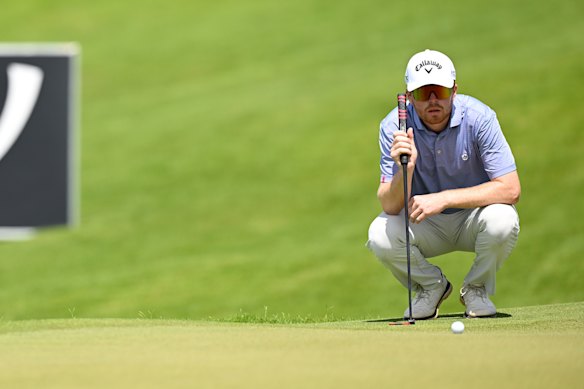
Slow going: Does golf need a shot clock?Credit: Getty Images
In 2017, the PGA Tour issued a stroke penalty for slow play for the first time since Glen “All” Day at the 1995 Honda Classic, when Brian Campbell and Miguel Angel Carballo of Argentina were assessed a one-stroke penalty as a team for both taking too long the first round of the Zurich Classic. Perhaps it’s time for a shot clock?
Emma Kemp
Basketball: Let’s get on with it
Continual parades to the free-throw line at the end of matches is a sure-fire way to sap the excitement out of contests. The last couple of minutes of a match can stretch out for far too long.
Fans want to see the stars decide the contest from general play and not teams targeting the weakest free-throw shooters on the opposing team and fouling them. Remember Shaquille O’Neal launching bricks at the backboard back in the day? It was so bad that it got called Hack-A-Shaq and has spawned numerous other iterations.
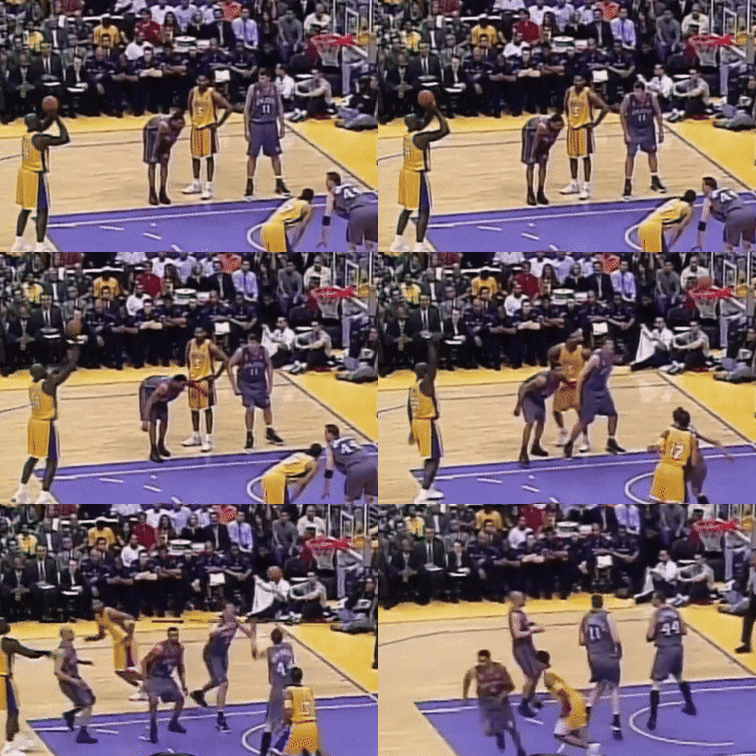
Free throws were not Shaquille O’Neal’s specialty.Credit: NBA
The fix? Disincentivise the idea of intentionally fouling by changing the free-throw rules in the last two minutes of a match. There’d still be two shots, but you only need to make one to get two points. Sink the first one, and you get two points; save some time and get on with the game.
Also, before you start on too many time-outs in the NBA, it’s highly unlikely they’re going anywhere. That’s because the TV stations want them – and pay big money via rights deals to have them. The result is the owners and the players getting more money – and that’s gonna keep everyone in Gucci loafers and holidaying in Turks and Caicos.
Paul Zalunardo