3 months ago
15
3 months ago
15

February 4, 2026 — 3:59pm
A single interest rate increase may not be enough for the Reserve Bank to bring inflation under control with an overwhelming majority of mortgage holders ahead on their loan and not facing an immediate increase to their repayments.
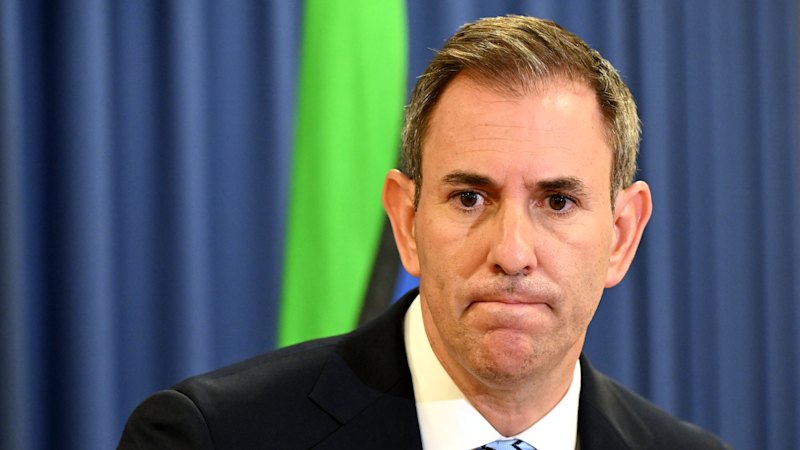
As Treasurer Jim Chalmers continued to reject suggestions that government spending was responsible for the Reserve’s decision to take the cash rate to 3.85 per cent, economists cautioned that the psychological impact of the move may weigh more heavily on households than its direct financial impact.
The quarter percentage point increase, which every major lender will pass on to their customers within the next few weeks, will add about $100 a month to the repayments on a $600,000 mortgage.
But all lenders have reported that when the Reserve Bank cut interest rates last year, borrowers did not reduce their repayments. With so few people forced to curb their spending by a single rate hike, it leaves the RBA with the prospect of one or two more to have a real impact on the more than 4 million home borrowers.
NAB reported in June last year that 95 per cent of its customers had maintained their repayment level after the February and May rate cuts with people choosing to “pay down their home loan quicker”.
Most banks have up to 90 per cent of their customers ahead on their mortgage payments. Even among the bottom 20 per cent of households, most people are 10 months in front. For the wealthiest 20 per cent, it is close to two years.
The proportion of people with mortgage offset accounts or redraw facilities is at record levels, giving people more opportunities to either reduce the interest paid on their mortgages or spend money they’ve saved by getting ahead on their repayments.
AMP chief economist Shane Oliver said when the Reserve started lifting interest rates in 2022, when the cash rate climbed from 0.1 per cent to 3.1 per cent in seven months, it took some time for consumers to start reducing their spending.
“Lots of people didn’t cut their repayments as rates went down, so they may not be affected as rates go up. The impact on households may be more psychological,” he said.
Deloitte Access Economics partner Stephen Smith said the impact of higher interest rates on the cashflows of households may be more muted given the way they have built up their savings over recent years.
Figures released by the Australian Bureau of Statistics on Wednesday highlighted the different ways inflation is affecting the community.
While official inflation has reached 3.8 per cent, the bureau said for working families with a mortgage, inflation is much lower at 2.3 per cent.
The bureau measures inflation for particular groups such as age pensioners and self-funded retirees, the rate varying based on their spending patterns.
Working families, who are much more likely to have a mortgage, have benefited most from last year’s cuts in official interest rates. In the 12 months to December, interest charges for families fell by 6.4 per cent compared to a 91.3 per cent jump recorded in the year to June 2023.
Families, who traditionally spend more on insurance, have also benefited from the slowdown in contents, housing and life insurance charges.
But for age pensioners, their inflation rate is well above the economy-wide measure at 4.1 per cent. This is due to the impact of state electricity subsidies, particularly in Queensland and Western Australia, which take up a large share of pensioners’ spending.
They have also been disproportionately affected by the lift in tobacco excise, as older Australians are more likely to smoke, and higher rents.
Financial markets believe the RBA will lift interest rates again by June. But Capital Economics’ Asia-Pacific head, Marcel Thieliant, said on Wednesday the Reserve would eventually drive the cash rate back to where it was when it started cutting them last year, at 4.35 per cent.
“The recent pick-up in economic activity and inflation suggests that the neutral rate of interest may now be closer to 4 per cent instead of the RBA’s estimate of around 3.5 per cent,” he said.
“Given that the RBA believes that a sustained period of below-trend GDP growth will be required to reduce excess demand in the economy, we now expect the Bank to lift rates to a peak of 4.35 per cent.”
In parliament, the Liberal Party continued to blame the rate rise on government spending, with shadow treasurer Ted O’Brien warning households faced their “14th interest rate rise” under Labor.
Chalmers said Reserve Bank governor Michele Bullock had noted that private demand had strengthened more than expected.
“Perhaps most importantly when it comes to refuting some of the rubbish that has been peddled by those opposite – this is in the statement of monetary policy issued yesterday by the independent Reserve Bank and I quote here, ‘the contribution of public demand to year ending GDP has continued to ease in recent quarters’,” he said.
Cut through the noise of federal politics with news, views and expert analysis. Subscribers can sign up to our weekly Inside Politics newsletter.