
 3 months ago
65
3 months ago
65
We called it the Cafe de Broken Dreams, a black-humoured riff on Harry’s Cafe de Wheels down in Woolloomooloo. It was nothing special, this cafe; the kind of place workers stop to grab a latte on their way into the office towers of Kent Street, in Sydney’s CBD. This was in the days before I became a coffee snob who’d mark this cafe down as not good enough. The days, too, before I became someone who’d never have a child.
On these days, another lifetime ago, we’d come to this cafe after appointments at the IVF clinic up in one of those nondescript towers. We’d look around, my then boyfriend and I, and wonder who else had just been in for an egg retrieval and found they’d produced, we’re sorry to say, only a handful of viable eggs. Who else had hoisted their legs into stirrups and had an embryo implanted, hoping this might be the one to last beyond the magical 12-week mark. Who else had just been told, we’re sorry to say, that their nascent pregnancy had not progressed. Who else, sitting here drinking not coffee (because too much coffee = bad for baby-making), looked not just sad but like they were recalibrating their whole life trajectory, because the thing they’d spent decades assuming they’d do, perhaps a tad too nonchalantly, was not happening.
Upstairs in one of those towers, our IVF doctor would be seeing his next patient, and the one after that. Because even then, in the late 2000s, IVF was big business. Our doctor had warned that in his experience, if it didn’t happen in three cycles, it tended not to happen. Particularly if the woman was in her late 30s, as I was, and producing a small number of eggs, as I had. He didn’t want to waste our time, money and psychological stability on false promises. It wasn’t that my eggs were unusually bad, he said. It was simply a question of age. Thank god for sensible, humane fertility doctors.
The embryo created in our third cycle had actually stuck, but somewhere before week 10 it had come unstuck. Those brief two months, in which I felt none of the things people usually talk about around this fecund state, was the only time I’ve knowingly been pregnant.
Things I remember in the aftermath: my sister-in-law and a friend both offering to give me some of their eggs. Acts of kindness they probably won’t remember but ones I will never forget. I didn’t take either of them up on it; my relationship was on its last legs and I wasn’t going to bring someone else’s DNA into that unstable situation in pursuit of baby.
The relationship breaking up. Going to stay with my sister. Coming home six weeks later and feeling utterly broken, not just from this experience but the decade of boyfriend choices that had led up to it. Wondering what I would do to give my life meaning. Should I go work in an orphanage in Vietnam?
Amid this whirl of emotions, feeling something else, too. Relief. I’d tried. It hadn’t worked – and nor had this relationship. Time to draw a line under it all.
Meeting my now husband Hugh and wondering if I could go back to my IVF doctor: “New sperm, should we try again”? No! Too embarrassing. Plus, my eggs were fried. And he was happy without kids, anyway.
Having my heart healed by the love of a good, stable, smart, funny, loving man. If that sounds cheesy, I don’t care. It’s true. My wonderful, no-nonsense GP telling me that we could have a great life without kids. Go and do that, she said – kids are not the be-all and end-all.
Barbara Tucker, the widow of the late artist Albert Tucker, saying something similar. I’d been interviewing her about art and we’d somehow got onto the subject of her not having children. I told her about my IVF experience. I must have looked sad. “Oh don’t worry love, you get over it. I think it’s a hormone thing. The sadness goes. It just goes.”
Guess what? She was right.
People like me, who wanted children but didn’t end up having them, are more common than you might think. Certainly more prevalent than the endless stories on the world’s fertility freefall tend to suggest, most of which talk about non-parenthood as an issue of choice, as if having kids is a binary yes/no – the no path taken due to cost, career, climate change, lack of interest in devoting your one precious life to raising another, or some other definitive factor. There are many like this, often called child-free because they choose to be so.
But there’s another group of non-parents: those who wanted kids, or blithely assumed they’d have them, but didn’t end up doing so. They’re typically referred to in the negative: childless, in keeping with the long tradition of “othering” those who don’t fit societal norms. According to Jody Day, a Brit who in 2011 set up Gateway Women, a support group for women like this, the childless are “hiding in plain sight” in society: rarely discussed, their complicated grief and pathway out of it not much researched, let alone understood.
For some of the unintentionally childless there were medical issues: cancer, early menopause, problems with eggs, womb, sperm. Feeding into this can be IVF financial hurdles that are too high for some to get over – and difficult to escape if you’re gay.
For others, being childless was the result of not one big decision but dozens of little ones, from how they responded to their own family dynamics, to the cultural conversation happening as they came of age, to the partners they rejected and those who rejected them. Some will have wasted years on lovers who were never going to give them what they wanted; for others, the relationship they’d always assumed would hove into view never really did. This is where the modern dating story meets the global fertility crisis.
For others, being childless was the result of not one big decision but dozens of little ones.
For others still, it was a drift. They didn’t actively pursue kids – they were too busy doing other things with their lives – but nor would they say they purposely chose not to have them. It just didn’t happen.
And here’s the thing: if we want to tackle the global fertility crisis (more on which, later), we need to get a better grasp on how the unintentionally childless got there. Because policies designed to change people’s minds on having kids wouldn’t have changed their trajectories. What’s more, if the childless and child-free are growing in number, we’d better stop talking about “families” as if they’re all mum, dad and two kids, and start celebrating the multitude of ways you can live your life, with or without kids, every one of them potentially joyous.
Zuzana Lenartova was born in 1973 in Czechoslovakia, where women were expected to marry before 25, “otherwise you were left on the shelf”. She wasn’t keen on this path, she tells me over coffee at Edgecliff in Sydney’s east, where she lives with her husband. Tiny, beautiful and intense, the 53-year-old has that charming Eastern European way of saying exactly what she thinks. She had an on-off boyfriend in Slovakia who was “not overly intelligent”, and when her dad died of a heart attack at 62, she decided to follow his long-stated advice and leave the country.
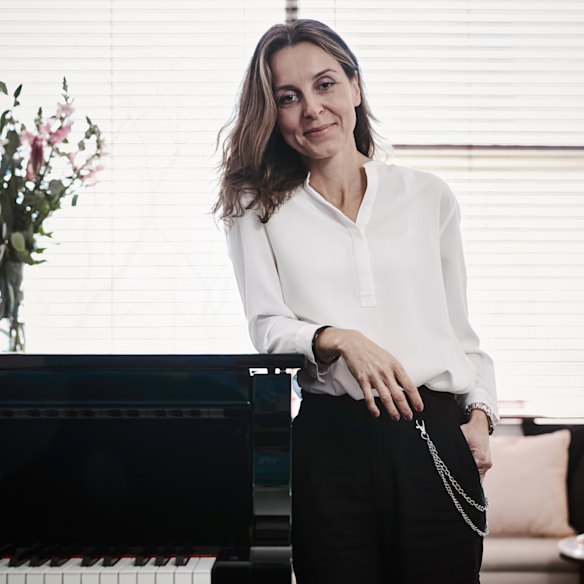
Thus at 27, Lenartova flew to Australia, armed with $1600, the contact details of one person and local knowledge of only “kangaroos, koalas and the Opera House”. After a couple of messy relationships, at 30 she fell in love. In her telling – and she freely acknowledges his version may be different – her boyfriend was keen on a baby but she wanted to establish herself here more, first. By the time she wanted one, he didn’t. It became an insurmountable tension point and they broke up when she was 35, cancelling a planned wedding in Slovakia. “It took me more than three years to feel OK about the whole thing,” she says.
Amid that sadness she met her future husband, who was significantly older but sprightly, fun, an excellent pianist like her. Their talk quickly turned to her desire for a baby. He was keen to try but age got in the way. “He took me to dinner and told me he’d seen a doctor, who’d told him there was a very small chance he could have a child,” Lenartova says. “He said, ‘I know it’s important for you, and I want you to move on and find someone to have a child with.’ ” She took his hand and replied: “I was with a man who could have had a child with me but didn’t want to. Now I’m with a man who can’t have a child with me but would love to. I’m staying.” They married in 2009 and a year later got their dog, Maximo. “My feelings for having children went,” Lenartova says. “I didn’t have a child but I had a really nice marriage with a man who fulfilled everything else. And I had Maxi.”
She teaches piano in Bondi Junction these days, mostly adults because parents of child students often irritate her. “They talk of schools, universities, boast about their kids.” She worries who will look after her in her dotage and is in deep grief over the death of Maxi last June, but says life is very good now. “I’m a responsible person, I work hard, I care,” she says. “What it’s given me is freedom to make decisions differently. If I want to go to Slovakia tomorrow, I can.”
Robust figures on the number of people without children are hard to find, let alone who got there by choice and who by circumstance. There’s plenty of data that approaches it – who’s in your household on census night, people’s intentions re: childbearing, how many children women aged 35-45 have had – but little that directly and rigorously addresses the question. Dr Bronwyn Harman, a senior lecturer in psychology at Perth’s Edith Cowan University who’s done a PhD on the child-free and childless, estimates from everything she’s read that about one in four Australian women over 45 don’t have children. Of these, she suspects about half got there intentionally, half not. Of the latter, about half again had medical issues, she estimates, the rest had other reasons. How many men never have kids is even less known – because when it comes to fertility, they’re not even in the count.
The lack of hard data is partly because, to be blunt, the childless have never been a big enough cohort to matter politically or economically. Measurement is also tricky, as “people change their journey, it’s on a continuum”, says Harman. Some start off wanting kids then can’t have them; others say they don’t want kids then change their mind. Others still become step, adoptive or foster parents. How each answers questions around parenthood will change according to where they are on that spectrum. Simon Kuestenmacher, co-founder of trends consultancy The Demographics Group, says this highlights a simple truth. “We make sense of our lives as we go along, which means our stories change as we go along.”
Whatever the actual percentages, what we do know is that fertility rates are falling – not just here but around the globe. While this partly reflects people having fewer children, it also suggests the childless and child-free are on the rise. According to the Australian Bureau of Statistics, women aged between 15 and 49 had an average of 1.48 children in 2024. That’s a record low and well below the 2.1 replacement rate that would keep the population stable without migration. It’s low enough for that great American father figure Elon Musk (14 kids) to quip that Aussies are becoming an “endangered species”.
If so, we’re in good company. The US fertility rate in 2024 sat at 1.6, with Japan’s at 1.15 and South Korea’s at only 0.75 babies per fertile woman. It’s not just wealthy countries having fewer babies, either. According to The New Yorker, in the fabulously titled feature, “The End of Children” (how’s that for satirising moral panic), fertility rates are also below replacement level in countries such as Nepal, El Salvador and Albania. Sub-Saharan Africa and Central Asia, it says, are among the only places that remain higher.
This lack of baby-making has politicians, demographers and billionaire tech bros (especially tech bros) in a lather. Less babies means fewer workers to pay taxes and look after retirees. Immigration offsets this but it’s a growing flashpoint in the West, including here. From wanting a smaller global population to combat climate change we’re suddenly all for growth. The solutions offered by a range of countries mostly revolve around encouraging us to get on with it, as if all we need is a bit of a kick-along. Think Peter Costello’s 2002 baby bonus; China ditching its decades-long one-child policy in 2015; Hungary offering tax incentives for parents; and the French president writing to 29-year-olds urging them to procreate.
More difficult, however, is grappling with the societal factors that led many who wanted kids, or wanted more than they had, to miss out. That’s a multi-headed beast that goes to the heart of how men and women relate, and when they start settling down (hot tip: your mid-to-late 30s might be too late). That crosses into almost every area of social angst, including online dating, smartphones, porn, education, housing, careers and entrenched generational and gender inequalities. As The Demographic Group’s Kuestenmacher says: “If it was easy to solve, one of the Nordic countries would have solved it by now.”
Men don’t feature much in the conversation around childlessness but they should, because they can feel grief around it, too. Or not, as is the case with Dave Jordan, who grew up in Papua New Guinea then went to boarding school in Brisbane. He spent much of his 20s and 30s in the navy, where he captained a ship. The girl-in-every-port cliché didn’t apply to him, he says with a laugh, and by his late 30s he was ready for a change. “I wasn’t lonely but I was ready to stop tooling around on boats,” says the 60-year-old, who is tall and dark with a dry wit, and now works as a defence-sector consultant.
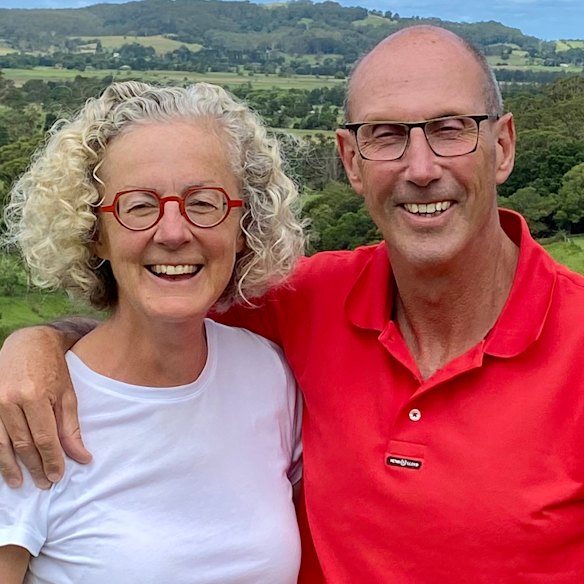
Over the summer of 2001 he met Louise Walsh, a young lawyer with a shock of blonde curls and a go-getter attitude to life who’d recently come off an intoxicating time working at the Sydney Organising Committee for the Olympic Games. She was fully into her career, which would evolve into the arts, philanthropy and funds management. Both 38, they hit it off, and by 40 they were married. They discussed having children, often in bars late at night, and he was probably keener than her, but they never did anything about it. “We were just happy we’d found each other,” he says.
Theirs is a simple story of two people with a glass-half-full attitude to life, careers that stimulated them, including a lot of not-for-profit work, and plenty of nieces, nephews and godchildren, many of whom now come to them for sage advice. They have a dog (of course), who Jordan says runs his life, and split their time between Berry in the NSW Shoalhaven region and Sydney. “I take the positives of where I’m at,” Jordan says in summary. “I’m not a coulda, woulda, shoulda kind of person, so it’s not something I dwell on. I have no regrets. We have a great life together.”
Growing up in Wingham in country NSW, Samantha Clode never had a strong desire for children, either. Her sister had a baby at 21 and most of her friends were pregnant within five or 10 years of leaving school, but she “wanted to get out – I was obsessed with travelling, seeing the world”. She was also obsessed with music, and worked her way up to her communications director role at Frontier Touring.
She was always more interested in a relationship than babies, figuring that if she met the right guy, they’d have children, but if she didn’t, c’est la vie. It was only in her late 30s, when neither had happened, that she started feeling sad about it. “My best friend got pregnant when I was 40,” the 53-year-old tells me from Elwood in Melbourne’s south-east, where she lives with her cat, Daphne. “I remember trying to be happy for her but being devastated.” Part of that was about losing her friend to baby land. “I remember feeling she’ll never have time again, we’ll never be as we were again.”
Clode has brown hair, hazel eyes and an enthusiasm for life that’s infectious. She talks about non-motherhood as a “quiet grief”, one that became acute again when she hit perimenopause. “There’s all this conversation about trying to get pregnant, miscarriage, early motherhood and so on. But women who simply miss out – they don’t get discussed.”
That said, as someone who grew up reading Margaret Atwood, Jeanette Winterson and Patti Smith, she finds society’s renewed focus on motherhood a bit regressive. ”Motherhood is held up on a pedestal as the most important thing a woman can do,” she says. “In reality, there’s a whole world of things women can do, achieve and dream of, that are equally important.” She’s seen the deification of motherhood in action through her work. “Almost every female artist I have worked with, they’re asked by journalists if they’re a mother. Almost mother first, artist second. Society doesn’t do that to men. Father is something they do, but they are themselves first. A woman is a mother first.”
I know what she means. It sometimes feels like there’s mass panic among today’s 30-somethings about having babies – which I can relate to, I had it too. The difference today is you can do a lot more about it, including freezing your eggs, shipping sperm in from offshore to go it alone and finding an egg donor or surrogate. I’m glad most of that wasn’t an option when I was doing IVF: I can see how easy it would be to lose years, plus an entire housing deposit, chasing a baby dream with no discernible stop point.
This, plus the rise of yummy-mummy influencers, adds to the impression that no matter what else you achieve in life, having a baby is the modern woman’s lodestar. This was brought home to me recently when I saw the hit play, My Brilliant Career. The idea that a woman might choose her career over marriage and children was so damn refreshing, in part because, in 2026, while we no longer have to choose, it sometimes feels as if babies are again the main game.
In a reminder that multiple thoughts can exist around all this at once, Clode says she’d love to have met her baby – “I don’t need a 15-year-old but I would have loved to see my baby’s face” – but also recalls a seminal moment at a PJ Harvey concert when she was about 40. “I turned to my friend and said, ‘Would you rather have a baby and be a mum, or be PJ Harvey?’ We were both like, ‘F---ing oath, be PJ Harvey!’ ”
Think about high-profile Australian women who don’t have kids – Gladys Berejiklian, Julia Gillard, Julie Bishop, Kylie Minogue, Delta Goodrem, Samantha Armytage, Layne Beachley, to name just a handful – and you realise that while they’ve all been predictably asked about it, even judged on it – who can forget the jibes about Gillard’s empty fruit bowl – they’ve tended to keep their answers succinct. (Minogue has tackled it more directly in her new documentary.) They’ve been busy doing fabulous things and, quite rightly, that’s what the public focus has been on.
But perhaps it’s also too risky a subject to dwell on. Nobody wants to look like a loser in life and that’s how childless women are often portrayed. Just ask Jennifer Aniston. (Hollywood men without kids also exist, including Keanu Reeves, Jon Hamm, Leonardo DiCaprio and Pedro Pascal, but they don’t tend to get the Aniston treatment. DiCaprio does get ridiculed, however, for his seeming inability to settle down and procreate, so maybe that’s the male version.)
But things are changing. At the same time as tech bros and Trumpians are leading a pronatalist push, those without kids are throwing off the stigma attached to words like “barren” and “spinster”, and reminding everyone that there are some pretty awesome upsides to the sans-kids life. Look at Aniston’s Instagram; nothing sad there. Her answer to all the “woe is Jen” headlines has been to live her best life.
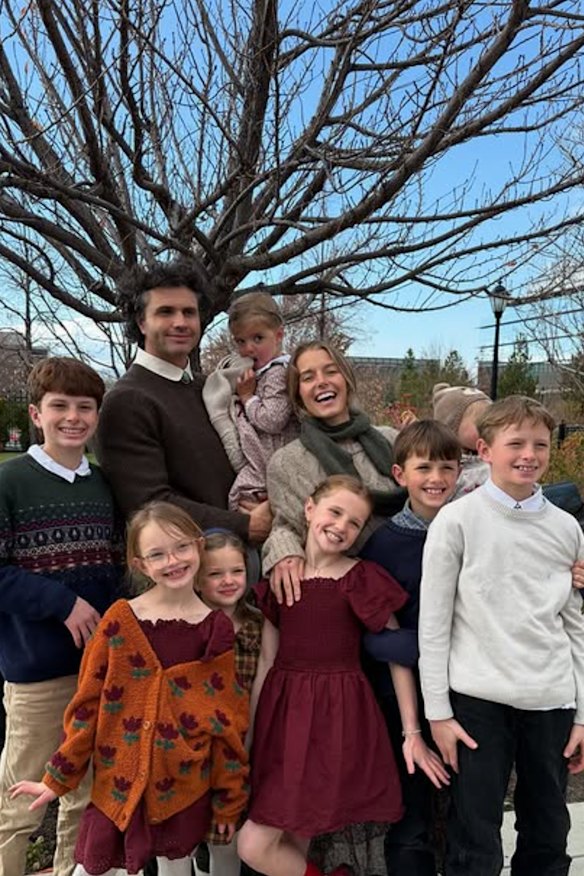
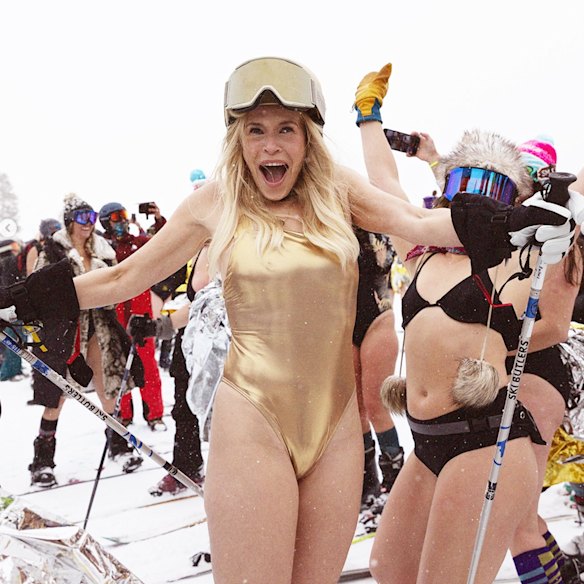
It sometimes feels like there’s a PR battle underway between the pronatalists and the child-free. In one corner is Ballerina Farm, whose 10.4 million Instagram followers watch a genetically blessed couple raise their nine kids on a Utah farm. In the other is American comedian Chelsea Handler, who regularly posts TikTok videos of herself doing “whatever the f--- I like” – skiing in a bikini, having a cocktail at 10am – because that’s the life she enjoys without kids to tie her down.
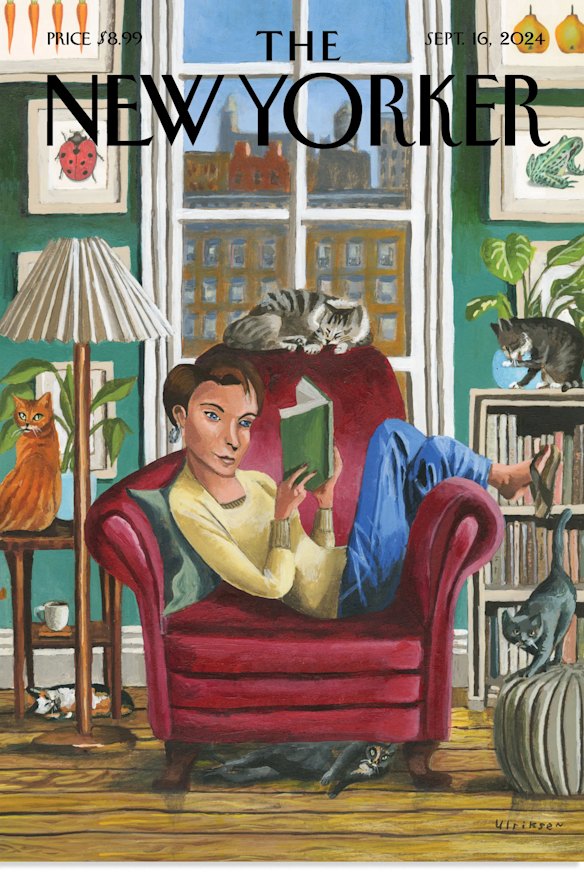
The battle was writ large during the 2024 US presidential election, when 2021 comments by then vice-presidential nominee J. D. Vance resurfaced in which he lamented the “childless cat ladies” running the Democratic Party, who he said wanted to make the country as “miserable” as they were. Vance might have become VP but in the forum that counts among the fertile – social media – the joke was turned on him. Women around the globe started posting pictures of themselves with their cats, accompanied by sassy captions like “living my best nine lives” and “childless and crushing it” (thanks, Chelsea). Taylor Swift (zero kids to date) signed off her post endorsing Kamala Harris (no biological children, two stepkids) with “Taylor Swift, Childless Cat Lady”.
The New Yorker summed it all up with a cover of a woman contentedly reading a book in her Manhattan apartment, surrounded by happy-looking felines. The title: “Childless Cat Lady Inexplicably Enjoying Life”.
Not everyone is sanguine about not having kids. For those who are not, Sarah Roberts and The Empty Cradle are there to help. Roberts set up the childless support organisation in 2017 when, after a decade of fertility treatment, she found little to help her through a grief so profound it put her in bed for a month. A trained counsellor who lives on acreage outside of Brisbane, she works with women, individually and in groups, to help them rediscover their spark and “rebuild their sense of worthiness”.
It’s not just the lack of a baby they can grieve, she says, but the lifelong flow-ons, ranging from never frequenting the school gate or footy field to becoming the beta-sibling whose needs come behind family members with the golden eggs that are children, to the guilt at not providing grandchildren, not to mention the regular fielding of clueless comments.
“It’s a cultural blind spot with huge silence around it,” she says. “When women do talk about it, they can be shut down with pat responses like, ‘Oh, have you tried X’, or ‘I know this woman who …‘, or ‘Lucky you’, or ‘Oh kids are a pain, have one of mine’ or ‘Why don’t you adopt?’ It’s a complex human story, and there’s often an empathetic failure in how people respond to it.” She works with women but says men can have big feelings about missing out, too, and also need services to deal with their physical and psychological loss.
The good news is that, with time, most do come out the other side of their grief. And here’s the fascinating thing – often for the better. “When you’ve been touched with a life-altering grief it can birth within you these very difficult emotions, become a place of shutdown,” Roberts says. “But when that heals it can be a time of expansiveness, of greater empathy and presence. The person I’ve become as a result of my childlessness would have been a much better mother than the old me. Isn’t that wild?” She pauses. “I’m a more centred, grounded, fully realised woman. And isn’t that what the world needs more of right now?”
I ask Roberts what can be done to help. Fund psychological services to support people through the acute transition phase to non-parenthood, she says. Set up a national advocacy group. And do more research, particularly into the ticking time bomb that is an ageing population with a growing number of childless people. Edith Cowan University’s Bronwyn Harman adds that governments should consider ways to improve the dating game. Funding late-night public library cafes, noodle markets and the like. Before you scoff at the idea of politicians getting involved in your love life, consider that nothing they’ve done to date has significantly reversed our baby-making decline. “If they’re serious about addressing fertility, they need to start thinking outside the box,” she says. Harman adds that politicians need to start talking to the childless and child-free and stop “othering” them. She predicts they’ll account for one in three Australians by 2050. “They will become a big cohort, and they all have votes.”
I know what Roberts means about coming out the other side of the grief. My wound has been cauterised and, with it, I’ve developed a deeper understanding of the truism that nobody gets everything in life. That’s OK. That’s actually life. I’d go further and say I feel lucky with the life I have. I realise, too, that I kinda like being outside the norm. Plus – and this will make parents go duh! – parenting looks really hard. These days, I enjoy answering “no” when people ask if I have kids, and waiting to see what they say next. It’s a fun game.
My wound has been cauterised and, with it, I’ve developed a deeper understanding of the truism that nobody gets everything in life.
I mention all this to Roberts, who agrees the grief can lessen with time but says it can be hard to get to this point if it’s not seen, and this is why a societal shift around childlessness is needed. “Everyone has suffering but not everyone’s suffering is acknowledged,” she says. “Most just want better empathy around what they’ve gone through. That’s often needed to be able to move on.”
Personality and circumstances also play a part. For some the grief never goes, nor the sense of being judged – by family, friends, society. I’m keenly aware that having a good partner, stimulating work and a mixed milieu of friends with and without kids, single and coupled, gay and straight, has helped my recovery, and that some have a much harder road out.
I sometimes feel sad that Hugh and I didn’t give our parents, and our nieces and nephews, more grandchildren, more cousins. I know they’ve lost something in us not having kids, too. (I always wanted four babies, by the way – hilarious given where I ended up.)
I wish I’d met my kids with Hugh. He’d have been a great dad. But you don’t need your own child to feel the joy of children, and watching those in my life grow up has been, and continues to be, a wonderful source of sustenance. It might be naive, but I don’t worry about who’ll look after me when I’m 85. If I get to that age I’ll be happy, given how many don’t. I’ll deal with it then.
I talk to many 30-something women angsting over whether they’ll miss out on kids. I tell them not to sweat it, that there’s a great life out the other side of the baby-making vortex, if that’s where they end up. I see in their eyes what was once in mine – they don’t believe me. But it’s true. There’s an alternative path to endless IVF and I can’t help wishing more would consider it. I see the cost, financial and emotional, of losing much of your 30s to this dream. It can be sky-high.
That said, the miracle of medicine has meant gay and single friends becoming parents who otherwise might not have, which is thrilling. Egg-freezing, which wasn’t around in my day, has also taken the pressure off 30-somethings. While not a failsafe, that’s a plus. I’m not against medical intervention at all. I just worry that, in pushing the whole partnering and baby-making project into our 30s, we’ve made it increasingly inevitable.
As I was finishing this story, two friends with daughters in their mid-20s became grandparents. This made me so happy. If the next generation is getting on with it earlier, maybe they’ll save themselves some of the grief my generation went through. Maybe they’ll be the ones to turn the fertility fall around. Maybe the pendulum will swing.
Read more from Good Weekend:
- Elijah was 10 when his friend typed ‘porn’ into a search engine. He was afraid – but unable to look away
- He keeps ex-PMs on retainer, parties with Trump and dines with King Charles: this is Anthony Pratt
- How Luke Bateman became Australia’s most unlikely book influencer
- Artist Khaled Sabsabi on becoming the centre of a political firestorm
Get the best of Good Weekend delivered to your inbox every Saturday morning. Sign up for our newsletter.

















































