
 1 month ago
66
1 month ago
66
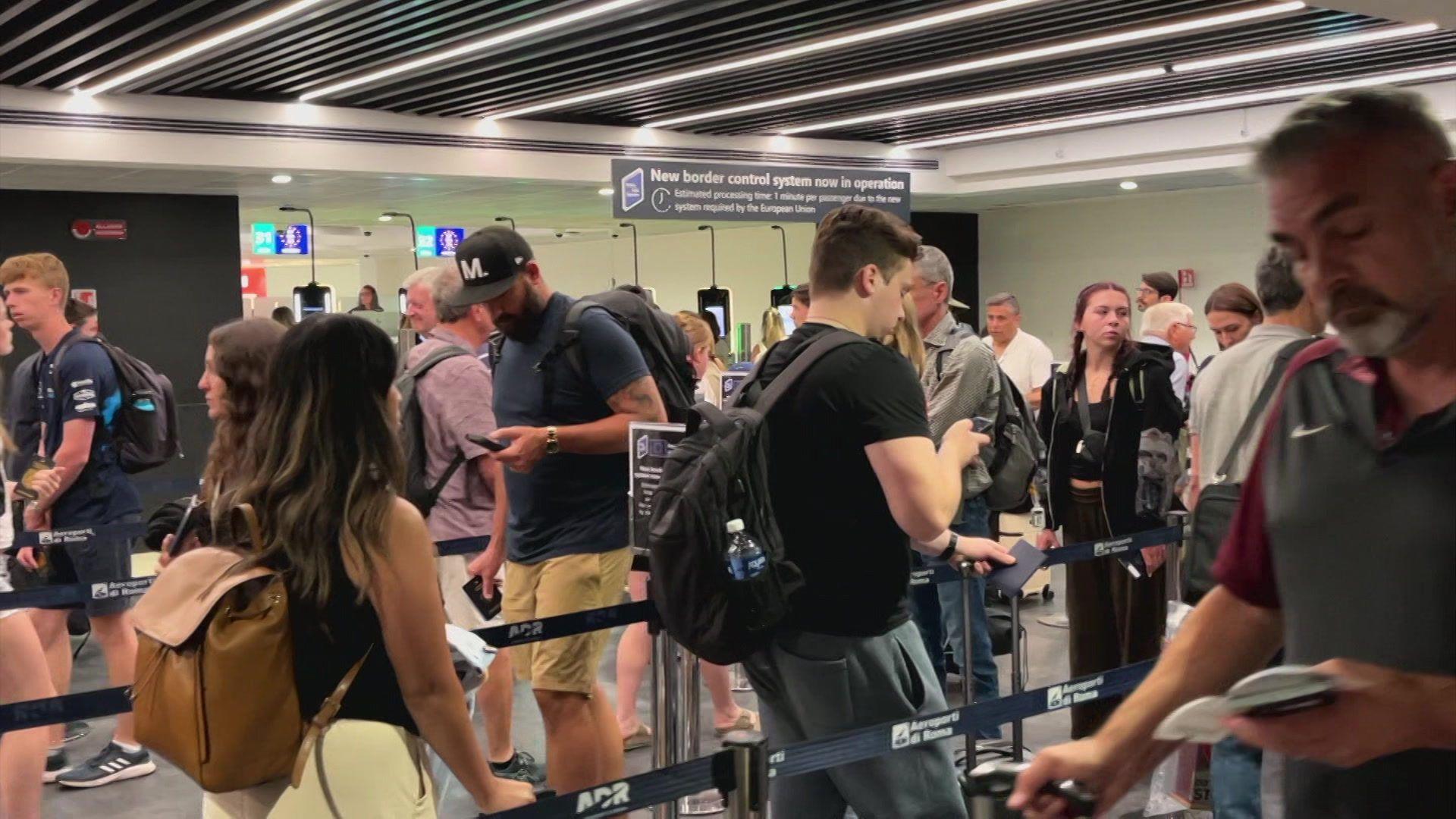
People in queue for the Entry Exit System process after landing at Fuimicino Airport in Rome, Italy, in mid-July
By
Transport correspondent
The EU's new border system has nearly tripled the time it's taking for Brits to get through passport control even after improvements have been made, a boss at Rome's main airport has said.
It comes as Ryanair has warned passengers travelling to Europe this summer to prepare for extended waits.
Border police at Portugal's Faro airport also told the BBC the Entry Exit System technology suffered from bugs, but insisted any queues there would go down quickly.
The European Commission (EC) has said in most EU airports disruption is limited, and added that it will continue to support member states in the system's implementation.
It added: "This support will continue to the fullest extent possible."
The digital Entry Exit System (EES) requires non-EU citizens entering the Schengen area - made up of 29 European countries - to register fingerprints and a photo when they arrive. The information is checked as they leave.
It's often done using standalone, automated machines known as "kiosks" and sometimes with border officers - for example, for children under 12. The new process and machines have been phased in since October.
Some European airports have seen hours-long queues at passport control. Passengers have even reported missing flights home.
This week, Ryanair said "the failed EES rollout" was causing unnecessary delays and long queues.
The airline said UK passengers should "allow extra time for their journey and be prepared for extended waits at passport control."
In Rome, a perennially popular destination for tourists from the UK and around the globe, everyone we spoke to in the Piazza di Spagna had an EES story.
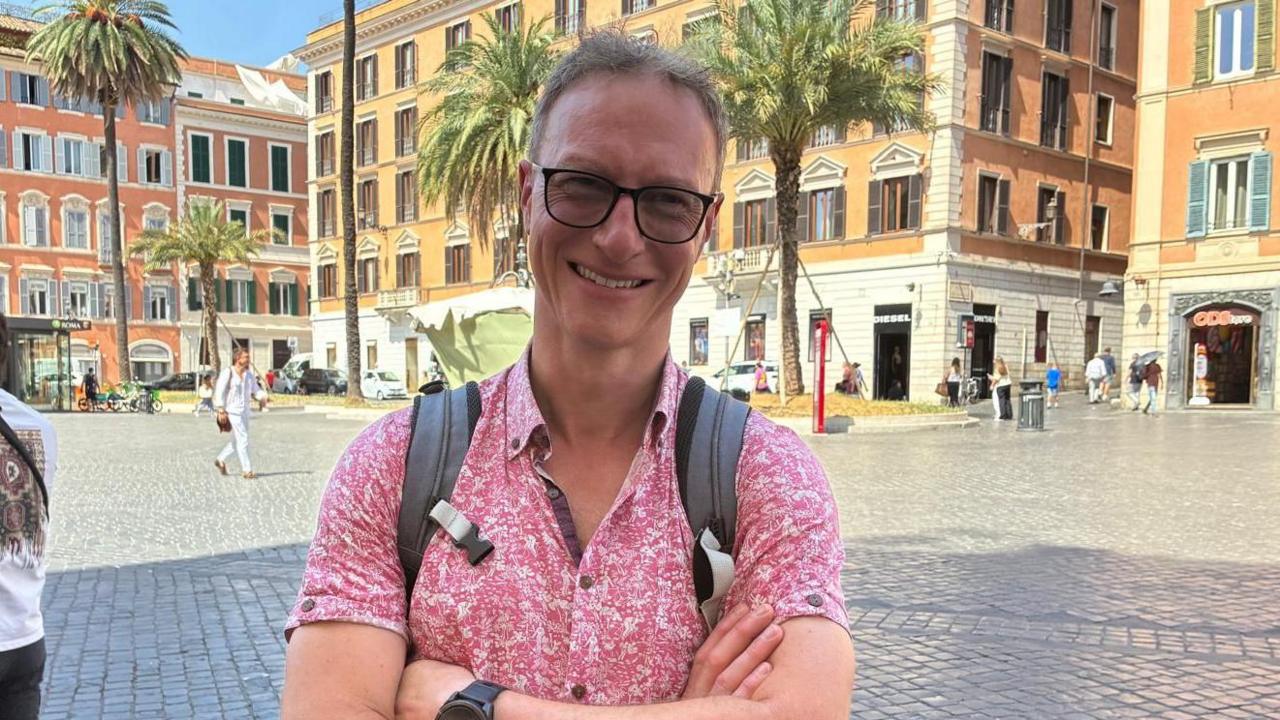
Carl waited two hours to get through border control with young children
Carl and his family travelled to Rome from Yorkshire.
"It was two hours queuing, from getting off the plane to getting through with children. I knew it was going to be bad, but not as bad as that."
David, visiting from the US with his wife Marlo, said the queue took about an hour. "We actually missed our car, our driver."
We met people who'd flown into other airports too. One group had landed in Barcelona before a cruise brought them to Rome.
Barry, from Bracknell, said passport control had taken 45-50 minutes because some machines weren't working.
His friend Sarah, who'd arrived in Barcelona on a different flight, said passport control took nearly as long as the flight. "The queue was huge, nearly an hour… it was just slow".
System 'needs fixing urgently'
Rome's Fiumicino airport has found it impractical to have large volumes of passengers using the self-service "kiosks", despite their €12m ($13.7m, £10.2m) cost.
Now, UK nationals are among those who can register fingerprints and photos at passport e-gates, instead of having to use the standalone machines too. Children under-12 can't use them and must go to a border officer.
Ivan Bassato, the airport's Chief Aviation Officer, told the BBC the integration with e-gates "improved things significantly".
But still, the complexity of the system means the time taken for UK nationals to get through the border has risen from seven minutes to 20 minutes.
"We are not at the point where you have the same quality of the process [as] before the EES," he said.
Bassato added the airport prides itself on being well set with technology, so it was "absolutely not okay with" waits of one or two hours.
"I think that we need to fix urgently certain aspects of the system."
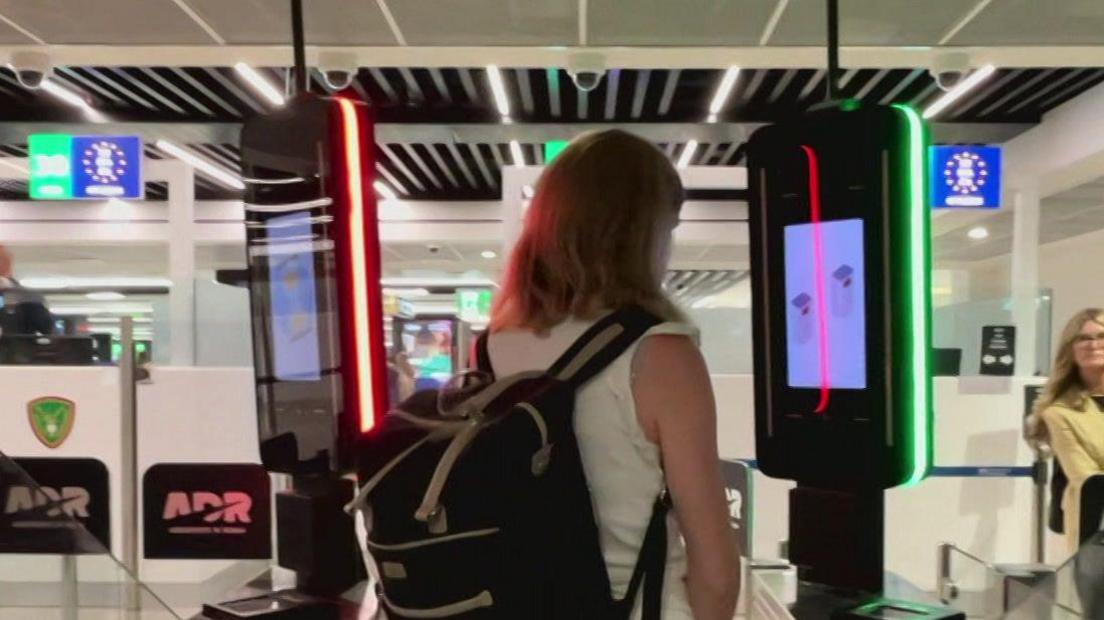
The BBC's Katy Austin goes through the Entry Exit System at an e-gate in Rome
Bassato believes that authorities should remove duplication from the process.
He would also like to see more countries using the the EU's pre-registration app. Only two countries are doing so currently - Sweden and Portugal.
Countries involved are able to suspend EES under exceptional circumstances.
Airports and airlines have been pressing the EC to allow states to proactively suspend the process ahead of particularly busy times. However, a meeting earlier this month did not lead to any change.
Another country where passengers have reported holdups due to EES is Portugal.
The BBC spoke to Superintendent Pedro Oliveira, who is in charge of border control at Faro airport. He said "sometimes what used to be a ten-minute queue... takes over thirty minutes."
The high number of UK passengers arriving means some degree of queuing is to be expected, but he insisted people should "not be afraid" because things would move quickly.
Waits of over an hour were very rare at Faro, according to Supt Oliveira, but he added they could potentially happen if more planes than expected arrived at the same time.
The automated machines were generally the quickest way of getting through the border, he said.
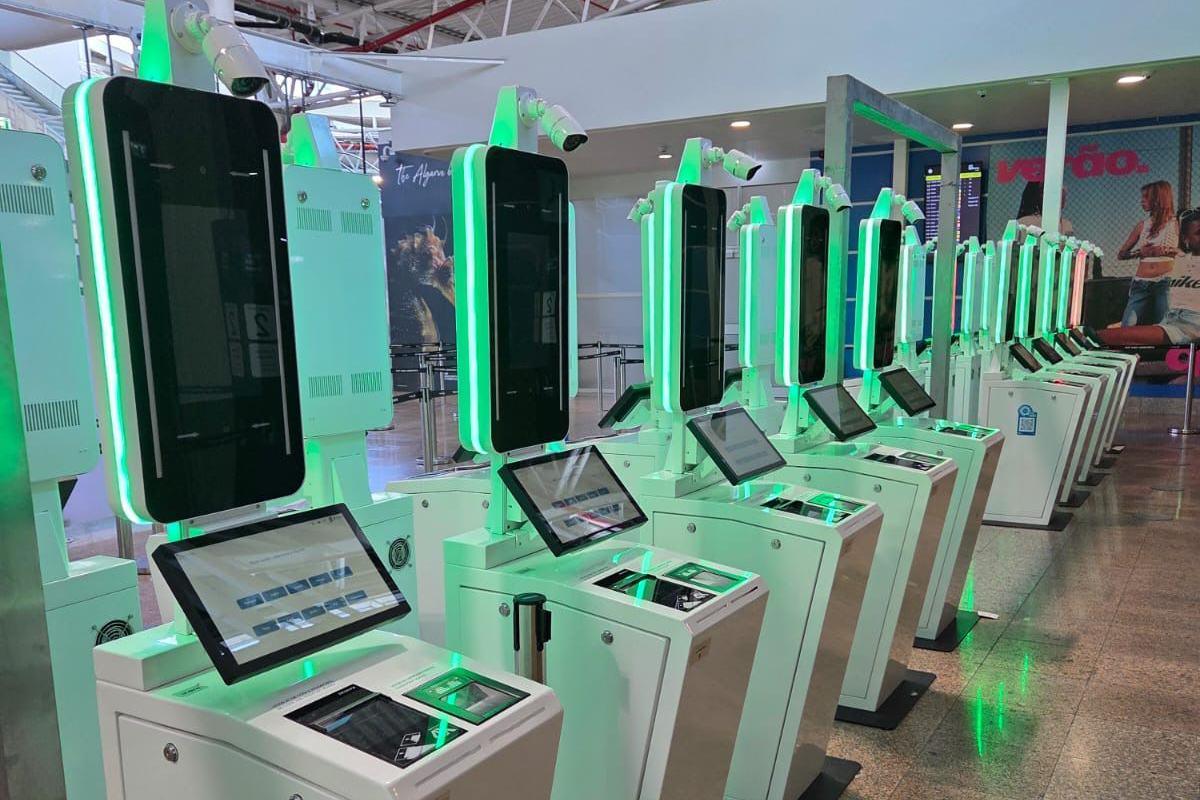 Image source, PSP / Pedro Oliveira
The automated machines to take non-EU passengers' fingerprints and photos at Faro airport in Portugal
Supt Oliveira also said the EU's new IT system has had bugs.
"[EES] makes us very dependent on the technology…. servers often are intertwined and connected, so sometimes something that happens in Warsaw affects our system here.
"At times, there are just complications with the server of the European Union. Sometimes crashes happen in all member states at the same time, and we need a few minutes to reboot everything."
He did say this was now happening less often.
More border officers have been recruited to help. In Portugal, children under the age of 16 go to a member of border police staff to have their biometric information recorded instead.

















































