3 months ago
40
3 months ago
40
My work moved office. Why won’t they pay for my travel costs?
Opinion
January 16, 2026 — 5.01am
January 16, 2026 — 5.01am
The company I work for has just undergone a major change. This has affected my role, and I’m now being asked to travel much further every week than I did previously. This has led to very substantial extra travel costs for me. I asked if I could be reimbursed in some way (I suggested several options) and was told no. The reason I was given was that if it was done for me, it would need to be done for others in my situation.
I don’t see this situation changing in the new year. What are my options or rights to fix the situation where I am actually significantly out of pocket?
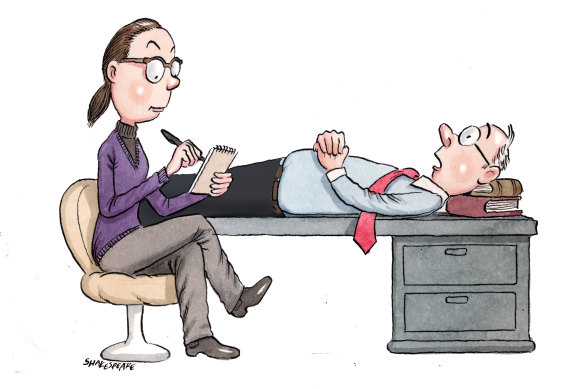
A longer commute due to a new office location is rough, but there might not be much you can do.Credit: John Shakespeare
My first instinct after reading your question was that this is extremely unfair. I only felt that was more true after our further correspondence.
Your employer has entrusted you with the job of smoothing part of a major organisational shift. In the process, they’ve asked you to travel much further than you once did, entirely at your own expense. The idea that you deserve zero compensation to reflect this new situation is, on the face of it, absurd.
“If we do it for you, we’d need to do it for everyone else” might be an understandable explanation if you were asking for an air-conditioned running track inside your office (as, possibly apocryphally, Mick Jagger once did before appearing at Coachella one year). For something like this, though, it’s laughably solipsistic reasoning – or, as you kids would say, that’s a them problem, not a you problem.
However, my own lay opinion is entirely separate from the question of what the law says about your predicament. I asked Joellen Riley Munton, an expert in workplace law, and Professor Emerita at the University of Sydney, about your concerns.
If they refuse to budge, perhaps now is the time to take your excellent skills and reputation elsewhere
She said that, as always when it comes to legal questions, the devil is in the detail. And the most germane detail in this instance is precisely what travel has increased. If you’re being asked to drive from your home to a new premise and back, your options may be limited.
“Businesses that have several locations, and move staff around periodically often face problems when employees do not want to work at the new location. The question then becomes, does the employee’s contract of employment contemplate such a move? If not, the employee can make an argument that their original employment contract has been terminated by the employer. This would allow them to claim payment for a period of notice and leave the job.”
Loading
Professor Munton said that if you took this option, you might argue that the original position has now been made redundant and seek a payout.
“This, of course, is not a great solution for a person who wants to keep their job. And it doesn’t always work, even for the person who is happy to resign and find something else,” Professor Munton conceded.
“Unfortunately, a lot of employment contracts now will expressly stipulate that the employee agrees to changes in roles and locations – especially if the employer operates in several locations – so it can be difficult to argue that a location change is so significant that it constitutes a termination of employment by the employer.”
Professor Munton said it’s a different story if you’re being asked to do the extra driving during the day. In other words, after your usual morning commute.
“Travel undertaken during the working day is generally done at the employer’s expense. Most employers will provide a company-maintained vehicle or a travel expense. An employer who requires an employee to cover the costs of their own work travel is at risk of falling foul of the Fair Work Act which prohibits employers from unreasonably requiring employees to spend their own money to meet the employer’s business expenses.”
I’m hoping sanity can prevail here, though. It sounds to me like you have a pretty good relationship with your employer, despite their initial rebuff, and that you’re well-regarded within the organisation.
My advice would be to appeal to the decision-makers’ better nature. The plain facts of the matter are that you’re being asked to do a critically important job for your company but are financially much worse off because of it. Only the most stubborn and short-sighted employer would see this as justifiable.
If they refuse to budge, perhaps now is the time to take your excellent skills and reputation elsewhere. But check your contract first.
Send your questions through to Work Therapy by emailing [email protected]
Most Viewed in Business
Loading