
 2 months ago
66
2 months ago
66
Vicky Belando Nicholson has no memory of the day she was found face down in the Mediterranean Sea, seconds from drowning, before being pulled unconscious from the water by a medical officer of the Maltese army.
“We were on a refugee boat and there were more people than there should have been,” she says. “The boat capsized, and my birth mother drowned, but they managed to save and resuscitate my sister and I.
“My lungs were full of water. I’m pretty lucky.”
The water that almost claimed Belando Nicholson’s life as a six-month-old baby is now the only thing between her and a Commonwealth Games medal in Glasgow this month.
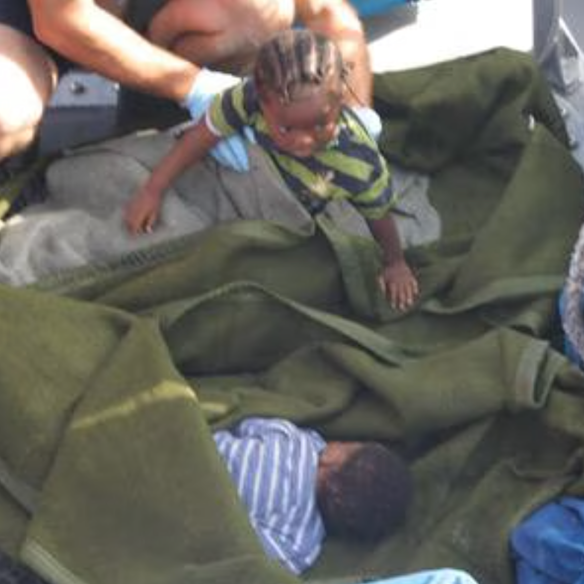
Sport is full of stories of adversity, but few can match Belando Nicholson’s journey: from a helpless infant in a Maltese orphanage, born with one leg shorter than the other, to a member of Australia’s Commonwealth Games swimming team.
The 18-year-old para-swimmer will compete in the 100m freestyle and 100m backstroke events in Glasgow. There is an irony in the fact that she prefers freestyle – with her face in the water – given how close she once came to drowning at sea.
“I wasn’t 100 per cent sure if I would make the Australian team or not,” she says. “It was a great relief.”
Belando Nicholson moved to Brisbane in 2021 and became an Australian citizen in 2023, but has no idea where she was born.
It remains a mystery where the boat carrying Vicky, her sister Destiny and their mother was travelling from when disaster struck on September 8, 2008.
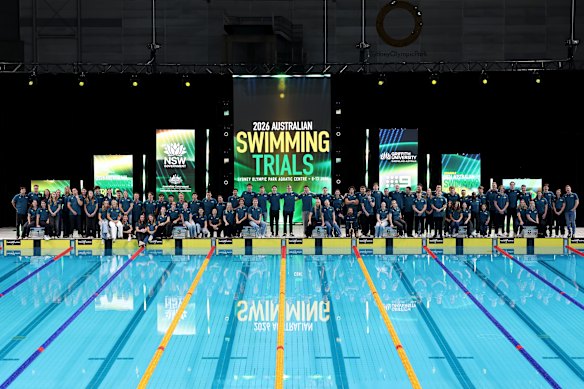
Belando Nicholson says she is open to taking a DNA test in the hope of learning more about her origins, which are probably in Africa and possibly Libya, according to her adoptive father.
Victoria and Destiny were taken to an Ursuline orphanage in Malta and declared stateless. One day, an Australian man from Brisbane named Ewan and his Spanish partner, Susana, walked through the doors.
They had intended to adopt a child from Haiti. But the devastating earthquake in 2010 changed their plans and, little did they know, would ultimately deliver Australia another representative swimmer years later.
“Haiti shut down all the adoptions, so we were at a bit of a loss at what to do,” Ewan says. “We then got a cold call from social services saying: ‘We’ve got two girls here, two and three years old, who are in an orphanage in Malta. Would you be interested in adopting them?’”
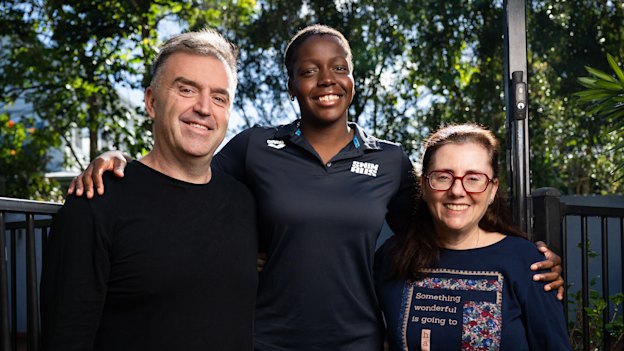
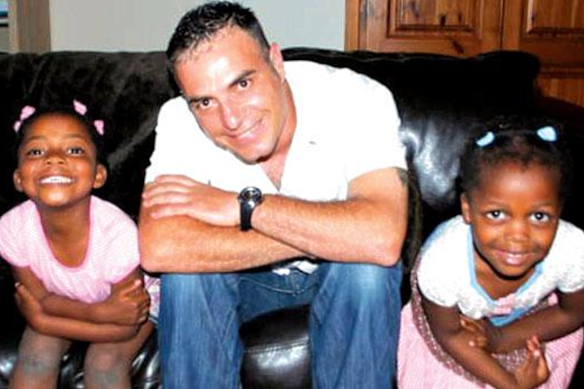
Ewan and Susana met Vicky and Destiny at the beginning of 2010 and, after a year of introductions and meetings, finally welcomed them into their home in Malta as their daughters.
But the story of what had happened on the boat lingered with Ewan.
“It just sounded like a weird story,” he says. “Once they were officially ours, then we did our own investigation. I wanted to know where their mother’s body was buried. No one knew.”
With the help of the United Nations, the family eventually tracked down the medic who had pulled the girls from the water. The Nicholsons used to tell the girls the story of how they were saved from the sea by a “dragon”.
His name was Silvio Xerri, who was a member of the Maritime Squadron of the Armed Forces of Malta. In 2011, he met the children whose lives he had helped to save.
“She had no pulse, no breath ... she was like a rag doll,” Xerri said of Vicky in an interview with Times of Malta.
Eventually, the family found the girls’ mother’s grave in Malta. It was unmarked, carrying only the words: “Corpse 59”.
More details of the boat drama became apparent: it had capsized in the vicinity of an Armed Forces of Malta patrol boat.
Vicky was plucked from the water and given CPR. She coughed up milk, which Xerri assumed must have been due to a recent breastfeed. Then her heartbeat returned.
She and her sister were airlifted in a German helicopter and taken to an ICU ward in Malta, where they remained for about three weeks.
“It’s a strange experience,” Ewan says. “You’re told as adoptive parents not to expect much. But these are your kids for the rest of your life. It was kind of jarring and beautiful.”
Vicky says: “Because I was so young, they are just my parents. I don’t even think about it. They’re amazing and have brought me up really well. They’ve given a lot to my sister and I, and supported us. We’ve had a very good life. It opens your eyes to the world.”
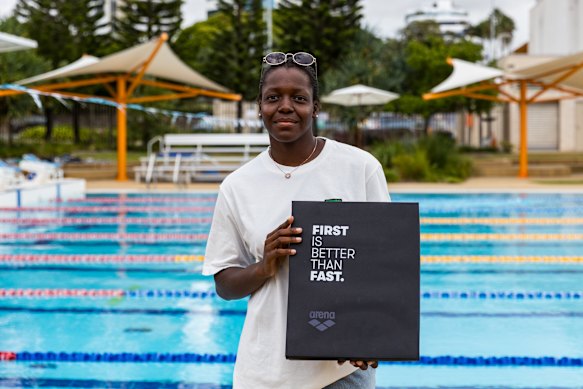
Vicky lived in Malta until she was six and vividly remembers standing nervously next to her adoptive father at a hotel pool as she was gently encouraged to get in the water.
First it was a toe. Then two. Then a foot, ankle and knee … before finally her whole body went underwater.
Does she think her fear of water was linked to her near-death experience?
“I wouldn’t be surprised if that was the case,” she says. “Maybe some subconscious [thought] about ‘this is almost what took my life’.
“It was a bit of a process, but then after I got in, I loved it.”
The family later moved to Malaga, Spain, where Vicky continued swimming and took up water polo.
Truth be told, she did not particularly enjoy swimming initially, even after the family relocated to Brisbane in 2021 due to Spain’s strict COVID restrictions.
But Vicky kept improving despite living with fibular hemimelia, a rare condition that left her without a fibula bone in one leg. She underwent a series of reconstructive and leg-lengthening surgeries, yet the challenges remain.
Her left leg is 14 centimetres shorter than her right, meaning she cannot run or hike and often relies on a crutch to get around.
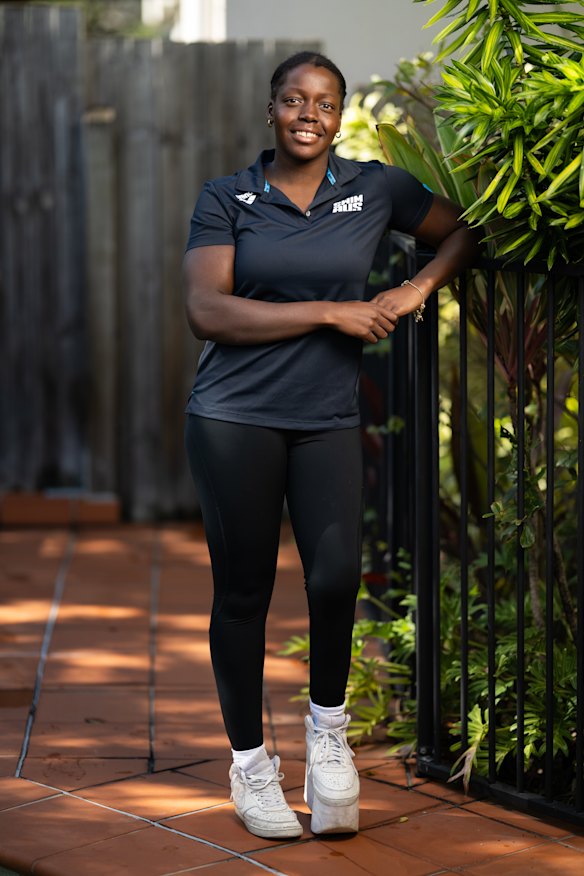
She wears a shoe raised to compensate for the difference in leg length.
In the water, things are easier, but her shortened leg drags behind her, limiting how much power she can generate through her kick.
For the Commonwealth Games, R.M. Williams has made a specially adapted pair of boots for the Australian team member to accommodate her needs.
Away from the pool, Vicky is preparing to begin a bachelor of design at Griffith University and spends her spare time drawing and listening to music.
Given everything she has overcome, her first dive into the pool in Glasgow will carry a significance few of her teammates can truly comprehend.
“Being able to be on the team with the able-bod [athletes] will be really good,” she says. “Also just getting to know new people.
“I would have never actually thought that I would be going off to Glasgow at the Commonwealth Games. I probably never even thought I would end up swimming.
“I’m really grateful to my parents and sisters to just be here and representing Australia.”
Ewan adds: “Representing Australia in swimming is a big deal. It hasn’t dawned on me that she is going to do that. It’s quite a journey from there to here.”
News, results and expert analysis from the weekend of sport sent every Monday. Sign up for our Sport newsletter.

















































