3 months ago
21
3 months ago
21
Opinion
January 14, 2026 — 6.00pm
January 14, 2026 — 6.00pm
The suburban pool in southern Sydney where I learnt to swim was a simple affair. Built in the 1970s, it featured a small kiosk selling hot chips and ice-blocks, basic change-rooms and a grassy hill, covered by shade cloth and dotted with palm trees, that sloped down to three outdoor pools.
Like so many youngsters raised in Australia, I spent hours at my local public pool; first gripping onto paddleboards as I learnt to kick and breathe in the water, slowly building my skills and confidence, and later churning through laps in the 50-metre pool practising for school swimming carnivals.
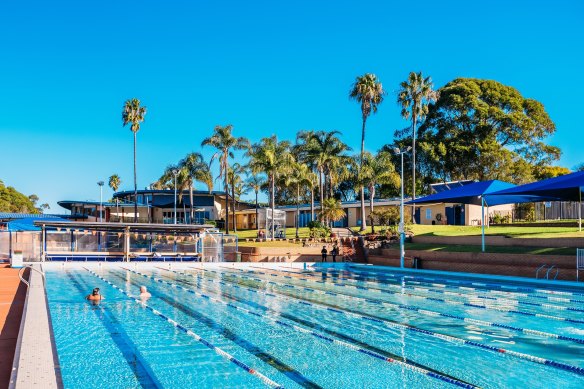
Engadine Leisure Centre in Sydney’s southern suburbs features several outdoor pools and a grassy hill.Credit: Good Thanks Media
Decades later, the modest Engadine Leisure Centre of my childhood memories remains largely unchanged. As Sydney gets hotter, denser and more expensive to live in, we need more like it.
On the other side of the harbour, the $122 million North Sydney Olympic Pool is nearing completion after a disastrous five-year revamp frustrated by scope creep, cost overruns and delays. It is due to open in a few months – three years late and more than $60 million above an initial budget estimate.
The project is an extreme example of a wicked problem facing the state’s local governments: The civic pools built throughout Australia in the 20th century are ageing and must be rebuilt, but cash-strapped councils struggle to afford the replacement aquatic centres modern consumers expect.
As North Sydney Mayor Zoe Baker, who spent years as a councillor rallying against the ballooning scope of the pool project, puts it: “Councils, and it’s not just us, are expected when they renew a pool to deliver a better standard than what they’re replacing, which only adds to how costly it is to do it.”
Those heightened expectations of the facilities and services public aquatic centres must provide are compounded by the financial pressures facing local governments across the country, increased demand on infrastructure driven by surging populations and density, and a rising drowning rate.
In the case of North Sydney, an upgrade to the 1936 swimming complex was sorely needed; the 50-metre Olympic pool and grandstand were riddled with concrete cancer and had to be replaced.
A minimal renovation was estimated at $28 million in 2017. By the time the pool closed in early 2021, the project scope had soared, and the expected cost of the redevelopment had risen to $58 million. Wet weather, surging construction costs and the pandemic were out of the council’s control. But an independent report by consultants PwC criticised the council’s rush to sign the contract on New Year’s Eve 2020, and the decision to have separate design and construction contracts.
“This expedited award created issues for the project as the design documentation was incomplete, and site investigations were ongoing, leading to early variations and delay,” the PwC report said.
It will probably be obvious to swimmers who visit the new pool that no expense has been spared. In addition to indoor and outdoor pools and a 970-seat grandstand are an expanded gymnasium, Reformer Pilates room, spa, sauna and steam room and a gelato bar. Other extravagances include swimsuit dryers and underfloor heating in the change rooms, and brass frog motifs which were inlaid in outdoor floor tiles at a cost of $42,000.
But locals, who also face possible rate rises to help fund the project, will have sweated through multiple summers without a pool for physical exercise, learn-to-swim classes and social interaction.
They’re far from alone – pools in Canterbury, Epping, Leichhardt and Willoughby have also been closed for refurbishments.
Councils who have managed to deliver redeveloped pools on time and budget – such as the well-resourced City of Sydney’s revamp of the Andrew (Boy) Charlton Pool – carried out robust community consultation on detailed plans and funding arrangements before they proceeded.
Royal Life Saving Australia has come up with a potential solution to cut costs to deliver new pools, last year pitching modular prefabricated pools, which could be delivered in about eight months costing about $5.5 million, to the NSW government. The government should explore the option.
State and federal governments should also consider more targeted spending to help local councils deliver costly infrastructure projects that deliver critical public health and safety benefits to booming populations.
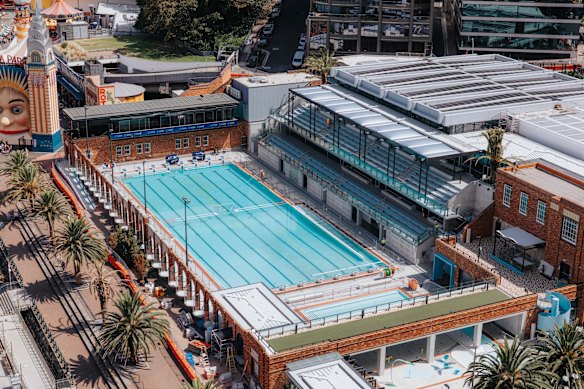
The complex includes new indoor and outdoor pools, a gym, children’s splash pool, cafe, gelato bar and grandstand.Credit: James Brickwood
Meantime, local councils need to have frank, early discussions with their communities about the costs of building and running large aquatic centres – or dump them in favour of simpler pools.
Lest we have a generation of Australian swimmers whose memories of their neighbourhood public pool are tainted by the cost of upgrading it, or worse – years left without a place to go for a dip at all.
Most Viewed in National
Loading