3 months ago
18
3 months ago
18
Mountains of seaweed choke Sydney beaches as heatwave approaches
We’re sorry, this feature is currently unavailable. We’re working to restore it. Please try again later.
Mountains of seaweed have blanketed the sand on several Sydney beaches, where it will remain to rot to benefit the environment during a severe heatwave expected to hit the city this week.
Among the most affected beaches is Dee Why, where this masthead estimated piles of kelp to be up to 1.5 metres high at the deepest point – neck height for an average man or eye level for a woman.
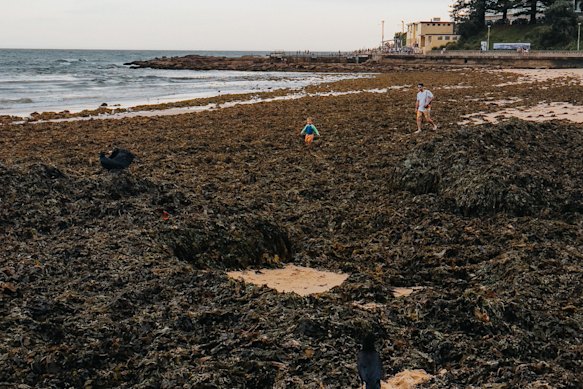
Seaweed along the southern corner of Dee Why Beach. Credit: James Brickwood
In past decades, council contractors would have removed the excess seaweed from beaches, but these days the preferred approach is to leave it in place for its benefits to coastal ecosystems.
Northern Beaches Council referred this masthead to its website, where it states that seaweed is not removed from any beach because it is part of an important coastal process, supporting sand recovery on beaches and natural habitat.
“During large surf events, the kelp beds off the coast are dislodged and inevitably wash up along our many beaches,” the website says. “Due to the large wave action, the volume of sand on the shoreline is sometimes depleted and washed back into the ocean.
“The kelp washing up on the beach provides an ideal structural support for the recovery of the lost sand and in turn helps to rebuild the sand base. Whilst the rotting seaweed has a rather unpleasant smell for humans, it provides an important nutritional source for the habitat.”
Seaweed washed ashore by storms provides shelter and food for animals living on beaches, the NSW Department of Primary Industries and Regional Development says in a video.
Other councils have a range of policies. Randwick City Council’s website says it removes 200 tonnes of rubbish and “excess seaweed” each year.
Temperatures are expected to soar above 40 degrees in western Sydney and well into the 30s on the coast from Wednesday this week, the Bureau of Meteorology said.
With James Brickwood
Get to the heart of what’s happening with climate change and the environment. Sign up for our fortnightly Environment newsletter.
Most Viewed in Environment
Loading