3 months ago
31
3 months ago
31

February 3, 2026 — 7:00pm
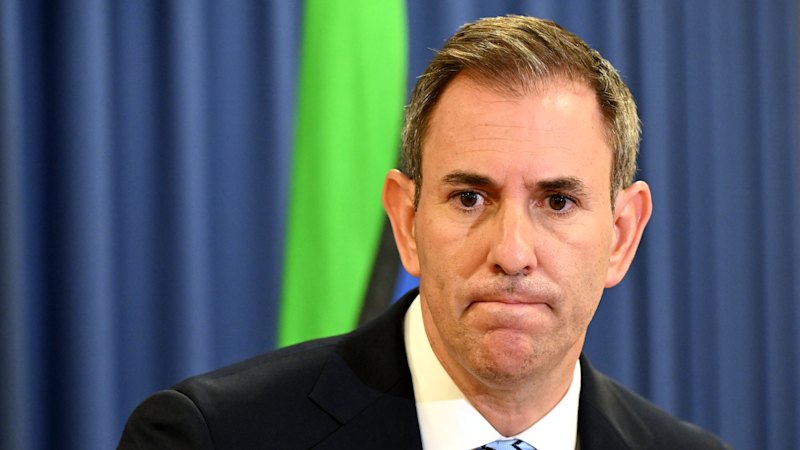
The May budget now shapes as the test of Jim Chalmers and Anthony Albanese.
Without a budget that finds savings and maps out a productivity-enhancing reform agenda, the interest rate increase delivered by the Reserve Bank on Tuesday will be followed by two, three or even more over the coming year.
The quarter percentage point rate hike by the RBA, just six months after it cut rates last year, is the surest possible sign of the economy’s long-term problems.
Those problems are centred on a dearth of productivity improvement that goes all the way back to the global financial crisis. But the cost is now being borne by all of us as the economy, which expanded by a modest 2.1 per cent in the 12 months to September, shows signs it can’t grow any faster without adding to inflation.
Through the final six months of 2025, the economy – driven by consumers and businesses – expanded faster than expected. People went out and bought goods and services while businesses finally started to sink cash into expanding their operations.
But that lift in growth was akin to a balloon in a box. The air was pumped in and the fragile balloon bulged within its confines, putting enormous stress on every side.
Without a rate rise, it could easily burst. Hence, the bank’s decision to lift rates.
The stress of the balloon in the box is most evident in inflation, which is expected to hit 4.2 per cent by the middle of this year and not be back within the RBA’s 2-3 per cent target band until mid-2027. That’s 17 months away, an eternity in political terms.
Higher inflation means real wages, after a two-year lift, will start contracting. After inflation, wages are tipped to slip by 0.9 per cent by the middle of this year. Through all of 2026, wages will fail to keep up with inflation.
That’s another cost borne by everyone because of Australia’s poor productivity performance.
The lift in inflation is partly due, the bank says, to businesses being able to increase their prices. Strong demand in the housing construction sector means businesses have ditched the deep discounts they needed to entice people through the door just a few months ago.
As RBA governor Michele Bullock noted, the ability of the economy to supply what all of us want is restricted by our failure, over a long period of time, to produce goods and services more efficiently or more smartly.
“The economy is closer to its supply capacity than we previously thought, which means supply constraints are binding in some more sectors and it’s not taken much of a pick-up in demand to generate price pressures,” she said.
“Years of weak to no productivity growth is a big part of that story.”
Bullock gave a shout-out to Productivity Commission boss Danielle Wood, whose organisation delivered a string of proposals to Chalmers just before Christmas on ways to lift the economy’s speed limit.
That’s on top of the ideas that were kicked around in the mid-year economic roundtable.
The problem with productivity, as Bullock noted, is that it is hard. She didn’t say it, but it can be politically difficult.
If it were simple, former treasurers Wayne Swan, Joe Hockey, Scott Morrison and Josh Frydenberg would have waved a wand and come up with ideas. But that’s not how productivity works – and has never worked that way.
The fearful response to some of the Productivity Commission’s proposals, particularly around business taxation, point to the sorts of political issues that Chalmers and Albanese face if they are to deliver real changes that improve the economy’s operation.
The May budget will be this government’s fifth. The first couple were dominated by fixing some of the issues left by the previous administration – such as its failure to allocate money to defence veterans – while also building on its own agenda.
But with an election out of the way, the government holding a commanding majority in parliament, and with an opposition that couldn’t fight its way out of a wet paper bag, there is no excuse for Chalmers or Albanese to put off necessary economic reforms.
If not, Bullock will be standing up after an RBA board meeting explaining why interest rates are going up – or at the very least not coming down – much more often.
Cut through the noise of federal politics with news, views and expert analysis. Subscribers can sign up to our weekly Inside Politics newsletter.