1 month ago
15
1 month ago
15
By Nicole Abadee
October 16, 2025 — 11.00am
A narrowly averted family tragedy nearly broke the bond between Megan Gilmour, 56, the chief executive and co-founder of a not-for-profit, and her daughter, Mia, 28, a yoga teacher.
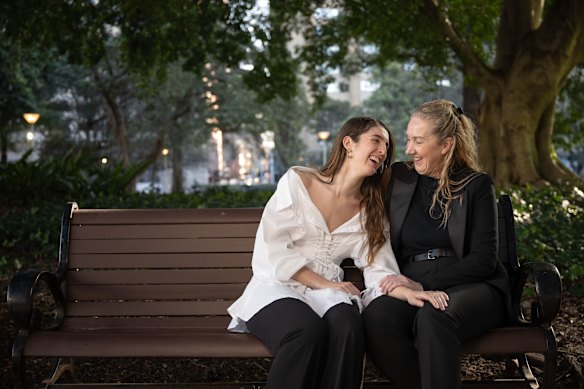
“I’m inspired by the way she’s alchemised our family’s trauma into something meaningful for others,” says Mia Gilmour of her mum, Megan.Credit: Wolter Peeters
Megan: Mia was a studious little girl. She’d get herself up and dressed, sit at the piano, practise her scales. She’s always been very vivacious – an extrovert to my introvert.
In June 2010, my 10-year-old son, Darcy – Mia’s brother – was diagnosed with three blood disorders. He and I were flown from our home in Canberra to Sydney Children’s Hospital for a bone-marrow transplant. Mia, who was 13, came to live with us at Ronald McDonald House. Being on that cancer ward was like living in a war zone and, in the crisis, Mia got completely overlooked. Sometimes, she’d storm out of the hospital and, blindly, I’d get angry and accuse her of being selfish. “Why are you doing this?” I’d shout. “Darcy’s lucky to wake up each day!”
We didn’t return home until the end of 2011, by which time Darcy was in recovery, but then Mia and I started having blow-ups as she told me how hard it had all been on her. When she said she wished it had happened to her instead of Darcy, I was stunned. I’d thought she was just jealous, but she’d actually been living with survivor’s guilt. She still got to go to school and see her friends, while Darcy’s world had shrunk to one room. This realisation became the starting point of Missing School [a non-profit co-founded by Megan in 2012 to keep sick and isolated children connected to their education].
Later, towards the end of a family holiday in Europe, when it was just me and Mia on our own in Rome, I realised I was unravelling. I hadn’t been sleeping and seemed to have lost all my trust in the world. I’d been elated that Darcy had survived, of course, but now I seemed to be consumed by guilt, too. Why had we been so lucky? More than anything she said or did – which was just to listen – Mia’s presence sustained me; she was still only 18. I thought, “My daughter is here for me in my time of need.”
‘We met ourselves in each other through suffering, joy and the radical act of showing up.’
Megan GilmourThen, in March 2021, Mia had her own crisis. One of the hardest things about any mental-health crisis is that our executive functioning, the part of ourselves that helps us navigate a complex situation, goes offline. She’d gone past the deadline for one of her postgrad assignments and I knew it was an important one. Talking to her on the phone one day, I said something stupid like, “It’s such a privilege to have this opportunity.” She hung up. I was shocked – and heartbroken. I know now she didn’t need perspective: she needed to feel safe.
We didn’t speak for three weeks – and I was devastated. I don’t recall who contacted whom in the end, but, when we spoke, something had changed. We talked more openly, more aware of each other’s feelings, and we both listened more. The time apart had been painful and made us both appreciate that not having each other would leave a wound from which neither of us could heal. It was the beginning of a new era.
Mia’s now a fully trained yoga teacher with her own business – and my best friend. I feel she can navigate anything. There’s fragility, complexity and strength in our relationship; we met ourselves in each other through suffering, joy and the radical act of showing up.
Mia: When I was six, I was bullied at school and Mum and I had to talk to the principal. When she said, “Mia causes trouble because she’s so sensitive,” Mum said, “We’re done here.” That was the first time I saw what a fierce advocate she can be.
After Darcy went to hospital in Sydney, I felt huge guilt that I got to live a normal life – going to school, seeing friends, playing sport – when Darcy was so sick. I represented everything he couldn’t have, so I tried to make sure that no one ever needed to focus on me. I made myself invisible, but it’s hard to be selfless at 14.
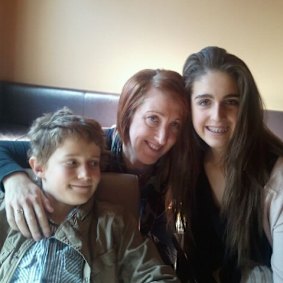
Megan and Mia, pictured with Darcy about six months after he left hospital.Credit: Courtesy of Megan Gilmour
I carried on keeping Mum at a distance after we got home. I’d been so self-sufficient for two years that I didn’t know how to let her love and attention back in. Mum invited me along to her yoga classes and we started going out for monthly “Mamma Mia” breakfasts, where we’d talk about school and how she was going setting up Missing School. We were rebuilding, becoming friends as adults. This feeling crystallised for me when we were in Rome. She was having a hard time, but it felt as if I was seeing her for the first time as a person, not just my mum. I reminded her of her resilience and tenacity, telling her, “I’m here with you; we’re good.”
‘In the years after Darcy’s diagnosis … I always felt as if something awful was going to happen: I didn’t trust life.’
Mia GilmourOne day, a stranger outside the house threatened me. It wasn’t a major incident, but it was like a dam inside me burst. In the years after Darcy’s diagnosis, even though he was now safe, I always felt as if something awful was going to happen: I didn’t trust life. We were in hard lockdown, too, only able to leave the house for short walks. This thing happening to me was confirmation, finally, that the world really was unsafe.
Loading
Mum had been calling regularly, helping me with my assignments over Zoom [Mia was studying for a graduate diploma in psychology]. She was so caring and reassuring but, one day, when I was struggling to get an assignment done, she said something that I felt was so minimising. The thing is, I didn’t feel lucky: my mental suffering was immense, despite bi-weekly check-ins with my GP and a psychologist. I told her I felt “unsafe” speaking to her – I hate that I said that – and hung up the phone.
In time, I realised Mum had only been reminding me I was clever, capable and fortunate when I felt certain I was hopeless and doomed – a victim. Ultimately, we ended up meeting somewhere in the middle and that’s where I rebuilt my belief in myself. Mum saved my life.
I love Mum’s tenacity, and that she’s so passionate about the work she does with sick kids. I’m inspired by the way she’s alchemised our family’s trauma into something meaningful for others. Training as a yoga teacher, and now teaching, has done that for me.
Most Viewed in National
Loading