3 months ago
28
3 months ago
28
It was described as a greenfield site – undeveloped, bare land, never used before. But a team of female designers and architects who created the new Willowdale Sports Precinct to service residents in a southern Sydney suburb near Campbelltown found it was anything but.
Thousands of years before retailers such as Bunnings or Barbeques Galore sold fireballs, made from clay or ceramics, Indigenous people in southern Sydney were manufacturing them on an industrial scale in East Leppington (now called Willowdale) to cook food for large groups in underground ovens.
“Essentially, it was a meeting spot to have a barbie,” said architect Gabrielle Pelletier, an associate director of Sam Crawford Architects (SCA), who won the 2025 NSW Emerging Architect Prize. “We loved that story. It was key for us.”
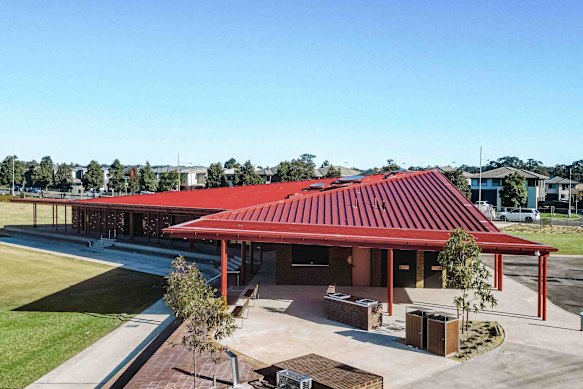
Willowdale Sports Precinct, Denham Court.Credit: RELD Group
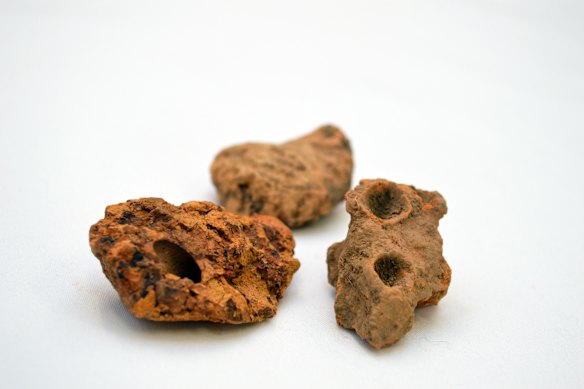
Clay balls found nearby, with holes where seeds had been pushed in to roast in an oven. Credit: Godden Mackay Logan Heritage
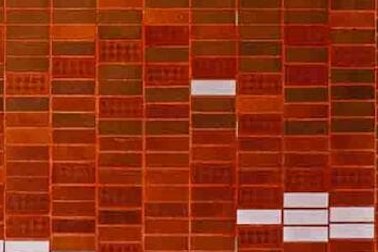
The bricks in the foyer are dotted with red balls of clay, about the same size and colour of the fireballs made on site. Credit: RELD Group
The colour and shape of these clay fireballs was reflected throughout the new centre, precinct and playground designed by Aspect Studio’s senior associate Natalie Bernuetz, with artist Sonia van de Haar, the creative director of Lymesmith, and Pelletier, the project architect.
Circular skylights created spotlights on the ground below. The shape is reflected in mirrors, lights and signs.
The blush-pink terracotta colour of the clay is reflected in the mortar and the bricks.
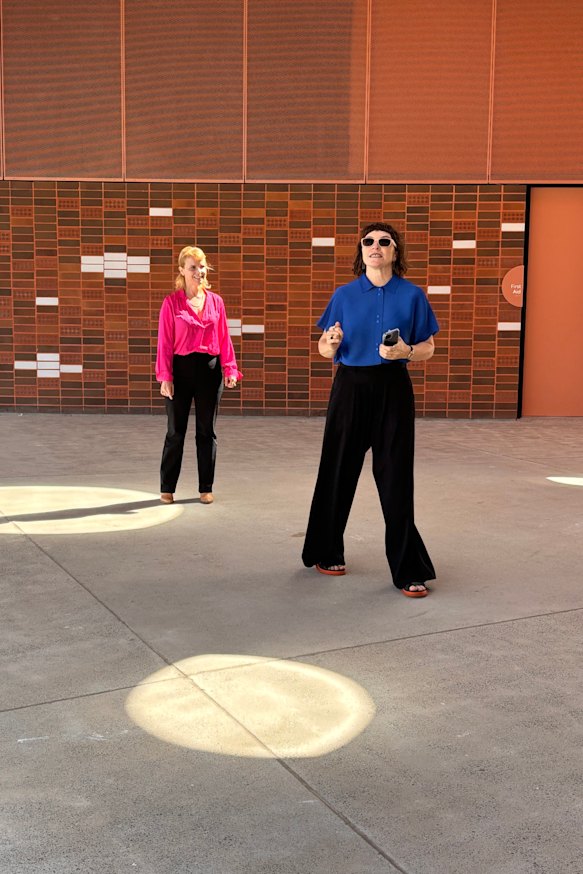
Architect Gabrielle Pelletier, an associate director of Sam Crawford Architects, with artist Sonia van de Haar, creative director of Lymesmith, look up at the circular skylights at the Willowdale Sports Precinct.
Van de Haar designed some bricks so they were dotted with lighter balls. They were handmade, she said, in much the same way as Indigenous people made the clay balls.
Combined with the white brick that breaks up the reds and browns, the building appears to hover like a spaceship at night, a beacon in the dark.
Far from the grey Besser block changing rooms that typified these sorts of facilities in the past, the Willowdale precinct is part of a trend towards high-quality suburban architecture.
SCA director Sam Crawford estimates that the number of buildings and urban design projects by his practice – ranging from Blacktown’s new animal rehoming centre, BARC, to toilet blocks and community centres – for councils has tripled in the past five years.
“We all know that loneliness and isolation is a growing social problem,” he said. Spaces close to nature, referencing local culture, brought together diverse groups of people.
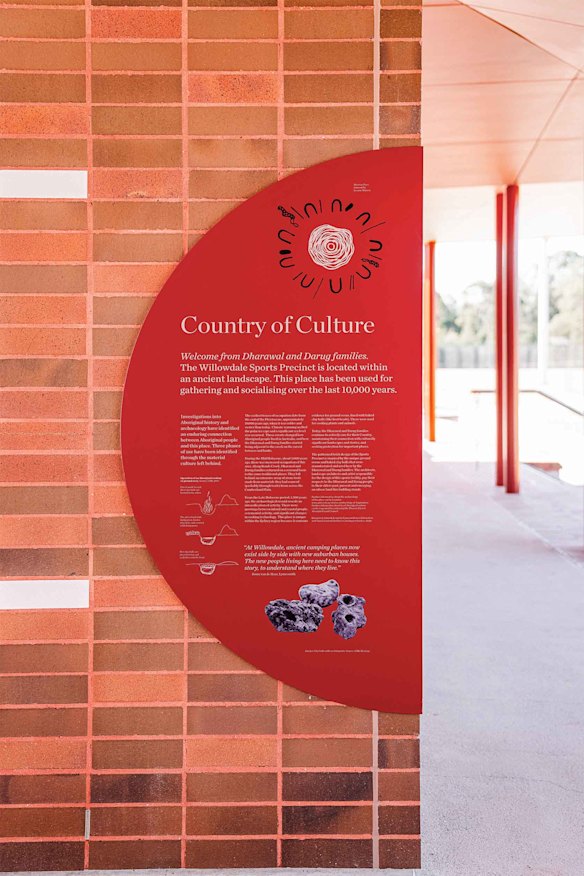
Willowdale Sports Precinct, Denham CourtCredit: RELD Group
The inspiration for Willowdale came from a report on the site’s 7000-year-old history by local Aboriginal people with archaeologists at Godden Mackay Logan (GML) Heritage. It had been commissioned by the developer, Stockland.
GML had found evidence of long-term habitation, including signs that the spaces had been divided into zones, used by family groups, for example, or for cooking, making tools, or dancing.
They also uncovered a “very unusual Aboriginal” site containing 13 clay ovens. “One was intact!” the report said.
Dug in a shallow hollow, the ovens were used by local Aboriginal people to roast food: “Similar to us roasting a chicken today” for large gatherings, the report said.
Clay (cooking) balls were placed on a fire to heat up and retain temperature. When the balls were hot enough to cook on, edible grasses or other plants were placed in the excavated hollow, the “game” (a bird, lizard, cut up wallaby, etc) on top of the plants, and the food was encased in the red-hot clay balls.
Like the public barbecues in the new precinct, the ovens (and balls) would have been used over and over.
Loading
GML did not know how or where clay balls were being made by Aboriginal people until a geophysical survey and excavation “uncovered a very unusual Aboriginal site – a clay ball manufacturing area.”
These balls were difficult to make, and the right material hard to find, but GML found evidence of an “industrial process of manufacturing” to make large numbers of balls. It included a fire pit and a flue or vent system.
Van de Haar of Lymesmith, which uses colour to amplify architecture and joy, was astounded when she read this report.
“I was like, ‘Holy shit, this story is incredible’. People should have a way to realise that it’s not a new site. People have been here for thousands of years. What was unique to me about it as a greenfield site was the level of archaeological investigation.”
Pelletier said taking on the rich environmental and human history of the site “was the real generator of the design for me”.
It drew on the site’s Indigenous and European past and current human settlement.
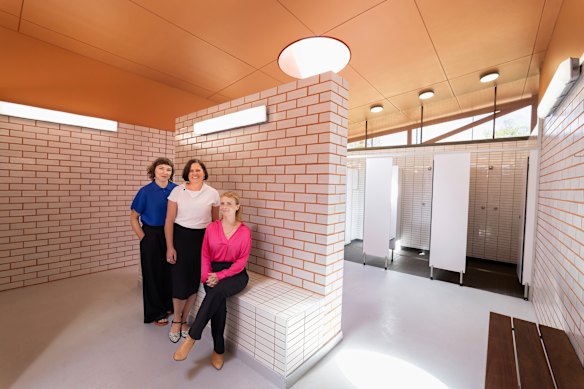
Sonia van de Haar, Natalie Bernuetz, and Gabrielle Pelletier were behind the design of the sports centre and precinct on Willowdale Drive, Denham Court.Credit: Sitthixay Ditthavong
A red corrugated steel roof references early European settler farm buildings. The side facing the street emulates the traditional pitched roofs of suburban homes, before dropping to a low, long verandah reminiscent of a rural shearing shed that provides shade.
Residents gave them “huge feedback” on the need for shade in the very hot summers. This led to an increase in covered areas, deeper eaves and more outdoor “rooms” with shade and wet weather protection for activities.
The women were also keen to make the sports centre lighter and safer night and day, especially for parents ushering children into the unisex changing rooms, by eliminating dark corners.
Bernuetz said she was particularly pleased that the playground was designed from the “year dot for all [cognitive and physical] abilities”.
A council worker said the only problem with the new facility is that it had lifted the standard – everyone else in the local government area wanted one too.