
 1 month ago
46
1 month ago
46
If opposition leader is the most unenviable job in politics, then Nationals leader in opposition has to be a close second.
Gurmesh Singh, a Coffs Harbour macadamia and blueberry farmer-turned-politician, was elevated to that position in November last year. Along with Liberal leader Kellie Sloane, who gained office only days later, he became a newly minted political leader just weeks before the country’s worst-ever terror attack.
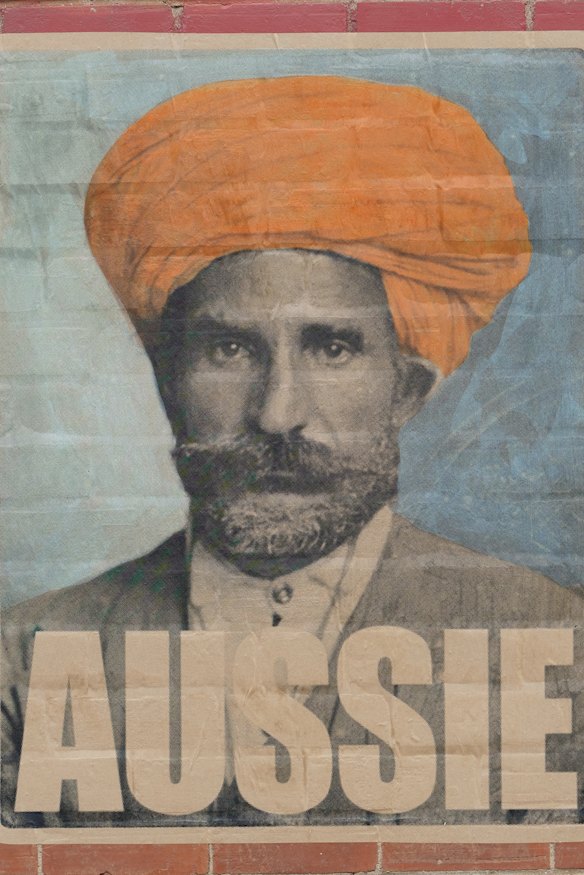
Now he’s the man tasked with saving his party’s regional NSW seats from a One Nation avalanche at next year’s election. He’s also the first Sikh elected to an Australian parliament and the first Sikh leader of a major party. He has a rich family history, and a portrait of Singh’s great-grandfather is plastered on walls around the country.
When we sit down to lunch on a rainy Sydney Tuesday, One Nation has been surging in the polls, and most of the talk on Macquarie Street about the Nationals often concludes with something like “they’re in major trouble”.
I know it’s probably not what Singh wants me to talk about but I can’t help but ask how he feels about Pauline Hanson’s surge in popularity and her calls for a monoculture, given his own background.
“I grew up in the ’80s and ’90s in what we would describe as Australian culture, in what some of these people are saying they’d like us to be,” he says. “It’s a good culture that I would also like to live in again.
“I look at myself [and my family] – we’ve got a different ethnicity, obviously we have different religious beliefs, and we might have slightly different festivals and religious celebrations, but I think you can do that while still being uniquely Australian as well, and I think that’s the more mature conversation that we should be having … how do we – and you can – do both.”
“I think what people are actually looking for is what we had back then. That’s safer streets, that was an economy that meant you could have a house with one income, it meant kids who were out on their bikes, meant you could go to the beach on a weekend – like, these are the things that people remember … It’s actually things that government should be striving for, right?”
The most recent Resolve Political Monitor conducted over June and July found support for the Coalition at the lowest in recent memory, down to 23 per cent and trailing behind One Nation, which sat at 25 per cent despite not yet having a single endorsed candidate for the NSW election.
Singh says he believes the tides will turn in the time between now and the March poll, and that Coalition policies like a reduction in payroll tax, released earlier than usual in this election cycle, will get people back on board with the core Nationals principles of smaller governments and better infrastructure for the bush.
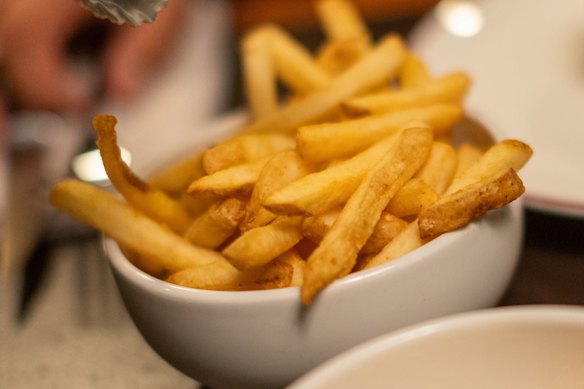
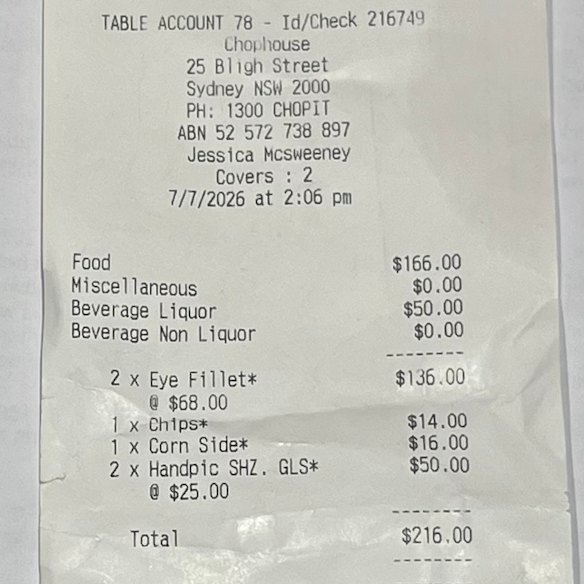
We’re lunching at Matt Moran’s Chophouse in Sydney’s CBD, a sophisticated steak house a short walk from Parliament House where Singh is familiar with the menu. He has a secret passion for hot chips, a love so deep that in his younger years he tried his hand at building an online map of his best reviewed offerings in Sydney.
The chips at Chophouse and Bondi’s Hotel Ravesis are up there among the best, he says, but so are those from parliament’s Long Bell Cafe. (I share this enthusiasm and am all too familiar with the salty, crunchy goodness, given the kitchen is mere steps from the Herald’s parliament office.) Another favourite is the KFC chip, which, he says, tastes best on a late-Thursday-night sitting day.
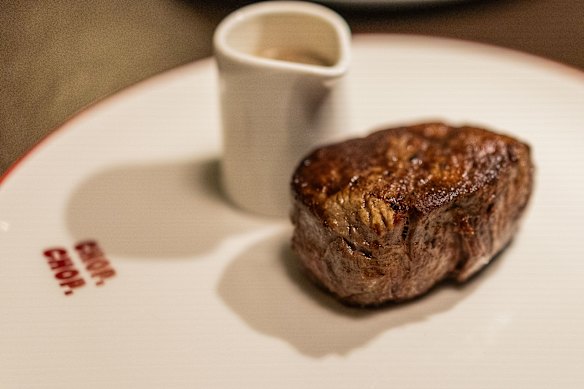
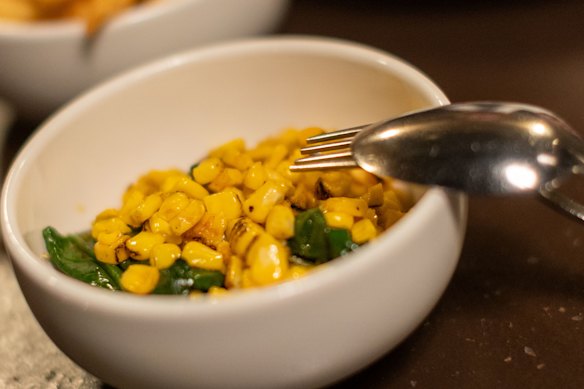
So of course we share a bowl of chips. He also selects the 200g eye fillet, and I’m quick to order the same, plus we get a side of charred sweetcorn with fermented chilli butter. Singh asks for no cheese on the corn; he’s so averse to the stuff that even the smell of melted cheese is enough to make him unwell.
Our plates are identical other than the sauce: peppercorn for Singh and mushroom for me.
Our waiter recommends a 2018 Barossa Valley shiraz before I get a chance to open the wine list. I’m more of a beer drinker and am always anxious about choosing the wrong wine, so I’m relieved to leave it in our waiter’s hands.
Singh is a “saltwater Nat”, lingo for Nationals MPs with coastal electorates, as opposed to their freshwater colleagues. His family first settled in Australia when his great-grandfather Bella Singh arrived in Cairns from Punjab in the 1890s and went to Harwood Island in the Clarence River region. Singh excitedly tells me he’s spoken with John Howard about this – his great-grandfather just happened to live in the small country town at the same time as Howard’s grandfather.
I’ve seen pictures of Singh’s great-grandfather long before we meet for lunch. His photograph is one of several used by artist Peter Drew for his famous “Aussie” series, taken from documents found in the National Archives of Bella Singh’s exemption from the White Australia policy language test. Getting in contact with the artist led Singh to spend hours poring over archives, finding troves of documents, some of which he is still yet to fully examine.
After World War II, Bella moved to the Coffs Harbour area to work and, a century later, that’s the electorate his great-grandson represents in the NSW state parliament.
Trying to win back conservative voters drawn to the anti-immigration rhetoric of One Nation without alienating the diverse members of his own electorate (Woolgoolga has a significant population of Indian heritage and is home to Australia’s first Sikh temple) will be a difficult tightrope to walk. The political fight ahead will test his leadership.
Singh finds respite from the pressure of NSW politics in what sounds to me like the grimmest of situations.
He’s an RFS volunteer, who enlisted after the Black Summer bushfires, but he tells me that, rather than fighting fires, most of his work has been supporting people on the worst days of their lives. Not as the boss but as the one who follows orders.
“It’s not something I’ve sought to promote necessarily but plenty of people have seen me out on the fires or at car accidents and stuff, and sometimes people were a little bit surprised to see me holding a Stop/Go sign or sweeping glass off the road or rolling up a pipe or whatever it is that we’re called to do on that day.
“I find it pretty rewarding. Given that I’m fairly junior in the brigade, I go there and take orders.”
One of the most confronting scenes he has responded to happened over Christmas while at a family dinner at a local beach. The brigade got a call and so Singh left the venue and headed two beaches over. A man had suffered a medical episode in the water and drowned. Paramedics were trying to resuscitate him.
As an RFS volunteer his job wasn’t to be the hero but to help retrieve supplies from the ambulance as others worked to save the man’s life. “That’s often what you’re confronted with rather than actual fire, although we’ve had some hairy fires as well.”
For the man with a title like NSW Nationals leader, his path to politics was fairly cosmopolitan. He attended UNSW and worked in a newsagent’s in Bondi. Straight out of university, Singh went to work for Qantas, in the marketing team, before working in software. He found a passion for politics after moving back home to farming.
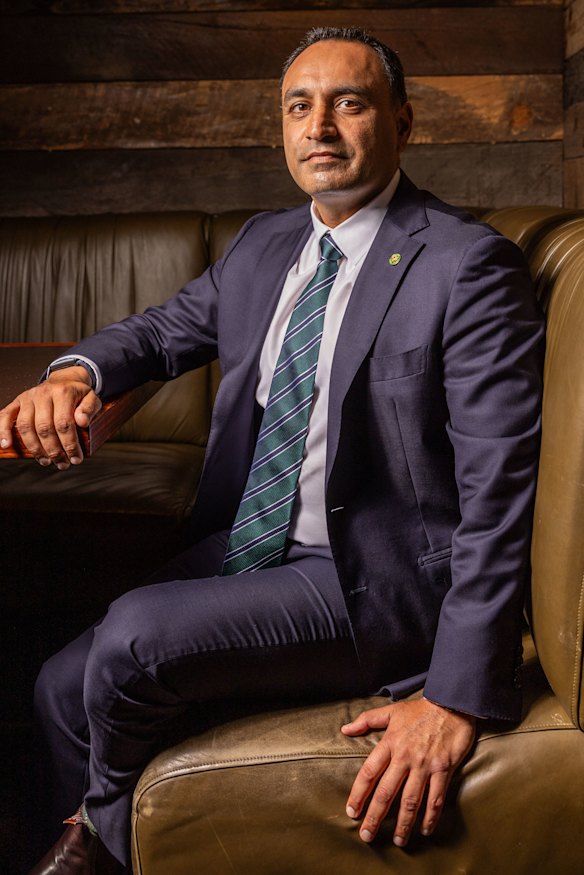
While previous media reporting has painted Singh as a humble blueberry and macadamia farmer, that’s only part of the story. He was actually director of the powerful blueberry farmers co-op Oz Group in Woolgoolga, and was vice president of the Australian Blueberry Growers’ Association.
The blueberry industry’s rapid expansion on the Mid North Coast hasn’t been without controversy, drawing concerns around pesticide use and lack of planning oversight.
Dealing with land-use conflicts in horticulture and running the co-op was how Singh got interested in state politics. “Even liaising with our local council, who had a couple of Greens councillors, their solution was to add more regulation when they weren’t satisfied the existing regulation were being followed.
“Well, that just punished the people who are already doing the right thing, rather than ‘let’s go after the people who are breaking the rules’.”
I tell Singh this reminds me of his argument against the recent tightening of gun laws in NSW. In the first test of his position as Nationals leader he chose to split from the Liberals to vote against Labor’s gun reforms, introduced in the days after the Bondi terror attack. It was a controversial move but one that played well with many of his farming constituents.
“Bondi was tough because I lived there when I was at uni. I worked there, I lived there, I was part of the community … To see that kind of terrorism brought to that place was especially tragic,” he says.
But the political choice when the premier recalled parliament in the days after the attack was simple, Singh says: “If we were in government we would have done something completely different.”
Before we head back to parliament our conversation turns to music and TV. We have similar taste in music and bond over Groove Armada. “I have the whitest taste in music,” he jokes.
We also both love ABC’s Utopia, which at times I have to switch off because it reminds me too much of dealing with bureaucracy in my day job. Singh talks a lot about regulation and red tape grinding his gears, so it feels right that we’re ending on our shared love of TV’s biggest send-up of government.
“I think we should start calling common sense ‘uncommon sense’ since it seems to be missing from a lot of places,” Singh says.
Read more great conversations over lunch
Jacqueline Maley explores loss with Bob Carr: Bob Carr on marriage, grief and finally learning how to do a load of laundry
Stephen Brook asks Michael Rowland about his future: In the space of 14 months, Michael Rowland upended his ABC life. There’s more upheaval to come
Margot Saville laughs with Kathy Lette: Kathy Lette on ageing fabulously … and giving cheek to the King
David Wenham bares his scars to Louise Rugendyke: David Wenham on cancer, getting older and being lusted after
Start the day with a summary of the day’s most important and interesting stories, analysis and insights. Sign up for our Morning Edition newsletter.

















































