3 months ago
27
3 months ago
27
Steven McKenzieHighlands and Islands reporter

 RZSS
RZSS
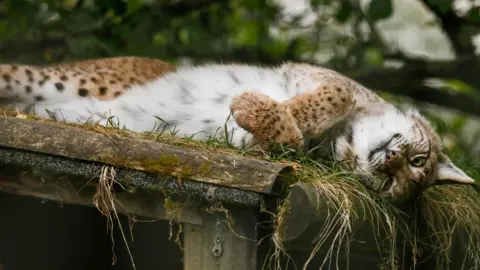
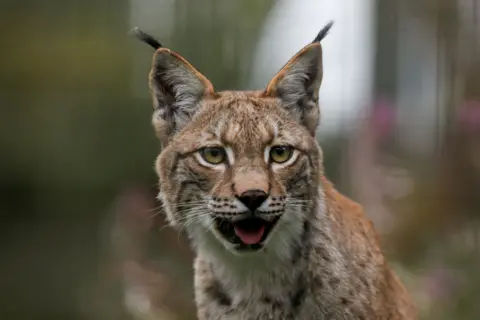
Cardrona's keepers say she is the boldest of the three lynx that survived their ordeal last January
Three lynx that were found starving after being abandoned in the Highlands a year ago are now thriving in a wildlife park, say their keepers.
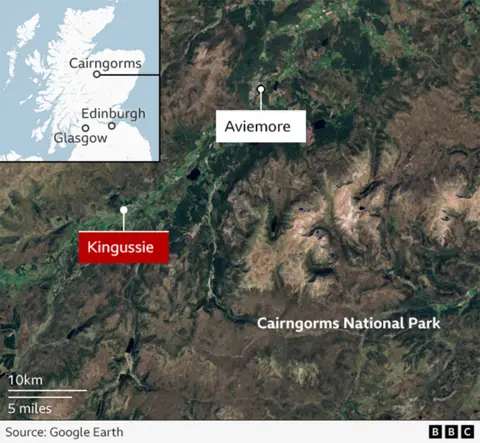
The female cats were spotted near Kingussie before being captured. A fourth lynx, a male, was also trapped but later died.
Their illegal release remains a mystery and Police Scotland says its inquiries to find the perpetrators continue.
The females were given a home at the Highland Wildlife Park, near Kincraig, and staff say the cats are living "happy, enriched" lives.
The drama unfolded over several days last January, deep in a snow-covered Cairngorms National Park.
Two lynx were spotted on Wednesday 8 January in the Drumguish area near Kingussie in a landscape of sweeping wetlands, woods and farms.
A team from Royal Zoological Society of Scotland's (RZSS) Highland Wildlife Park managed to catch them a few hours later.
They were caught using cage-type traps baited with venison and quail, a small game bird.
The traps were fitted with doors that closed once the cats were inside.
In the wild lynx are elusive and rarely seen by humans, but these two appeared to be tame.
One sat looking back calmly as a headtorch was shone at it, and when an RZSS keeper spoke to the lynx it did not run away.
Friday morning came and police warned that two more lynx had been spotted in the same area.
A new search was launched involving police, RZSS, park rangers and a drone from Cairngorms Mountain Rescue Team.
The lynx were captured later that day and, like the previous two, showed no fear of people and were not aggressive.
RZSS said the cats walked straight into the traps set for them.
Watch the moment two of the lynx were captured
On the Saturday it was confirmed the male lynx had died overnight.
RZSS, which took the three survivors into its care, said all four lynx had shown signs of starvation.
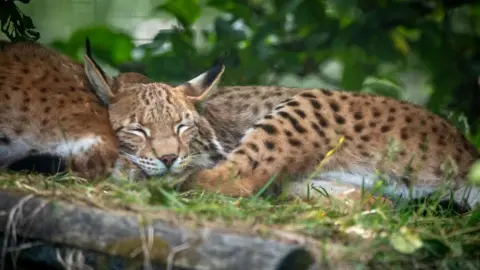
They were young - about six to eight months old - and described by experts as "naive" and unlikely to have been able to find food for themselves.
Lynx were once native to Scotland before dying out hundreds of years ago.
Charities campaigning to have the species reintroduced condemned last year's illegal release as an "irresponsible act".
The captured lynx arrive at their new home at Highland Wildlife Park last year
 RZSS
RZSS
RZSS said Bluebell and the other cats displayed different personalities
After being quarantined and given health checks at Edinburgh Zoo, the three survivors were moved the Highland Wildlife Park.
They were given names - Caledonia, Cardrona and Bluebell.
A year on since their ordeal, RZSS said the cats had settled in well in their new home.
"Their outgoing nature keeps us on our toes, and they have become a firm visitor favourite," said Lucy Petrie, animal operations manager at Highland Wildlife Park.
"Now that they feel at home their personalities are really starting to shine.
"Cardrona is the boldest of the trio, leading the way with her curious and mischievous nature."
 RZSS
RZSS
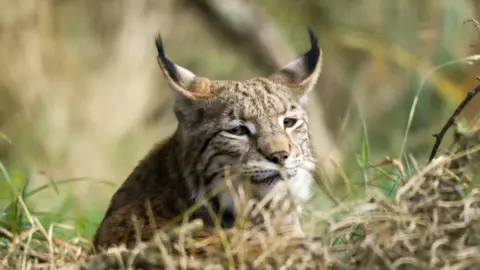
Caledonia is the most agile of the three
She said Caledonia was agile and could often be seen climbing trees in her habitat, while Bluebell loves to play with her food, tossing her meals in the air during feeding time.
Ms Petrie added: "It's unlikely the lynx would have survived for very long after they were abandoned so we're happy to see them living happy, enriching lives at the park.
"They all enjoy chasing each other early in the morning and playfully stalking birds. Their absolute favourite spot is relaxing together on top of their house."
The unsolved mystery
 RZSS
RZSS
RZSS said the cats were young, tame and unlikely to have been able to find food on their own
A possible clue to where the lynx - dubbed the Cairngorms Four - originated from was reportedly found near where they were spotted.
BBC Scotland News understands bedding was discovered with porcupine quills in the straw.
Did whoever release the cats own other exotic animals?
A licence is required under the Dangerous Animals Act to keep lynx.
Local authority Highland Council said last year that no premises in the area had applied for, or were operating under a Dangerous Wild Animal (DWA) licence, suggesting they had come from somewhere else.
Scotland's nature agency NatureScot also said at the time it had not granted any licences for the reintroduction of lynx.
Police have told BBC Scotland this week that there were no updates in the case and their inquiries were on going.
Asked if RZSS had any theories, Ms Petrie said: "We can't speculate on how or why the lynx were abandoned as it's the subject of an ongoing Police Scotland investigation.
"Releasing animals into the wild without the necessary research, planning and consultation is reckless and risks harming both wildlife and local communities."
She added: "Conservation must be guided by science, collaboration and long-term planning – not by impulsive actions, no matter how well-intentioned they may be."