3 months ago
21
3 months ago
21
Voters are throwing their support behind Australia’s teen social media ban, although most are sceptical that it can work – and less than a third of parents are planning to fully enforce it, new polling shows.
Nearly 70 per cent of voters back the world-leading ban, which is set to take full effect on Wednesday, but only 35 per cent are confident that social platforms will manage to effectively block users under the age of 16.
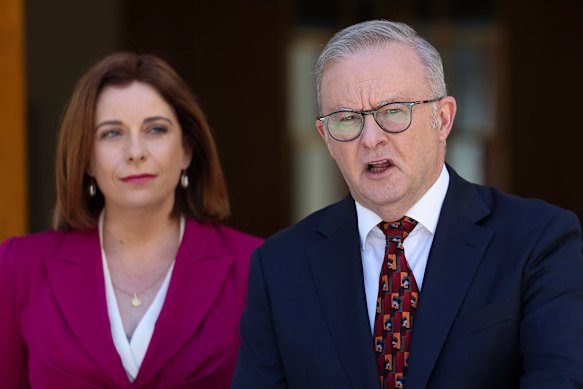
Prime Minister Anthony Albanese and Communications Minister Anika Wells will spend this week spruiking the laws.Credit: Alex Ellinghausen
The polling, conducted by Resolve Political Monitor for this masthead, found that 29 per cent of parents planned to fully enforce the ban by deleting apps off their kids’ phones, while 53 per cent said they would pick and choose what their child could access and that they would review parental controls. Thirteen per cent plan to take no action on the ban.
Loading
Prime Minister Anthony Albanese on Sunday claimed victory over tech giants such as Meta and Google, saying Australia’s initiative had won support in Europe, Asia and elsewhere.
Pushing back on complaints his government was too cautious, Albanese said the move to protect children from tech giants was revolutionary.
“This can be a source of national pride,” he told this masthead on Sunday. “It’s a big reform that will impact not just this generation but ones to come.”
The survey of 1800 voters conducted last week showed 67 per cent in favour and just 15 per cent opposed (the remainder were undecided), adding weight to Labor’s strategy of relying on goodwill among parents to override concerns about whether the ban is practical.
This time last year, 58 per cent were supportive, indicating voters liked the idea the more they heard about it, a rarity in politics.
Albanese and Communications Minister Anika Wells have said some teens would find ways around the ban, although easy workarounds in the early months might dent the ban’s credibility.
As families prepare for a summer with teens unable to occupy themselves with apps such as Snapchat, the bipartisan consensus around the teen limit, initially proposed by the Coalition, appeared to be cracking.
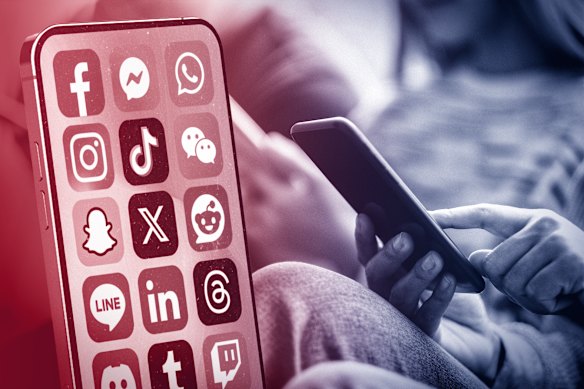
The teen social media ban will come into force from Wednesday, December 10.Credit: Nathan Perri
The Coalition is tapping into voter scepticism that the ban will work but that it risks going against the wishes of parents, as the government scrambles to get on top of a wave of new apps that mimic the banned apps and can still be accessed by teens.
Stories have emerged of teens using photos of celebrities, their parents or older siblings to get around facial recognition. Teens might also use virtual private networks. Young activists have said being pushed off social media will disenfranchise them.
The onus is on tech firms, which have fought the laws, to bring in technology to age-gate their apps. Facing the prospect of $49.5 million fines if they fail to take “reasonable steps” to stop under-16s from having accounts, Meta last month started removing children from Instagram and Facebook.
Companies are relying on several factors to determine those held by children, including facial or voice analysis, activity patterns that indicate account holders are at school, and the length of time the account has been active. Phones are already banned in most schools.
Platforms captured by the laws include Snapchat with an estimated 440,000 under-16 users, Instagram with 350,000, TikTok with 200,000, Facebook with 150,000, as well as Kick, Reddit, X, YouTube and Threads. Discord, Messenger, WhatsApp, Pinterest and others were not included because they are primarily used for messaging or gaming, but the government is open to amending the laws if children flock to new spaces and harmful content is picked up.
“It is a success already,” the prime minister said on ABC’s Insiders. “What’s happening is that parents are having this discussion with their young ones.”
Pointing to proposed changes in the European Union, Malaysia and New Zealand, Albanese said it was important that Australia had used the United Nations to build global support.
“We have others in our corner now, rather than the potential … for us to be isolated by these giants, the big tech companies who have a lot of power and influence,” he said.
The Coalition was unequivocally in favour of the ban last term, but Coalition MPs, as well as teal and Green politicians, have started to question the move.
Opposition frontbencher Alex Hawke on Sunday said the government had banned YouTube without saying so before the election to avoid a backlash.
Loading
“The jury’s well out,” Hawke said on Sky News’ Sunday Agenda when asked whether the government had handled the policy effectively.
“I speak to families in my electorate, I speak to people who have kids, my own kids, there hasn’t been enough work done on the preparation for this launch.”
Wells said on the same program: “This is going to look untidy on the way through, big cultural reform always does.”
Resolve director Jim Reed said Australians were warming to the social media policy but that people had doubts.
“The same is true of tobacco excise and net zero [emissions by 2050],” he said. “But doing something is better than doing nothing, it seems. Voters don’t want to let the perfect be the enemy of the good.”
Cut through the noise of federal politics with news, views and expert analysis. Subscribers can sign up to our weekly Inside Politics newsletter.
Most Viewed in Politics
Loading