3 months ago
27
3 months ago
27
Katy Austin,Transport correspondentand Emer Moreau,Business reporter

 Getty Images
Learner drivers could have to practice for up to six months before they are allowed to sit their practical test
Learner drivers in England and Wales could face a minimum learning period of up to six months before sitting their practical test, the BBC can reveal.
The government will unveil the measure, which will be subject to consultation, as part of its wider road safety strategy launched on Wednesday.
The shake-up of driving laws is aimed at reducing the number of people killed or badly injured on Britain's roads by 65% over the next decade, and by 70% for children under 16.
Around a fifth of all deaths or serious injuries from crashes involved a young car driver in 2024.
The government believes a minimum period between sitting the theory test and the practical test would help learner drivers develop their skills, including driving in different conditions.
The Department for Transport will consult on three or six months for the minimum learning period.
It would include any informal learning they may do with parents or guardians as well as formal lessons with a driving instructor.
Evidence from other countries suggests minimum learning periods could reduce collisions by up to 32%. Currently, learner drivers can take lessons from 17 and book a practical test as soon as they have passed a theory exam.
The majority of driving tests in Britain are taken by under-25s. In 2024-25, about 55% of tests were taken by drivers aged 17-24.
Learner drivers currently face a waiting time of around six months to take their practical tests anyway, due to a backlog from the Covid pandemic. The backlog is expected to last until late 2027.
The proposed changes could see an end to teenagers passing their tests days after turning 17, meaning the youngest drivers would be at least 17 and a half.
Graduated driving licences
There have been vociferous campaigns for "graduated driving licences" (GDLs) to be introduced in the UK. Different countries have varying types of GDLs, such as not allowing newly qualified drivers to carry passengers or not letting them drive at night.
Proponents of GDLs include some parents of young people who have died on the roads.
Sharron Huddleston started campaigning for GDLs to be introduced eight years ago after her daughter Caitlin was killed in a crash aged 18.
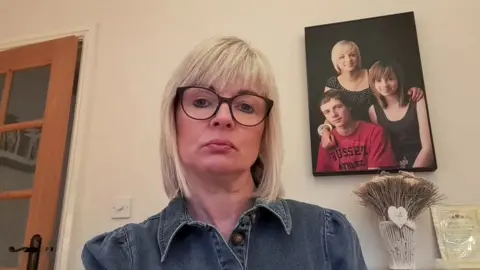
Sharron's daughter Caitlin was killed in a car being driven by a novice driver
Sharron supports the proposed minimum learning period but said: "We need the post-test safety precautions as well."
The driver, Skye Mitchell, who was also killed, had passed her test four months earlier.
Sharron believes Caitlin "would still be here" if the UK had graduated driving licences which forbade newly qualified, young drivers from carrying passengers their own age.
"All the girls [in the car] were 18," she said.
"This is the strongest element of a graduated driving licence that would save many young lives."
The AA has welcomed the measures announced by the government, but said not introducing GDLs was "a missed opportunity".
Its president Edmund King told the BBC that "all the evidence, from Australia, from Canada, from other countries" shows that limiting the number of same-age passengers in a car for six months "will save lives".
He said of the learning period: "That will help, but the question is: does it go far enough?"
The road safety strategy will also include proposals for a lower drink-driving limit in England and Wales, to bring them in line with Scotland. Novice drivers would have an even lower limit, which is already the case in Northern Ireland.
The BBC revealed in October that further research into headlight glare would be included in the strategy.
Twenty-one-year-old Alisa Fielder from Surrey passed her test as a teenager but crashed a year ago as she was trying to overtake a lorry on a motorway. Nobody was injured, but her car was written off.
"I took too long checking the blind spot and all the cars in front had stopped," she said.
"If I had maybe taken some more lessons then I would know that you can't really take that long."
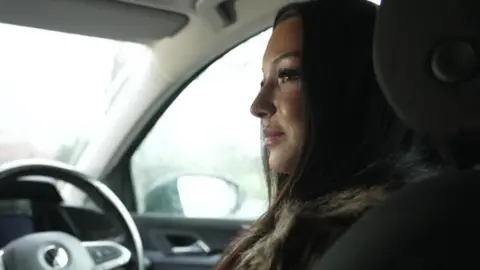
Alisa did a driving assessment four years after getting her licence to see what skills she could improve
She didn't drive for a year after the crash. She has since done an informal assessment with charity IAM RoadSmart to boost her confidence and figure out what she needs to work on.
"I wasn't driving to the best standard and that's why I had a crash."
Alisa said the process of becoming a better driver should continue after a person passes their test. "Maybe more lessons that you're required to take with a professional."
Local Transport Minister Lilian Greenwood said young people make up just 6% of all drivers, but are involved in nearly a quarter of fatal and serious collisions.
"Inexperience puts drivers, their passengers, and other road users at greater risk," she said.
The proposed learning period "is all about supporting young drivers to develop the confidence they need to stay safe and giving them more time to build their skills and gain experience in different driving conditions".