
 2 months ago
61
2 months ago
61
Until the federal budget, Kristian Williams had given up on ever owning a home. The 35-year-old consultant had tried to save for a deposit before, but was disheartened by the rate at which house price growth outpaced his ability to save.
“I was trying to save pretty aggressively ... and you just read there’s another 7 per cent increase this month, there’s a 2 per cent increase this month, and it’s like my savings haven’t increased much, so it just feels like a runaway dream at that point,” he says.

He was 31, and he’d given up almost everything – to no avail. “It takes a lot of joy out of your lifestyle when you’ve got to really focus on saving and cutting corners as much as you can,” Williams says.
He gave up and moved to Korea and Japan, where the cost of living was cheaper, and when he came back to Australia this year he didn’t plan to start looking for a home again – but the budget reforms changed his mind.
Other first home buyers also sense an opportunity. An investor tax overhaul has deepened property price falls. Some investors have shied away from the market, which has tilted the market further in first home buyers’ favour.
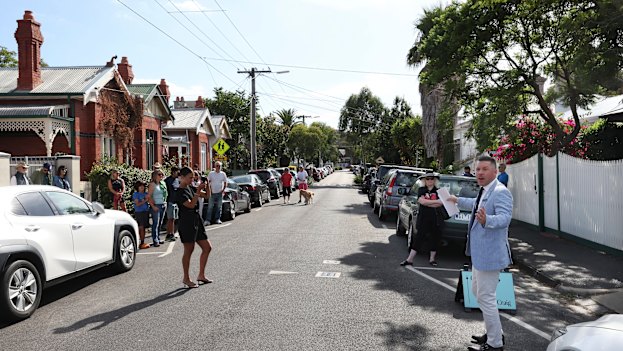
Even in Melbourne, where home values have tracked sideways for four years amid an increase to state taxes for investors and a lacklustre economy – and where first home buyer activity has been higher than average – first time buyers have been in the box seat at auctions over the past month.
Of the nation’s eight capitals, Melbourne property is now the third cheapest. According to Cotality, the median Melbourne home is now worth $812,621, down 0.8 per cent in May.
Investors have recently reconsidered their plans – those investors still left in the market after many already pulled back a few years ago to avoid higher land tax bills.
Meanwhile, home sellers are adjusting their price expectations in light of buyer caution, rate hikes and economic uncertainty.
Williams moved in with his mother in Port Melbourne. “It’s given me a bit of an edge to save,” he says.
“The noise that surrounds it feels like the wind has been taken out of the back of the property market,” Williams says. “It’s slowing, and it’s not growing any more, which I know sounds horrible … but it gives me a chance to get in.”
A “re-balance” of the tax system
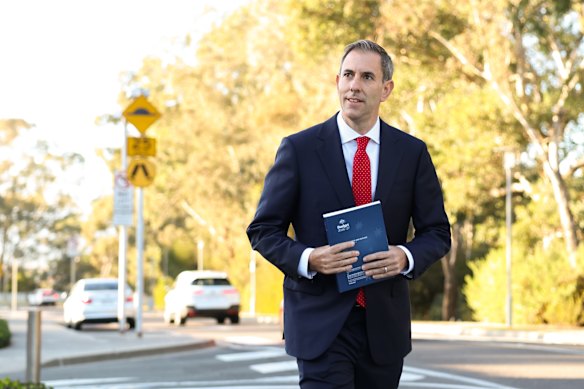
Labor used its May budget to shepherd in “the most ambitious budget in a generation”, promising to re-balance the tax system in favour of younger, less wealthy Australians, Treasurer Jim Chalmers said.
The biggest changes include restricting tax breaks for negative gearing to new builds while grandfathering existing investors, and scrapping the capital gains tax discount in favour of taxing above-inflation gains. Investors in new builds may choose the old capital gains tax discount.
Economists have long argued that the combination of a capital gains discount and negative gearing has cut young people out of the housing market, fuelling social dislocation.
Independent economist Saul Eslake has been tracking the housing market for decades, and says the shift from housing as a basic human need to a vehicle for wealth accumulation over the last 30 years has skewed the market towards investors.
“What the federal government is trying to do is reduce the demand from investors for existing properties, whilst encouraging investors to continue to buy new ones … so that home buyers have a better chance of succeeding at auctions,” he says.
“So if what you’re seeing, and the press is reporting, is investors staying away and first-home buyers having a nibble, well, that’s the point.”
Hope for first-home buyers
Williams has been watching the news. “I’m feeling a little bit more confident now, because if people are starting to think about selling investment properties — that opens up a bit more stock on the market ... [and means] I won’t be buying into a crazy hot market,” he says.
A recent consumer trend report from Insights Exchange found that one in three Australians aged 18 to 29 still live with parents or in-laws, and that only 9 per cent of Australians plan to save for a home deposit over the next five years.
“This really shows that young people are putting off moving out of home and delaying even being able to buy a home,” says founder Nichola Quail. The budget changes, while a good first step, will take time to filter through and help first home buyers enter the market, she adds.
“Given that much of what the budget came out with [things like] the local infrastructure fund, the impact of the negative gearing – yes, that’s going to help, but not in the next 10 years, so then these first home buyers will be in their 30s, even in their early 40s,” she says.
House values have fallen across almost all price points in Melbourne over recent months, with the biggest losses for sellers concentrated in the top end of the market.
The upper quartile – also known as the family home market – of properties has been hit hardest, falling 4.1 per cent in Melbourne over the three months to the end of May. Domain research this week predicts house prices could fall as much as 8 per cent in Melbourne over the next 12 months.
And while the Reserve Bank kept the cash rate on hold at 4.35 per cent this month, RBA governor Michele Bullock raised the possibility of further hikes.
Cotality head of research Gerard Burg is not convinced that the budget is solely responsible for the cooling market. While the changes may have affected investor activity in Melbourne, he points out it is but one of many factors that have been affecting demand.
“We’ve had three rate rises, existing affordability challenges ... the impact of the Middle East conflict on energy prices, and then we’ve had this more recent investor impact from the budget,” he says.
“They’ve all been pushing in the same direction, so trying to split out how much is down to investors, how much is down to any of these other factors is pretty challenging.”
The decline in clearance rates indicate fewer buyers, Burg says, both from the investor side and potential owner occupiers.
“But we tend to think the rate rises are probably the big driver, because that’s really impacted on household budgets and the ability to get into the market,” he adds.
Since February, the Reserve’s three interest rate increases have added nearly $300 in total to monthly repayments on an average mortgage of $600,000.
Rethinking property plans
Tiffany Doan, acquisitions lead at buyers’ agency MECCA Property, is both an investment adviser and an investor.
While her goal before the budget was to buy an entry-level commercial property, she and her husband Joshua Jeffrey have since pivoted to Melbourne’s inner-ring boutique apartment market, buying a two-bedroom, one-bathroom unit in South Yarra for $565,000.
“The most important thing is ensuring we have sufficient cash buffers and that we’re only taking on assets we can comfortably afford to hold,” she adds.

Jeffrey agrees that while the budget hasn’t impacted the couple’s decision to invest in property, it has reduced their borrowing capacity. “This has resulted in a shift of location and types of properties we might invest in, such as units with a land component becoming increasingly valuable,” he says.
Doan says while some buyers are adopting a “wait-and-see” approach to the budget, others are shifting towards the more affordable market.
“Many buyers have been priced out of houses and townhouses but still want access to desirable lifestyle locations close to the CBD,” Doan says. “As a result, we’re seeing increased interest from first-home buyers, owner-occupiers and investors looking at quality boutique apartments under the $600,000 price point.”
Hobart-based Jake Stalker, 31, and his husband have the same idea. The couple purchased a one-bedroom Richmond unit for $335,000 as an investment two days post budget, despite knowing that negative gearing would likely be restricted.
“We were actually looking for an investment property that would avoid negative gearing,” he says. “There are very few markets that we saw across the country where yield is as high compared to the purchase price as in Melbourne.”
The couple was looking to buy in Brisbane, but realised it was unaffordable.
Stalker and his husband are not looking for extensive capital growth. “We just want a little property that pays its own way, and is similar to the investment property we have in Hobart,” he says.
Woodards Elsternwick agent Sean Rice, who helped Stalker buy his property, says investors are still around, if acting a little more cautiously.
“They are still readjusting to the potential expectations – the new rules to pass Parliament,” he says. “But once investors do the numbers, Melbourne real estate is still relatively cheap but with high rental yield, so it’s a balancing act of buying the right opportunity.”
Buyers “lacking in confidence”
Whether it’s down to the budget or not, buyers are more nervous, says Ray White Southbank agent Tommy-Lee Davies.
“Buyers have been more hesitant and lacking confidence,” he says, adding there are a lot fewer out there. “We have launched properties and expected them to do better than they have.”
Investors – many from Sydney – have been dropping out of auctions, selling more often and also “making ridiculous offers, thinking they can buy something half price”, he says.
“Investors have just lost confidence in their property growing – they are giving up on Melbourne,” Davies says. First home buyers are still around, if a little more nervous, and owner-occupiers looking to upsize are still selling, even if it’s at a bit of a loss.
“But they will probably be buying for a bit less in that market as well, so it’s a good time for that,” he says.
Gary and Nicola Klein, represented by Davies, put their two-bedroom, two-bathroom inner-Melbourne apartment up for sale in February, but only recently sold it.
Over the months, they have seen interest in their property wane as rate rises, the cost of living crisis and the price of fuel battered people’s hip pockets.
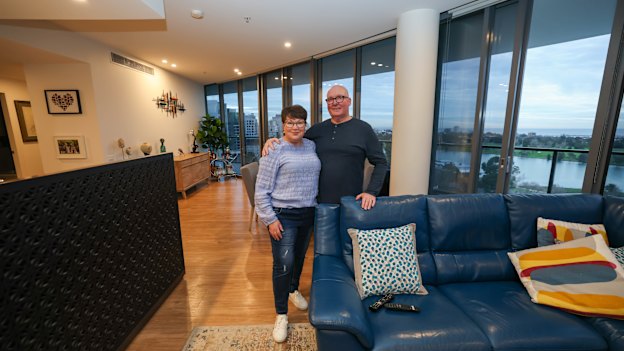
The budget, Gary says, was the last straw.
“We were really fortunate to sell our place, because basically over a period of three to four weeks, with all these things considered … the leads and people coming through our unit basically dried up,” he says.
The couple ended up dropping the price 10 per cent and selling to a buyer who was there from the beginning.
“The budget just bought everything to a halt,” Gary says. “I’m not sure what the long-term consequences of the budget will be, but certainly the immediate consequence has been to cool the market rapidly.”
Start the day with a summary of the day’s most important and interesting stories, analysis and insights. Sign up for our Morning Edition newsletter.

















































