
 2 months ago
62
2 months ago
62
Before we even sit down for our lunch on the top floor of the Australian Museum, Kim McKay has already launched into the first of many entertaining anecdotes.
Yet to start the voice recorder, I am forced to take notes the old-fashioned way – with pen and paper and rusty Teeline shorthand.
McKay is now director and chief executive of the Australian Museum, but the story was about her time at the National Geographic Channel in the United States 20 years ago.
Tasked with promoting a film, she organised to meet the scientist behind it – Dr Spencer Wells, then a geneticist at Oxford University. She was on a layover; he drove down from Oxford to meet her at Heathrow Airport.
Over a bottle of pinot noir, Wells told McKay about how he had traced the migratory route of early humans from Africa to Australia, based on 10,000 samples of human DNA. McKay’s first question was: “What if you had 100,000 samples?”
“He said, ‘it would fill in the gaps in human history, it would tell us this whole story of man’,” McKay tells me. “So I said, ‘well, why don’t we do that?’.”
From that came the Genographic Project and a campaign to get 100,000 DNA swabs from the general public. McKay landed IBM as a partner to build the world’s largest database of DNA results, which were all confidential since the purpose was de-identified science not individual medical history, and launched a cheap swab test kit for the public on the US Today Show.
Since then, National Geographic has sold millions of the kits, with profits funding language and cultural preservation in indigenous communities.
The story is prompted by a colleague coming to say hello and is relevant to the work the museum does with DNA research to study natural history, but it also speaks volumes about her energy and propensity to think big. With my journalist hat on, it is also reassurance that if nothing else, lunch will not be boring. Sometimes I have to work to put an interview subject at ease, but McKay is clearly in her element. My only job is to keep up.
McKay has headed up the museum, which happens to be in Sydney but is one of Australia’s most important scientific institutions, since 2014. This year she also became the chair of the Council of Australasian Museum Directors, the peak body representing 24 major museums across Australia and New Zealand.
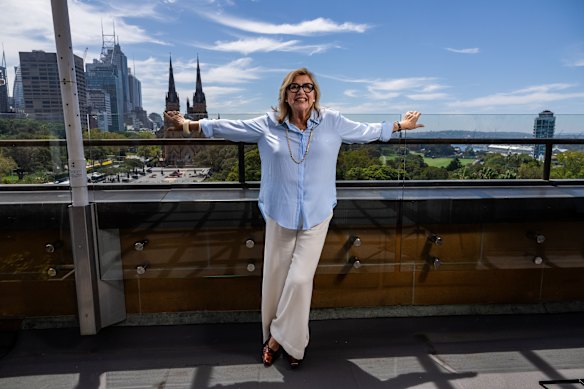
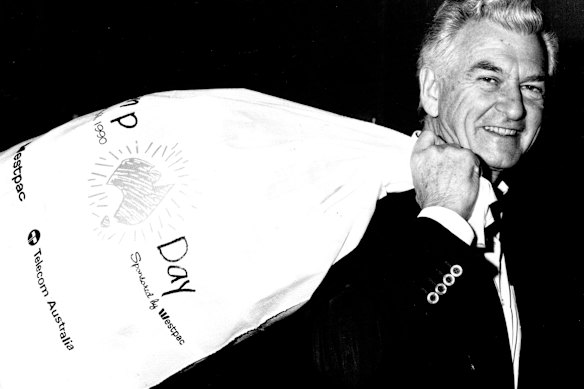
I ask about a piece of jewellery McKay is wearing – it turns out to be her Officer of the Order of Australia pin. This is the second-highest rank in the Australian honours system, and was awarded to McKay mainly for her role in co-founding Clean Up Australia and Clean Up the World along with Ian Kiernan in the 1990s.
Recently, McKay’s name has been discussed as a possible successor to Louise Herron who is stepping down from the helm of the Sydney Opera House. However, McKay says her experience and passions are in science and the environment not performing arts, and no one has rung her. While she believes in “never say never”, she is not looking to leave. “It’s the museum’s 200th anniversary next year, and I’m really committed to being part of it – what a privilege that will be,” she says.
McKay is clearly proud of her track record over the past 12 years. Highlights include the big renovation during the COVID-19 pandemic and making admission free. Her key performance indicator from government was to increase visitation – it was 340,000 a year when she joined, and now it’s 1.5 million, she says.
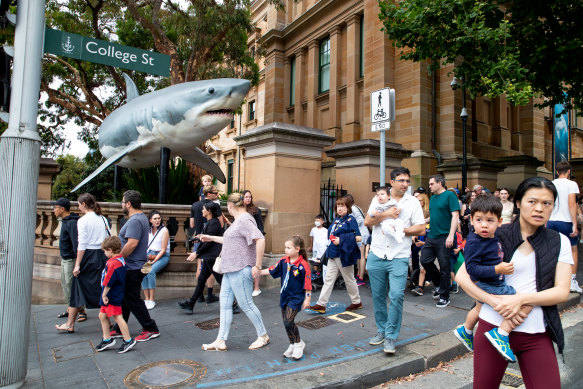
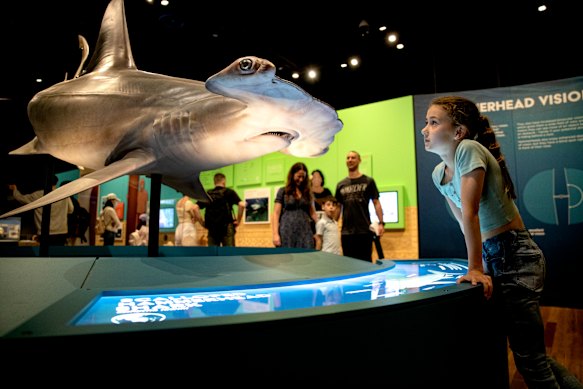
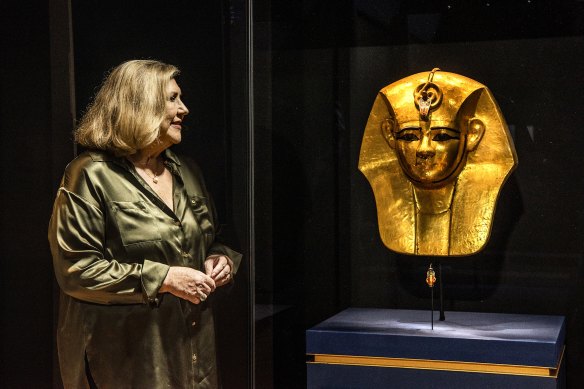
NSW Treasury gave the museum an offset for forgoing entry fees, but the increased visitation has boosted revenue from gift shops and food venues such as Bistro Gadi where we are having lunch and the casual cafe on level 2. The museum also makes money from events and special exhibitions, including the blockbusters from overseas such as Ramses & the Gold of the Pharaohs and homegrown hits that later tour such as Sharks.
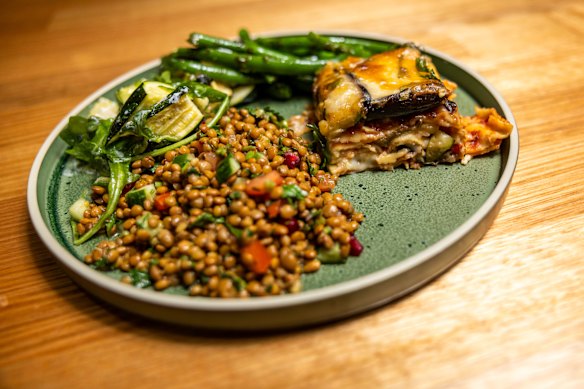
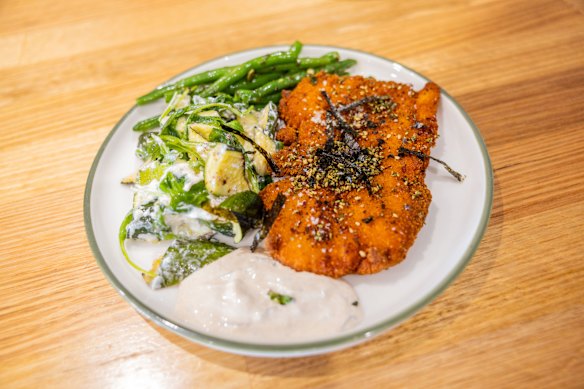
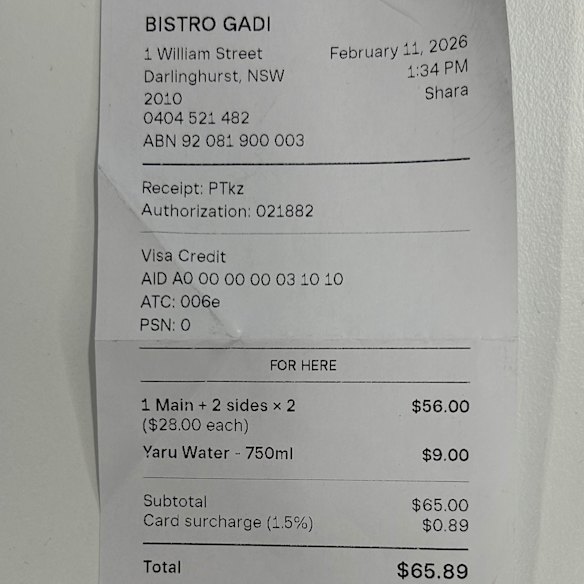
The food at Bistro Gadi is different every day – you choose a main and one or two sides. McKay orders karaage chicken with green beans, while I choose a very tasty pasta al forno with green beans and a lentil salad.
The less publicly visible side of the museum is its scientific research. Last year, museum staff discovered, named, wrote and published on 293 new species, which McKay says is more than anyone else, including other museums, universities and CSIRO. In the examples she gives, it seems clear her passion is where the two worlds of scientific research and public engagement meet. At National Geographic, it was the Genographic Project; at the Australian Museum, it’s citizen science projects such as Frog ID, which now boasts 1.4 million frog calls uploaded by Australians.
Under McKay’s leadership, the museum has embraced Australia’s Indigenous history, starting a First Nations division and promoting Wailwan woman Laura McBride as First Nations director on the executive. “We were the first museum in the country to do that,” McKay says. The museum is developing a cultural collections and research centre on Dharawal land at Campbelltown, in south-western Sydney.
For the 250th anniversary of then-lieutenant Cook’s circumnavigation of Australia, McKay made the call not to display artefacts from his last voyage. Those objects are part of the First Nations-Pasifika collection, McKay says, and it will be up to the team out at Campbelltown whether and how to put them on display.
In her role as chair of the peak body, I ask McKay about some of the controversies plaguing museums and art galleries, both in Australia and internationally, from the jewel heist at the Louvre to climate protests where people have thrown paint on artwork.
I mention that the War Memorial in Canberra has grappled with Indigenous history – specifically the question of how to memorialise the Frontier Wars. McKay pauses and then simply says “it has”. When I press her further, she says the association is there to share information and experiences, but her role is not to tell other institutions what to do.
“Running one of these institutions in this day and age is not easy,” McKay says. “I like to try and do what I term the right thing and show others that by doing this and this and this, you can actually succeed.”
Similarly, the Western Australian Museum has come under fire for accepting sponsorship from Woodside, while the Queensland Museum was criticised for Shell sponsoring some of its climate change educational materials. McKay says it is up to every museum to develop their own policies, and proffers that while Western Australia and Queensland are vulnerable to climate change, they also have economies reliant on fossil fuels and all museums face funding challenges.
But she rules out accepting fossil fuel money for the Australian Museum, saying she hopes that she can engage enough philanthropists and sponsors that she does not have to go for “the BPs of the world”. I press her further – can she articulate why is it preferable not to do that?
“While I’m communicating the climate change message here and demonstrating that fossil fuels create changes in the climate we’re seeing, and impact the wildlife of Australia, and impact the way in which we live, I don’t think it would be true to my message at this time,” McKay says. “It can be tempting, and we look at every partner carefully.”
McKay grew up on Sydney’s northern beaches and started school at Dee Why Public School. Soon afterwards, her dad accepted a transfer to London for work. He flew on the kangaroo route, which took him about three days. The young McKay and her mother and sister went by ship, which took six weeks.
The ship stopped in Brisbane, then Singapore, then Ceylon (now Sri Lanka), then up through the Suez Canal to Egypt where she visited the Pyramids, and finally docked in Southampton, England. Even though McKay was only five, it made a lasting impression.
“I remember everything,” she says. “Here I was, going to Dee Why Beach, Mum and Dad having me running under the sprinkler in the garden, living this lovely Sydney life in the ’60s. Suddenly, I saw soldiers carrying machine guns and people in different outfits and different coloured skin – Australia was pretty white bread back then. It opened up my eyes and that was the start of my fascination with the world.”
After four-and-a-half years, the family returned to Sydney. McKay remained in state education for high school, attending Mackellar Girls and joining the acting group at nearby Balgowlah Boys.
Her taste for travel and adventure was unabated, but she figured out at an early age that she could build it into a career and get someone else to pay for it. After studying at the University of Technology, she started working in communications and PR for big sporting events such as professional surfing tournaments and yacht races including the America’s Cup.
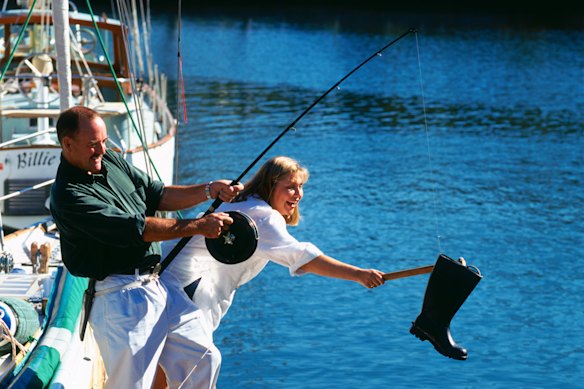
Her interest in environmental issues was growing, and the two paths collided when she was working on the promotion of the 1986 BOC Challenge and Ian Kiernan’s campaign on board the Spirit of Sydney. Back then it was normal for ships and boats to throw their rubbish overboard, but the sailors in the race decided to keep it on board to measure and demonstrate the issue to the public.
When Kiernan arrived back, he went sailing in Sydney Harbour one weekend and saw the rubbish on the beaches of Sydney, particularly at Store Beach in Manly where he anchored his yacht. He came to McKay’s office on Monday morning and asked if they could do something about it.
“I swung around to my IBM golf ball typewriter, way before the internet existed, and we wrote that first letter to the minister of ports in NSW to say we wanted to organise a clean-up, and would he support it?” McKay says. “We got a letter back from the department saying, ‘thank you but no thanks, my department looks after the cleanliness of Sydney Harbour’.
“There’s nothing like a ‘no’, I believe in life, to spur you on for a good ‘yes’. So that was the start of Clean Up Australia and Clean Up the World, so suddenly, the next decade of my life was pretty much governed by rubbish.”
She joined Discovery Channel in 1997 leading the Discovery Eco Challenge in Cairns, Morocco and Patagonia, then moved to Washington DC to work at headquarters. Then she moved down the road in early 2000 to work at National Geographic. She stayed there in various roles until 2010, including a stint based in Australia.
Now she lives in a city apartment right near the museum and frequents the cafes and restaurants of Stanley Street in East Sydney. She has a wide circle of friends, two nephews and a niece, and is godmother to several of her friends’ children. She does not have a partner, but jokes that she is “very eligible”. “You’d think I’d meet more men in this job!” she says. “Anyway, this can’t be an ad for me looking for love.”
She still travels and will soon head to Barcelona to launch the Sharks exhibition – but it nearly went awry a couple of years ago when she was due to fly to Berlin. She went out to her balcony to water her plants, and tripped and fell. She blacked out, and when she came to, she was in agony. She thought she had smashed her knee cap – it turned out to be a full dislocation where the bone on the outside of the leg flips over to the inside. Having previously dislocated a shoulder, the pain was like that “but on steroids”. McKay couldn’t move, her phone was inside on her bed, and her two final visitors had been and gone.
“It’s 6pm on a Friday night and as far as everyone was concerned, I’d left and gone to Berlin, so I was lying there, and traffic’s going past at the top of Hyde Park, and I started yelling out,” McKay says. “I’ve got a very loud voice – the projection from when I wanted to be an actress kicked in. Luckily, my neighbour, this lovely gay man, had his mother visiting. She said to him, ‘I can hear a woman yelling out’. And he said, ‘just close the door, it’s probably some drunk in the park’. And she went, ‘no, no, it’s closer’. Thank God for mum! They came out to his balcony, and I could sort of see her upside down. I’m yelling still, and she saw me, and she said, ‘are you all right?’.”
McKay had eight different surgeries over the next two years – and endured a golden staph infection after one of them. Since then, she has made good health a much bigger priority, going to the gym three times a week, and working with a personal trainer and physiotherapist.
“It made me realise I’m pretty resilient and tough, never once during all the hospitalisations and surgeries and what have you, did I ever feel depressed or anything,” McKay says. “It reinforced that I am a determined person, and it reinforced the importance of having great friendships. It was my friends who kept me going, and they were extraordinary, and family as well.”
Read more great conversations over lunch
Jacqueline Maley explores loss with Bob Carr: Bob Carr on marriage, grief and finally learning how to do a load of laundry
Stephen Brook asks Michael Rowland about his future: In the space of 14 months, Michael Rowland upended his ABC life. There’s more upheaval to come
Margot Saville laughs with Kathy Lette: Kathy Lette on ageing fabulously … and giving cheek to the King
David Wenham bares his scars to Louise Rugendyke: David Wenham on cancer, getting older and being lusted after
Start the day with a summary of the day’s most important and interesting stories, analysis and insights. Sign up for our Morning Edition newsletter.

















































