
 4 months ago
53
4 months ago
53
53 minutes ago
Lily JamaliNorth America technology correspondent, Oakland, California

 Getty Images
A California jury has tossed out Elon Musk's high-profile lawsuit against OpenAI and its boss Sam Altman.
In a unanimous verdict, the case was thrown out because Musk had filed his lawsuit after a statute of limitations to bring such claims had expired.
Musk had accused Altman of breaching a non-profit contract by shifting the ChatGPT-maker to a for-profit company after Musk donated $38m (£28.5m).
Musk had argued Altman deceived him by accepting his money and then reneging on OpenAI's original non-profit mission to develop artificial intelligence (AI) technology for the benefit of humanity.
Jurors spent three weeks viewing internal correspondence and hearing testimony, and arrived at a verdict on Monday after deliberating for roughly two hours.
Those witnesses included Musk and Altman themselves, plus Satya Nadella, the chief executive of Microsoft, which Musk had accused of helping in the scheme.
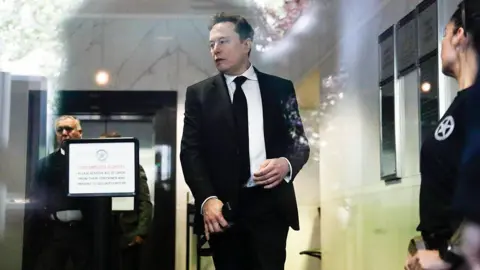
On the trial's first day, Musk took the stand wearing a dark suit and tie and was asked by one of his lawyers what the legal action was about.
"It's actually very simple," he said. "It's not OK to steal a charity... If it's okay to loot a charity, the entire foundation of charitable giving will be destroyed."
But Altman told the jury during his own testimony that Musk not only backed the idea of OpenAI becoming a for-profit business - he wanted control of it for the long-run.
"A particularly hair-raising moment was when my co-founders asked, 'If you have control, what happens when you die?' He said something like, 'maybe it should pass to my children.'"
Musk's other claims against Microsoft were dismissed as a matter of law given the jury's findings on the two claims against OpenAI.
The pair started OpenAI in 2015, but Musk left in 2018 after his co-founders denied him control.
Standing outside the court Sam Singer, a spokesman for OpenAI, called the verdict "tremendous victory".
"This was nothing but an effort by Mr Musk to slow down a competitor," he said, adding that it was a victory "for the justice system as well".
Lawyer William Savitt, who represented OpenAI during the trial, said Musk's lawsuit "bears no relationship with reality" and that the jury decided that Musk was lying during his testimony about the company's origins.
"We're pleased that the jury reached the right result, and reached it quickly," he said.
Savitt also said that OpenAI will continue to focus on its mission to develop "safe AI for the benefit of all humanity".


















































