
 2 months ago
72
2 months ago
72
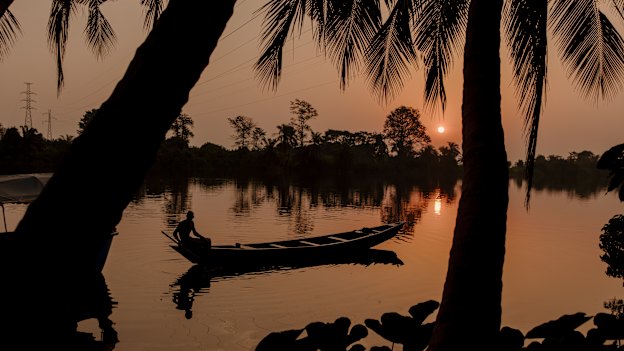
The day began before the rooster’s crow. Little hands loaded heavy fishing gear into a wooden canoe before paddling towards the middle of the lake.
Beneath the murky surface lay thousands of submerged trees, left behind when the vast reservoir was created decades ago. As fishermen cast their nets, they tangled in the branches below.
Pointing to the lake floor, an older fisherman demanded young Jerry Amoh dive deep into the dark waters to untangle the nets. Malnourished and sleep-deprived, he obeyed, hauling himself down the net and nearly drowning.
He knew that if he’d refused the trafficker, he would be beaten.
Jerry was on the waters of Ghana’s Lake Volta – the world’s largest man-made lake and one of the worst child-trafficking hotspots on earth. For years, children as young as four have been trafficked into Ghana’s fishing industry, forced to work long hours in dangerous conditions far from their families. Some survive. Others never make it home.
When Australian humanitarian photographer Ben Adams visited Lake Volta, he met survivors of this crime, including Jerry, who is now an adult.

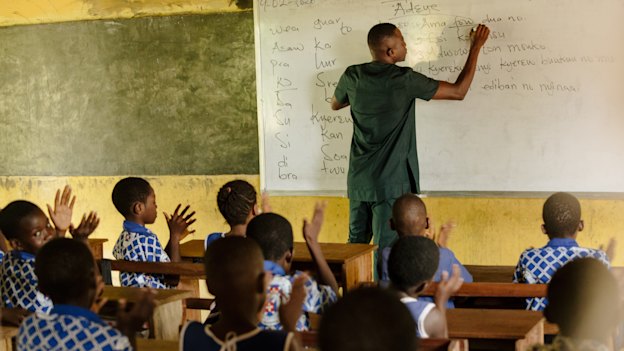
“I was eight-years-old when I was trafficked to the lakeside,” Jerry says, sitting in the classroom where he now teaches.
A woman had approached his mother with promises of food, shelter, and an education she could not afford. What appeared to be a lifeline became a brutal nightmare that lasted four years.
“When my mum discovered what happened, she fought to bring me home,” Jerry says.
Jerry returned malnourished and traumatised, but with a fierce determination to reclaim his life. He walked back into the classroom, ready to pursue the education that had once been promised to him.
A global crisis, a local reality
Child labour remains widespread. The International Labour Organisation estimates 138 million children are trapped in child labour worldwide – five times Australia’s population.
Lake Volta is among the most dangerous environments for trafficked children, where weak enforcement of child labour laws, harsh conditions and the demand within the fishing industry intersect.
For communities living along the shoreline, fishing is more than work, it is survival. With limited economic opportunities, it is often the only source of income for many families.
To minimise labour costs and maximise yield and profit, fishermen use trafficked children, valued for their nimble fingers to untangle nets.
In a wider region where families in poverty are seeking a better future for their children, traffickers exploit that hope. Parents are approached with false promises; children are sent into years of backbreaking labour far from home, often never to be seen again.
Making trafficking risky
As photographer Adams moved from fishing villages to government offices and courtrooms in Ho, a city in the Volta region, his lens captured a different side of the story: those working to ensure fewer children end up on the lake.
For more than a decade, International Justice Mission (IJM), which has an office in Sydney, has worked alongside Ghanaian authorities to identify cases of trafficking, bring children to safety, and prosecute those responsible.
“While many responses to child trafficking focus only on rescue and rehabilitation, IJM works to increase deterrence, building the capacity of local police, prosecutors and government authorities to strengthen the whole justice system,” says IJM Australia chief executive David Braga.
At IJM Ghana’s headquarters in the capital, Accra, director Anita Budu leads this work with quiet intensity.
“Without prosecutions, nothing was changing. Traffickers would simply replace the children who were rescued,” she says.
Each morning, Budu gathers her team and reminds them that even the smallest task matters in the pursuit of justice.
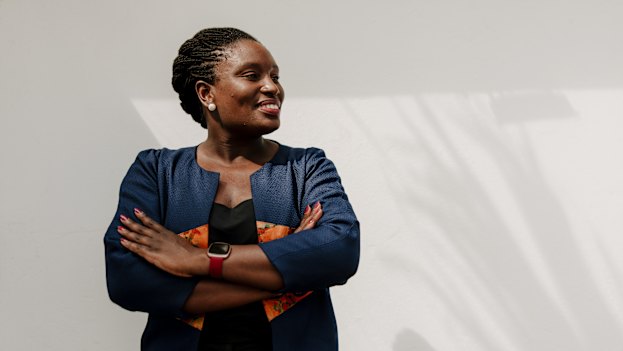
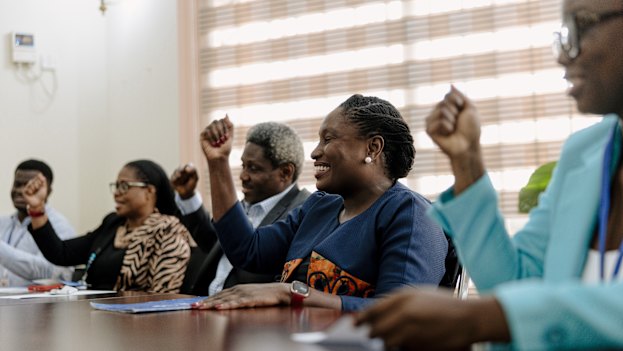
“My team is made up of great people. We have people who come into this work with a passion to change the system, and a passion to make a difference in a child’s life,” she says.
This systems-change approach is shifting outcomes, IJM’s Braga says. Since partnering with government agencies in 2015, these efforts have contributed to 138 operations that have brought 575 children and vulnerable individuals to safety.
Through IJM’s support, the local Attorney-General’s Department has also made progress in the prosecution of trafficking cases, contributing to more than 70 convictions.
“Through our work, we’ve shown that justice is possible and that perpetrators can be held to account,” Budu says.
As the justice system becomes stronger, people are starting to trust that their complaints will be heard.
“More and more, we are seeing children and family members gain confidence in being able to report these issues to the police or social welfare officers within their community,” she says.
Training law enforcement is central to IJM’s strategy. In 2022, IJM trained hundreds of police officers, prosecutors and social workers to better identify and respond to trafficking.
Budu shares an example of this training in action. In 2023, a fisherman brought a teenager into a police station, accusing him of stealing his boat. An IJM-trained police investigator saw something different. Weeks earlier, the boy, Philip*, had been trafficked to a remote fishing community where he was exploited alongside other children.
Every day began at 4.30am. Meals were scarce: rice and banku – like damper. At night, the boys huddled on a cement floor atop fishing nets tangled with hooks, their bodies marked by beatings.
When Philip escaped and was recaptured, he was brought to the police accused of theft and the case could have ended there. Instead, the investigator, trained by IJM months earlier, called the Department of Social Welfare, triggering a rescue operation that brought six other children to safety.
IJM has also supported Ghanaian authorities with resources such as patrol boats to strengthen enforcement on Lake Volta. “We’ve seen an increase in men stepping forward to join boat patrols on the lake to help strengthen overall security,” Budu says.
For Budu, the change in attitudes is becoming visible, with reports from marine police that more fishermen are choosing to work with adults over children.
“People are beginning to see that there are consequences to taking a child,” she says.
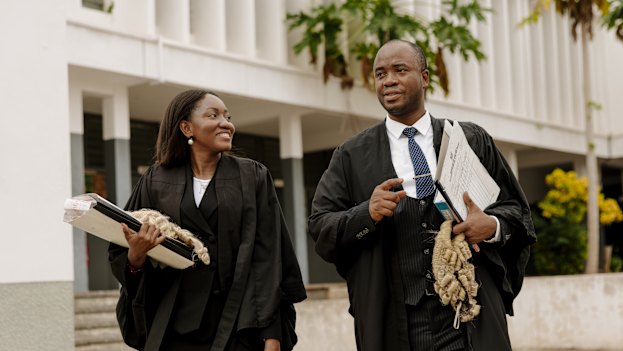
In the heart of Ho, Adams photographs senior state attorney Andrews Dodzi Adugu, behind him the courthouse where he has spent countless hours crafting cases that shape children’s futures.
For too long, Adugu says, traffickers operated with almost no risk because the crime went unpunished.
“If the person is not prosecuted, it’s like ‘well there’s nothing at stake. I can always get away with it and commit the same thing’,” he says.
IJM has been partnering with Ghana’s Office of the Attorney General for a decade, helping to strengthen collaboration between investigators and prosecutors.
“We work together to ensure everything is in place for a watertight case, so we have a winnable case when we get to court,” Adugu says.
Before the partnership, convictions for child trafficking were rare. Today, more cases are reaching court and more traffickers are being convicted.
“I’m happy that my work has been able to take somebody from a very dark place to a place of light,” he says.
For Adugu, the ultimate goal is deterrence. “My dream is to get to a time where nobody will think about committing the crime of human trafficking because whenever they think about it, they’ll know we’ll make sure they are arrested,” he says.
Survivors lead the way
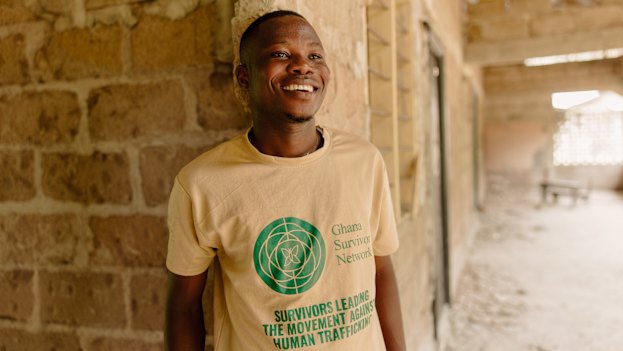
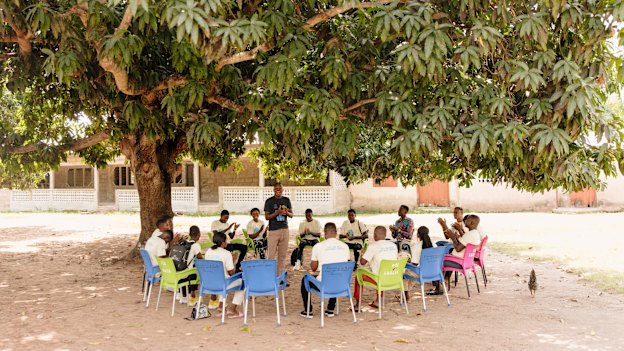
As sunlight filters through the branches of a large mahogany tree, Jerry stands among other survivors as Adams photographs them. Their joy is undeniable, the sense of freedom palpable. A community of advocates united by shared suffering, each on their own path to healing.
“The survivor network is my family,” Jerry says. “When you’re trafficked as a child, the community doesn’t see you as a person. But at the survivor network we share stories, talk about what we’ve been through, we come together, we sing, we advocate.”
For members of the Ghana Survivor Network, rescue and prosecution matter. But the goal is to stop the crime before it begins.
“We want to make a world where trafficking in Ghana no longer exists,” he says.
Across Ghana, survivors are reshaping how trafficking is understood, turning their experience into advocacy and pushing for change in communities where exploitation once thrived. The network includes 200 young people across chapters in different communities.
Jerry works to educate families about the deceptive tactics used by traffickers, collaborating with law enforcement and NGOs, and speaking at community gatherings and on radio programs where people share what they’ve witnessed on the lake.
“There is a stigma,” he says. “Some people see us as damaged, others think we should move on. But I refuse to be silent.”

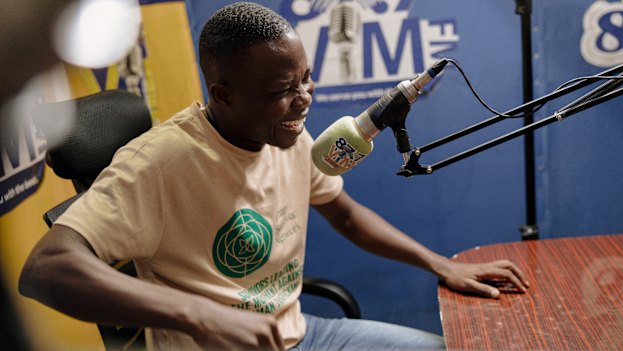
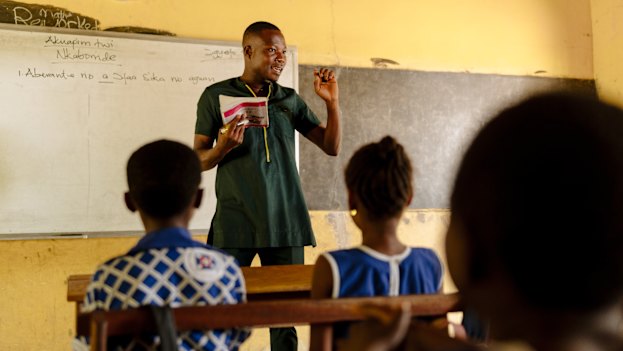
Alongside his advocacy, he is now a teacher and educates his students to recognise how traffickers operate in their communities.
“If I can stop even one child from going through what I did,” he says, “then my pain has meaning.”
Jerry walks forward with purpose. His past fuels his mission; his voice carries the weight of experience and the promise of change.
On Lake Volta, the sun is setting on a past when traffickers could exploit children with little risk to their own freedom. Filled with hope and strength, Budu looks to the future.
“My vision is to build on the progress we’ve made on Lake Volta, reaching more regions, strengthening partnerships and finding more children trapped in exploitation,” she says. “We move forward in courage and confidence, knowing that we’ll be able to see an end to child trafficking in Ghana.”
* A pseudonym has been used to protect the survivor’s identity.
Start the day with a summary of the day’s most important and interesting stories, analysis and insights. Sign up for our Morning Edition newsletter.

















































