3 months ago
27
3 months ago
27
By Candida Baker
January 9, 2026 — 6.00pm
It’s 1984, and I’m at a party. The director Jim Sharman is there. Back in the late ’70s I’d lived in Sharman’s Newtown house for some months, with Sharman and his then partner, James Waites, who would later become the much-loved, occasionally hated, acerbic theatre critic. They inevitably became known as Old Jim and Young Jim.
Old Jim and I said a fond hello to each other, and then he asked me what I was doing. I told him I was working as a journalist, and still trying to write some personal fiction, and he said, in his abrupt way: “Still more of the same then.”
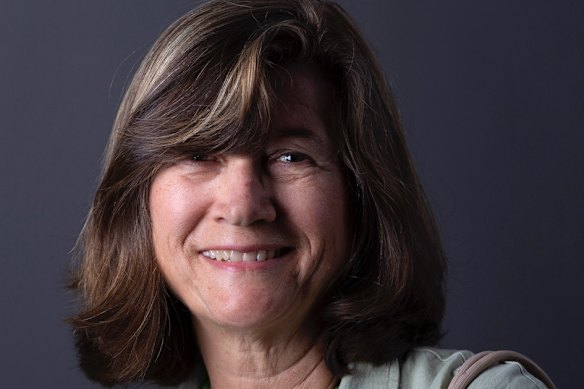
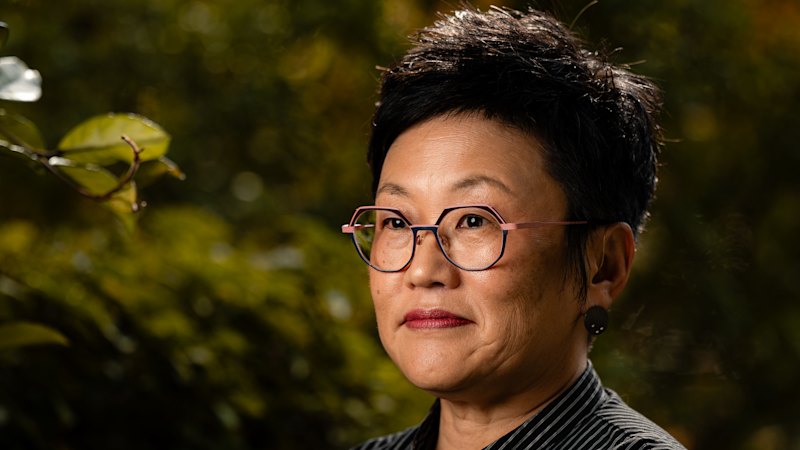
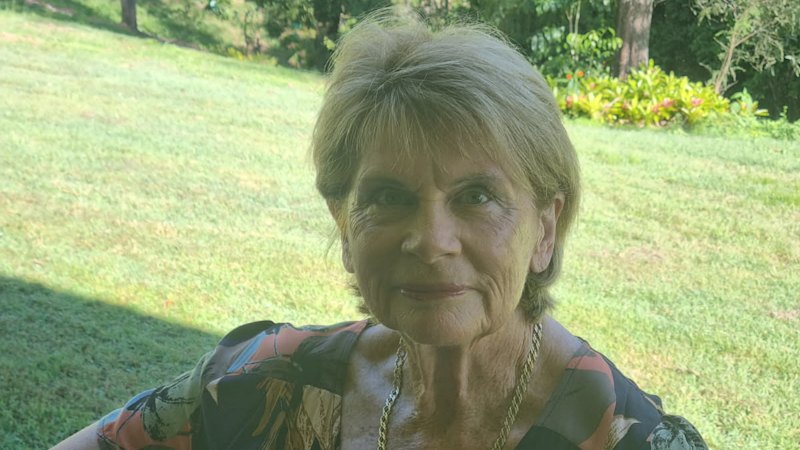
Journalist, author and horse wrangler Candida Baker.
Stung, I laughed it off, and we chatted a bit more before we moved on. But the comment lingered. I was writer searching for a project, I knew that, but what? The answer, perhaps spurred on by Sharman’s off-the-cuff remark, came to me a few mornings later, when, after an ill-considered bout of drinking far too many Irish coffees on a night out with my first husband, Robert Drewe, at the Basement in Sydney, I’d gone to the spare bedroom. When the room finally stopped spinning, I slept sitting up with my glasses on, so when I woke up, I had two thoughts – I couldn’t see, so perhaps I’d drunk so much I’d gone blind. The second thought was that I knew exactly what I was going to write: an Australian version of The Paris Review books of interviews with writers, which, like many others in the writing world, I found fascinating.
Little did I know that I was embarking on a 10-year project which would become the Yacker – Australian Writers Talk About Their Work series. I was in the middle of Volume 1 when we moved to Melbourne and I got a job as a sub-editor at The Age, having somewhat falsely parlayed my subbing experience on Cleo magazine into newspaper experience.
I learnt a lot at The Age, and as a long-time sub on the news desk told us new subs, “don’t ever cry or knit because you won’t be asked back”.
My first night on the paper, the chief sub, Bob Millington, approached me at the start of a break, to ask me whether I imbibed, and when I replied that I did, he led me, to my astonishment, towards the gentleman’s toilet, opening the door and beckoning me in. I was mystified, but I bravely followed, and found myself in the “Bog Bar”, complete with a large kind of living room in front of the toilets themselves, a bar with well-stocked fridge, a sad looking green sofa, an even sadder, torn and frayed Penthouse pet and a Bruce Petty cartoon. To my surprise, all the subs (apart from the one doing her knitting), and several of the editorial staff were there. Over the next months, the Bog Bar became a convivial place to spend a bit of time chatting, beer or glass of very bad wine in hand.
I’m proud to say, in part because I think I can claim that I am perhaps the only writer in history to have her first serious book launched in a gentleman’s toilet, that the then night editor of the paper, Clive Malseed, launched the first Yacker in the Bog Bar. The series was successful, and it gave me what perhaps I was searching for – the secret to becoming a writer, which is that there is no secret, you just have to write, however works for you.
Fast-forward to 2000. I’m 45 and editor of a weekly newspaper magazine, I’ve just given birth to my second child, my daughter Anna, and my second novel, The Hidden has just been published to critical acclaim. You could say life was going well, and it seemed to me that it wouldn’t be long until the next novel made its presence felt. How wrong could I be?
There were some major disasters around the corner – leaving the security of a large news organisation, moving to the NSW Northern Rivers, a marriage falling apart, and in the fallout from the 2007 global financial crisis, a developer going bust with all our real-estate money. Writing fiction was the furthest thing from my mind as I navigated a new life as a single mum, and threw myself head over heels into a life with horses – riding, rescuing and training – while also catering for a showjumping-mad son and a dance-mad daughter.
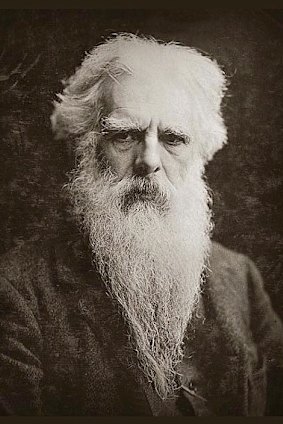
Pioneering photographer Eadweard Muybridge.
But somewhere along the line it occurred to me that writing was essential for my survival. If I didn’t write I didn’t feel right, and so I started getting up at 5am every day to write something – anything. A few of my core interests in photography, astrology, writing and horses began to make their presence felt, and in 2009, almost a decade after The Hidden was published, I chanced across the work of the extraordinary Victorian-era photographer, Eadweard Muybridge, the first person to capture an image of a galloping horse at the split second it has all four hooves in the air.
As I delved deeper, I discovered that Muybridge had married a much younger woman, Flora, and only a few years after their marriage, had shot dead his wife’s lover, Harry. When Flora died only a year later, Muybridge refused to recognise their son, Florado, as his, and left him in an orphanage in New York, collecting him when Florado was 10 and leaving him at a ranch in Texas, where Florado spent the rest of his life.
The material tugged at me. Cognisant of what novelist Glenda Adams had once told me when I interviewed her in New York, that if material comes up like an outcrop of shale, over and over again, it’s demanding to have something done with it, I began to scratch around the surface of writing a novel again.
I remember reading the first pages out loud to Greg, my second husband, on a camping trip in 2010. The extraordinary landscape, and the gallery of Indigenous cave art triggered something in me around the importance of landscape in Muybridge’s life, and the importance of place, family and ancestry to all of us.
Loading
What if, I wondered, Muybridge and Flora’s DNA had continued into another generation beyond Florado? Gradually, my main character, Rosa, a testy 80-year-old when I started writing her in 2014, came to take central stage – exploring for me the tragic triangle of Muybridge, Flora and Harry against the sub-texts of family, nature versus nature, love, desire and betrayal.
Horses too, began to make their fictional presence felt, but ironically the real horses in my life, slowed the writing down immeasurably. A conundrum for sure, but somehow, almost against all odds, as Catherine Kenneally once wrote in a review for Yacker about the writers I’d interviewed, a book emerged.
Twenty-five years between novels is a long time and lot of water has passed under the bridge. I may even have cried on occasions, although I’ve never picked up knitting needles, and to be honest, I hope I never do.
Even as an optimist I know the next novel can’t take 25 years, so as a 70-year-old with two hip replacements and a herd of five horses, I am making more space for creative endeavour, and less for the physical hard work of the last few decades, even though I would not swap it for the world, of course.
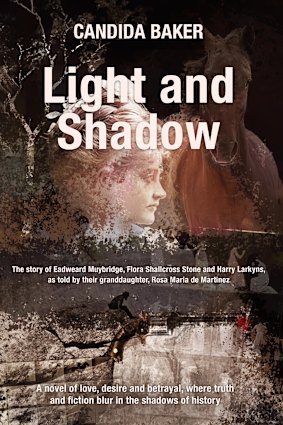
Light and Shadow by Candida Baker (Fair Play Publishing) is out now.
The Booklist is a weekly newsletter for book lovers from Jason Steger. Get it delivered every Friday.
Most Viewed in Culture
Loading