3 months ago
9
3 months ago
9
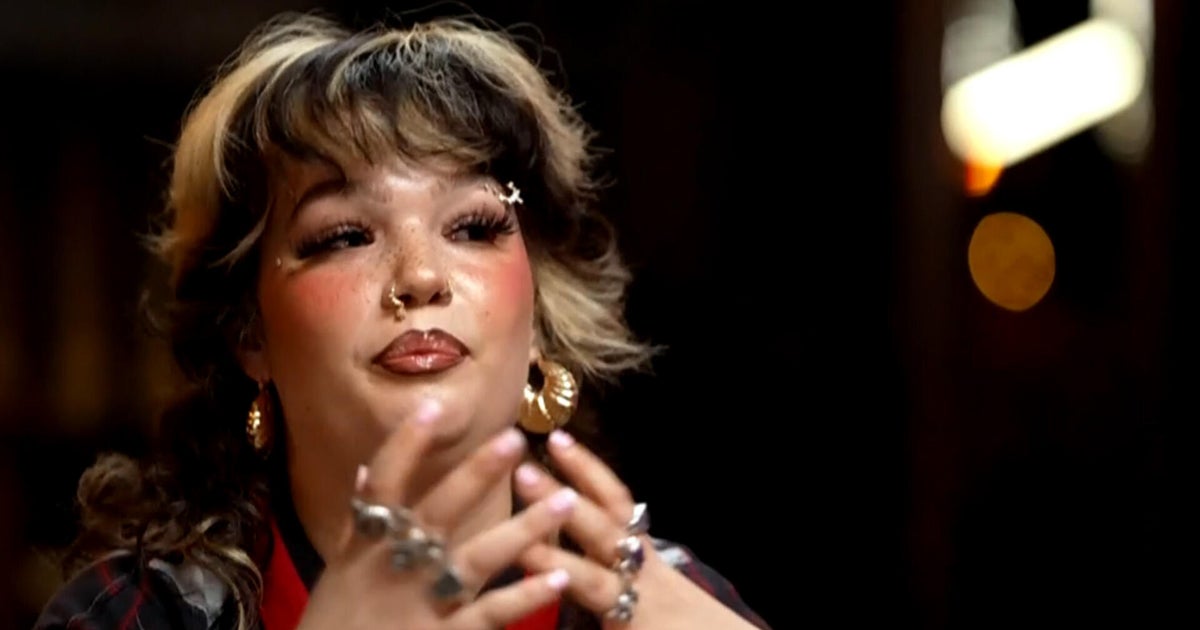
Between the age of 16 and 18, Dee Carr was admitted to mental health wards more than 100 times and received seven psychiatric diagnoses.
When she was younger, she remembers feeling so lonely, helpless and worthless that she didn’t want to live to her 16th birthday.
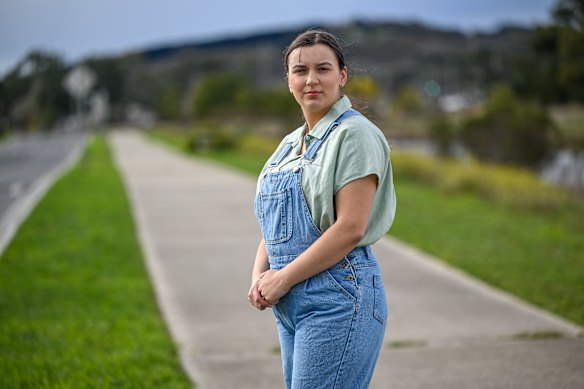
Nearly one in five school students reported suicidal ideation, which includes suicidal thoughts, according to a 2025 study. Dee Carr says it took a suicide attempt to get the life-saving therapy she needed.Credit: Joe Armao
“I’d utilise things like Kids Helpline and school counsellors but … at that point, it was definitely not enough,” she said.
It wasn’t until she reached a crisis point and attempted suicide at 16 that Carr finally received treatment for her complex psychosis at a primary publicly funded Headspace clinic.
Now 26 and a new mum, Carr’s experience is not unique. Australian and international psychiatric experts are raising the alarm about a crisis in youth mental health, warning young people aged 14 to 24 are not immune to the mental anguish of existential, social and economic challenges once thought to only be the concerns of their parents.
Carr’s story is one of many explored in a new documentary, Mental Wealth. The film is a call to arms to save the lives of young people and the future economies depending on them by encouraging parents to have tough conversations about mental health and suicide to overcome the stigma surrounding it.
Nearly one in five Australian school students reported suicidal ideation, which includes suicidal thoughts, in a 2025 study. The same study revealed 3 per cent of students said they had attempted suicide, and 17 per cent reported self-harming behaviour.
“Things like social media, which have got most of the blame, are probably just manifestations of that neoliberal, economic world that [young] people are growing up in these days,” said Australian psychiatrist and leading international youth mental health expert Professor Patrick McGorry.
The 2010 Australian of the Year, who is also executive director of youth mental health organisation Orygen, said “megatrends” in society over the past two decades, including increasing economic insecurity for young people, intergenerational inequality, housing costs, educational fees, and climate change – “everything that seems to be making the lives and futures of young people much more insecure than in previous generations” – were having an impact.
“We already knew it was a big problem back 20 years ago but, over that exact period, we’ve seen a 50 per cent rise in prevalence of these mental health conditions,” McGorry said.
Carr credits being alive to the mental health treatment she eventually received, and says every young person in Australia should have access to high-quality and affordable care.
She was referred to a tertiary public youth mental health service at Orygen, which specialises in complex mental illness. But, when this period finished, Carr was referred to an adult service.
“The adult mental health services weren’t supporting me in the same way that Orygen was,” she said. “I felt really alone in my recovery journey.”
Loading
Once she turned 18, Carr sometimes found it impossible to get a public hospital bed.
“I’m not just competing for a spot [with] other teenagers. I’m competing with like five different age demographics,” she said.
McGorry, whose own son, Niall, attempted suicide as a teenager, said the public health system fails to adequately service youths in the “missing middle” who require additional resources for their mental health, but do not present severe symptoms.
“You’ve got a primary care system which is able to treat mild conditions. [But] even the common mental disorders like anxiety and depression, there’s about 50 per cent of them that need to see a more specialised level of care.”
Former Channel 10 US correspondent Michelle Stone was inspired to create Mental Wealth, airing on ABC on Tuesday, after her own lived experience as a mother with a mentally ill child.
“I really wanted to start a conversation, particularly for parents ... people were having these conversations in hushed tones and there was an element of shame that some parents were feeling around the fact that their kids were unwell mentally,” Stone said.
In this year’s election campaign, Labor pledged more than $700 million towards youth mental health services.
McGorry said the funding was a major step in the right direction. The key will be prioritising specialised, accessible, evidence-based care, he said.
Labor’s $700 million commitment to youth mental health
$500 million for 20 youth specialist care centres
More than $200 million to bolster and expand the headspace network. The headspace funding would build 25 new centres and upgrade 33 existing centres to meet more complex needs
$91m to grow the youth-focused skilled workforce essential to care for young people and deliver evidence-based care
Having recently become a mother, Carr knows how close she came to missing out on the life she has now. She cannot help but think of her newborn daughter’s future and “what a mental health system looks like for her in the future, should she need it”.
“It makes me emotional for the people who are in their darkest points now who don’t have access to that help because now, coming out on the other side, I know that there is a lot for people to miss out on,” she said.
If you or anyone you know needs support, call Lifeline on 131 114, Kids Helpline on 1800 55 1800 or Beyond Blue on 1300 224 636.
The Morning Edition newsletter is our guide to the day’s most important and interesting stories, analysis and insights. Sign up here.
Most Viewed in National
Loading