2 months ago
32
2 months ago
32
Claire Moodie
March 1, 2026 — 5:30am
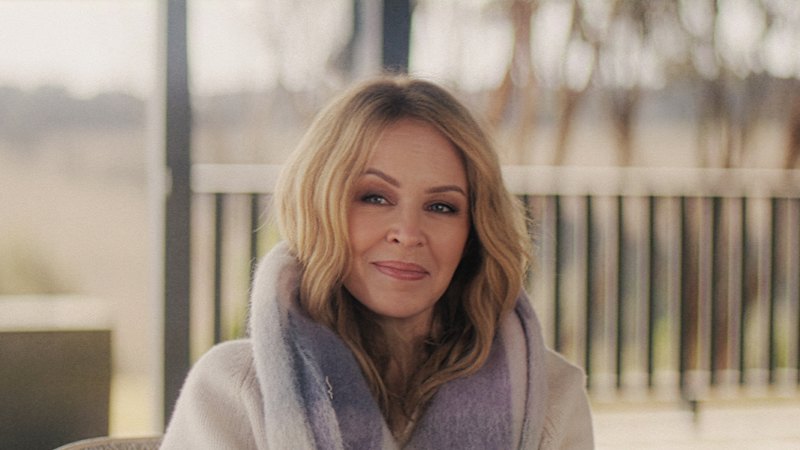
Kathy Hodgson is shaking, staring at the envelope on her lap that has just been delivered to her home by registered mail. This is a big moment for the 68-year-old. Her husband and older brother are there for moral support.
Inside is the birth certificate she has been fighting for, listing her biological parents. It’s taken her more than two years to prove that she was illegally adopted as a baby. She is overwhelmed but excited at the same time.
“I’m thinking ‘wow’ – I’ve done it,” she says.
“Thank Christ,” adds husband Jim, and they both laugh, exhausted and relieved. “Put it this way, she’s now got an identity.”
As previously reported in this masthead, Hodgson’s identity was thrown into doubt in 2006 when she learnt through a relative that she wasn’t who she thought she was and that she had been adopted as a newborn in Sydney in 1957.
It wasn’t until 2022 that she found her biological family through a home DNA test and travelled from her home south of Brisbane to meet her mother, Nita Annesley, for the first time at a nursing home in Forbes.
By then, Nita was suffering from dementia, but Hodgson’s new-found siblings told her that their mother had years before talked about a baby she’d given birth to. She told them the baby had been stillborn.
Unable to verify how she came to be raised by another family – there are no government records of Hodgson’s adoption – she has been on a mission to, at least, set the record of her origins straight.
But convincing the NSW Registry of Births, Deaths and Marriages that her previous birth certificate, with her adoptive parents’ names on it, should be replaced has been an uphill battle.
Even an official DNA test from her biological mother showing a “relative chance of maternity of 99.9999971747 per cent” and statutory declarations from her siblings were not enough.
Her request was declined. Under the Births, Deaths and Marriages Registration Act (1995), the registry cannot alter a birth document without at least one parent applying for it. In Hodgson’s case, her biological father had already died many years before and her mother, Nita, was not able.
In September last year, Hodgson appealed to the NSW Civil and Administrative Tribunal (NCAT) but was unsuccessful.
In the end, seeking a court order was the only avenue. Hodgson couldn’t afford a lawyer, so she represented herself via video link from her home in a hearing in the District Court, with support from her son, Lee.
She is thankful that a $1100 court fee was waived due to financial hardship, but the whole journey has been highly stressful. “It’s dragged her health right down,” says Jim Hodgson. “You get put through the wringer.”
The registry would not respond directly to questions about Hodgson’s case, saying “it recognises that adults who were adopted can face challenges in providing evidence to add a biological parent to the pre-adoption birth record” and that it will “work with applicants to assist them where possible”.
The Benevolent Society, which has helped people affected by historical adoption in NSW for more than three decades, says one of the issues is that legislation has not kept up with the arrival of commercial DNA testing.
Sarah Burn, manager of the society’s Post Adoption Resource Centre (PARC), says increasing amounts of adopted people are trying to change their birth certificates, and the current system “causes distress”.
“For some, DNA testing has led them to discover that they are not related to the family they were raised in.” Burn says. “Legislation and processes within the adoption space are not keeping pace with this, causing immense frustration to the adoption community, who feel they must jump through hoops to have their true identity acknowledged formally.”
Peter Capomolla Moore, the president of the group, Adoptee Rights Australia, calls it “trauma on trauma”, saying the government should be righting the wrongs of the past in a compassionate way.
“I wish I could say that Kathy’s case is a one-off,” he says. “Unfortunately, nearly 13 years after the National Apology for illegal forced adoptions, there is no legislation to provide a speedy process to reinstate their [the adoptees] true identities.”
Asked whether there were any plans to change legislation and make the system easier, a NSW government spokesperson responded with a statement that focused on integrated birth certificates (IBCs), which were introduced in NSW in 2020 and combine information about both biological and adoptive parents on the same document.
While designed to recognise adopted people’s full identity, they have received a mixed response within the adoption community, with opponents dismissing them as a “token gesture”.
The spokesperson also said that the government recognises the ongoing impact that historical adoption practices have.
For Hodgson, that impact has been both emotional and physical, but she is starting to get her strength back after months of illness. Sadly, the birth certificate did not arrive in time to show her mother. Nita died in June last year. Hodgson is sharing her story to give hope to others heading down a similarly painful path. “I’m so proud that I’ve actually done this with the support I’ve had,” she says.
“They really need to shake up the system,” adds Jim. “Not make it so bloody hard for people.”
Start the day with a summary of the day’s most important and interesting stories, analysis and insights. Sign up for our Morning Edition newsletter.