3 months ago
17
3 months ago
17
Fabio Angele shepherds an elderly couple into a booth, then dips behind the counter with a nod: “I’m sorry, give me one second.”
One hand gripping a black tray, he clears another table and settles into his own chair in a far corner of Carlton’s Brunetti Classico.
He pulls pages of notes from his pocket, most from a waiter’s ordering pad, and one printed with a graph showing Lygon Street’s declining pedestrian numbers.
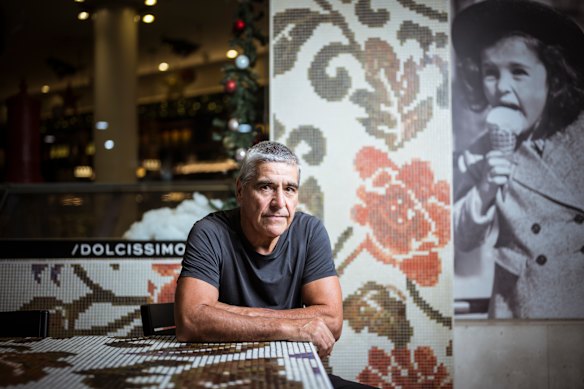
“I have a lot of thoughts,” he says.
For many of Carlton’s longest-serving traders, the story of modern-day Lygon Street begins in their memories of its heyday, when its footpaths overflowed with people in the 1970s and early ’80s.
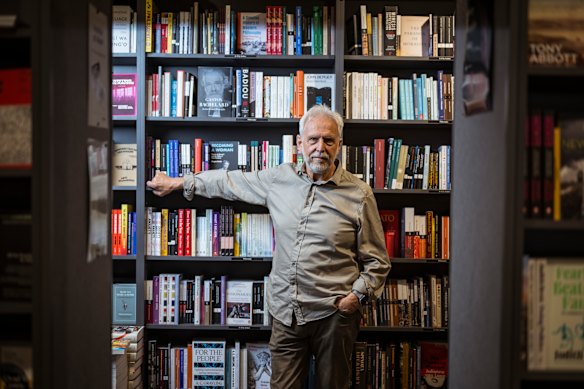
Brunetti was just a single shopfront at Lygon Court, and a twenty-something Mark Rubbo – who started out with a record store, Professor Longhair, in 1972 – bought out Readings on offer from Ross Reading in 1976.
Toto’s Pizza, Australia’s first pizza house, ushered in the initial wave of Melburnians to Lygon Street when it opened in 1966, and the likes of King & Godfree (a delicatessen by the end of the ’70s) and Jimmy Watson’s Wine Bar (established in 1935) were thriving.
Traders bring up one number on repeat: more than 700,000 people are said to have attended the Lygon Street Festa over just one weekend in ’83.
It’s not an official figure. At the time, The Age reported that the festa attracted “more than a million people”, compared with almost 100,000 people in 2024. But it still inspires a glossy-eyed nostalgia.
“I’m older now, but all the young people don’t realise what the strip was like back then,” Angele says. “You couldn’t move in the streets during that [festa] weekend.”
A decade of data reveals Lygon Street is at a crossroads in the post-pandemic world, after years of decline between 2015 and 2019.
Its average weekend pedestrian numbers stabilised in 2024-25 at almost 1000 people (or 13 per cent) below pre-COVID-19 levels, and 30 per cent below what the Lygon Street foot traffic sensor near Readings recorded on an average weekend in 2015-16.
Foot traffic is also down during the week, with a 16 per cent decline on pre-pandemic levels, and a 33 per cent decline on a decade ago.
KPMG urban economist Terry Rawnsley warns this kind of entrenched downturn can be difficult to shake.
“There’s still a vacancy rate issue in both [Lygon Street and Bourke Street Mall], but it’s almost a bit of an opportunity … for people to come in there and try something different, funky and hip, to try and attract people back into those locations,” he says.
Lygon Street’s retail vacancy rate is sitting at about 9 per cent in Carlton, according to property appraisal company Urban Property Australia.
That’s compared with 13.5 per cent in 2019, and 5.6 per cent in 2018.
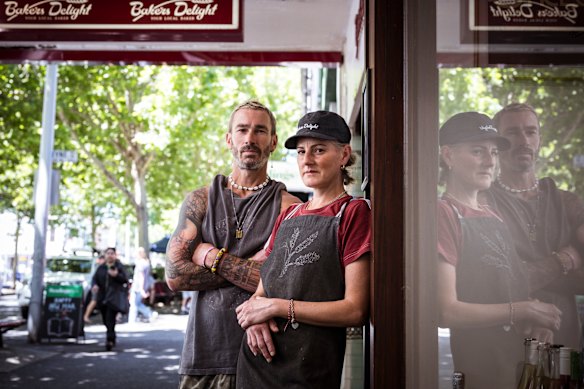
Bakers Delight franchisee Damien Fairbanks, who’s run his Lygon Street business for 25 years, says the bakery has half the customers it did two decades ago.
He holds out his phone to reveal a black-and-white Age photo from 1964 of a busy Leptos fruiterer’s, which used to stand in the bakery’s place.
“During the day [now], you’re missing the people doing their shopping – there’s no local deli, there’s no local fruit shop,” Fairbanks says.
“There’s no ‘local’ vibe.”
Traders are hopeful for a return to daily trade, rather than the “occasional” business the likes of Cinema Nova, Readings and local restaurants attract.
Rubbo, now Readings chairman, notes business from local universities has shrunk as students and staff learn and work from home post-COVID, while Nova chief executive Kristian Connelly says there needs to be a more appealing mix of shops and venues to encourage people to stay in Carlton “after the movie is over”.
“As Fitzroy and Brunswick have become hip young centres, Carlton seems to be staid by comparison,” Connelly says.
“[Its arts history] goes relatively uncelebrated locally as most arts culture is centred at Southbank, which is a missed opportunity.”
Local traders’ association Carlton Inc. is lobbying for Melbourne’s free tram zone to be extended to Elgin Street to draw more people up from the city – a proposal Lord Mayor Nicholas Reece has publicly backed.
Another idea is to enforce limits on the number of eateries on the strip, as state and local government did in the ’80s with the Lygon Street Action Plan.
As author Michael Harden writes in his book, Lygon Street: Stories and recipes from Melbourne’s melting pot, the plan came at a time when one in four shops in the area was an eating place, and made it much harder to open a new food business north of Grattan Street.
The section between Queensberry and Grattan streets, meanwhile, was designated a tourist area, with effectively no cap on the number of restaurants and cafes. The City of Melbourne council advanced a similar plan in 2005, which Angele described as “overdue” at the time. They abandoned it that same year.
“It’s interesting [with] Lygon Street because it has had ups and downs throughout its history,” Harden says. “It had that heyday, but then it got super-touristy, and all of the laminated-menu-and-red-gingham-tablecloth places started to take over.
“It was having those iconic businesses rooting it, I think, that gives it longevity … they’re generational restaurants, and generational institutions.”
The King & Godfree building is set to reopen in 2026 following a (second) long-term closure, which will encourage more foot traffic back into the area, Harden says.
The old-school deli is no more, but owner Jamie Valmorbida is opening three new venues in the building (the first, Garfield Pizzeria, is due to open in February). Valmorbida has also bought Donati’s Fine Meats, and will continue running it as Lygon Street’s last remaining butcher’s shop.
The council is also in talks with Carlton Inc. to bring back the Festa.
Many of Lygon Street’s traders are fiercely protective of its status as a cultural mecca, and want its Italian heritage to remain at the core of its identity.
However, some – like Harden – see diversification as Carlton’s “saviour, not its killer”.
After all, the author says, the area was a Jewish ghetto pre-World War II, and “little Italys” around the world are no longer strictly Italian.
Rawnsley notes Lygon’s slump correlates with an increased restaurant offering in the CBD and a more recent “renaissance” in Brunswick East and the neighbouring Sydney Road.
For Universal Restaurant, established in 1969, Lygon’s reputation as Melbourne’s little Italy is great for business, managing director Alfie Mercuri says. And no one on the strip doubts Lygon’s staying power – as Readings’ Rubbo says, it has “very good bones”.
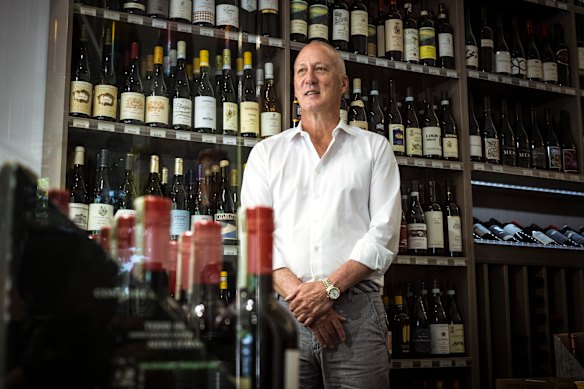
But if foot traffic and tourist numbers are to increase, it needs to take on a new identity as a diverse food precinct, Mercuri says.
“I see that as being the future because it’s already there now,” he says. “It may as well be embraced and marketed that way.”
Mercuri acknowledges not all traders will agree with him. But more important things unite them: passion and hope.
Use the interactive below to select a Melbourne pedestrian sensor location and view data for foot traffic trends over the past decade:
The Age’s City Limits series investigates how inner Melbourne has weathered the pandemic and changing workplace, retail and entertainment trends. Click here to explore more.
Get the day’s breaking news, entertainment ideas and a long read to enjoy. Sign up to receive our Evening Edition newsletter.