3 months ago
34
3 months ago
34
They call it Club Med for crustaceans.
Death row for tonnes of crabs and lobsters, bound for the city’s restaurants and fishmongers, could be worse than the temperature-controlled trading floor of the new Sydney Fish Market, workers say.

Sydney Fish Market’s head of product and quality Erik Poole with live eastern rock lobsters from waters off Sydney.Credit: Steven Siewert
There, in conditions designed to mimic their natural environments, the live seafood plucked from waterways as far as Cairns, Perth and Darwin will be sorted and stored before a swarm of buyers secures its fate at a wholesale auction each weekday from 4am.
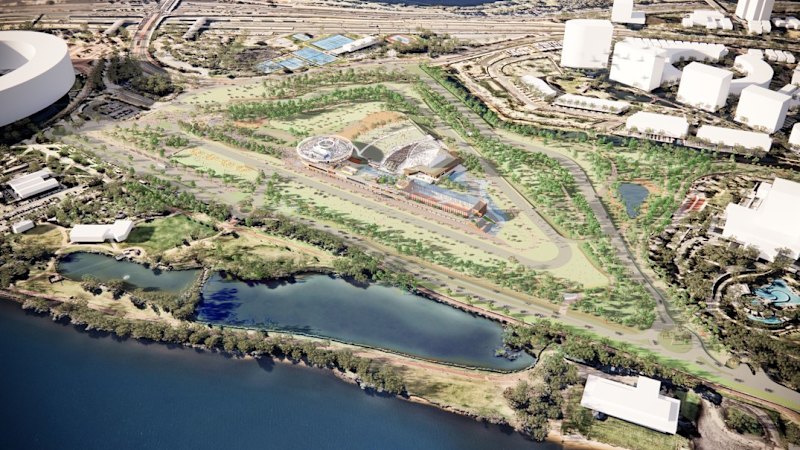
Sydney Fish Market chief executive Daniel Jarosch said the trading floor would be the epicentre of the behemoth new $836 million fish market building, which opens on Monday after more than six years of planning, cost blowouts, construction delays, legal squabbles and financial uncertainty.
“The auction feeds out to all the fish and chip shops and fishmongers around Greater Sydney, and also goes to our wholesalers, who have even broader customer bases, and up to the retail floor,” he said.
Jarosch said one of its most impressive features was the live crustacean system, designed to satisfy a growing demand for live seafood, which accommodates various species, such as lobsters, at different temperatures.

The new Sydney Fish Market on Blackwattle Bay will open its trading floor on Monday after more than six years of planning.Credit: Steven Siewert
“It’s like three separate Club Meds because they share it with other lobsters. It’s truly world class.”
Work to transfer trading operations from the old market building at Pyrmont to the sprawling four-storey complex at the head of Glebe’s Blackwattle Bay will begin after the final auction on Friday. Cleaners will then prepare some equipment to transfer to the new site.
In the hours before the first day of trade on Monday, about 30 staff will start to receive and sort stock – including mud crabs, lobster and reef fish – delivered by air freight and trucked to the inner-city building, or unloaded from fishing trawlers that gather flathead, whiting and tuna off the coast.
Sydney Fish Market head of product and quality Erik Poole, a 20-year company veteran, said the glass-walled trading floor at ground-level would be visible to visiting members of the public.

Sydney Fish Market chief executive Daniel Jarosch inside the auction room on the seafood trading floor. Credit: Steven Siewert
He drew inspiration from markets in New Zealand and Canada to create aspects of the live crustacean system, which was designed to better protect the quality and freshness of merchandise.
“Live seafood is an increasingly important part of our business because of the demographics of our buyers. We have a lot of live mud crab, and also eastern rock lobster, southern rock lobster, pipis and other species. In this new system, we’re able to hold a much greater range,” Poole said.
Poole said the lobster “hotel” kept the animals in boxes rather than releasing them into a tank and later scooping them out as filtered seawater at different temperatures was circulated. The mud crab room was kept at 21 degrees and 90 per cent humidity to keep the critters “nice and happy”.
“That’s the sort of environment they’re used to, and it’s important for animal welfare, which is increasingly under scrutiny. Keeping them in optimal conditions is the most humane way to do it. Fishers and buyers don’t want to see the animals harmed because they’re worth money,” Poole said.

The wholesale trading floor, which is visible to the public, has storage areas for different species of fish and crustaceans. Credit: Steven Siewert
There are also seven portable tanks for live fish. Temperature-controlled zones – the main trading floor is 14 degrees – lower the need for ice, which can damage seafood quality, and reduce stress on animals.
About 160 registered buyers will inspect the products on the trading floor early each weekday morning before the crab auction starts at 4am, followed by fish at 4.30am. The auctions have been brought forward by an hour at the new building to ensure trading is finished by 10am.
Since 1989, the market has used a Dutch clock auction, which works in reverse of a usual auction: the auctioneer starts with a high price that drops until a buyer presses a button, winning the lot.
Loading
Jarosch said: “The trick is to get the live auction over and done as quickly as possible. On an average day, we do about 3000 crates [of seafood]. At peak, about 30 days of the year, that goes to 7000 crates.
“The challenge is then getting the product out of this facility because it has to get into the stores for customers to buy at lunchtime. We may need to start earlier on peak days, which we do already.”
An estimated 20 tonnes of fresh seafood will be sold at the new market each hour, or an average of 50 to 55 tonnes per day. Poole expected about 60 tonnes of produce would be sold on Monday.
“There’s excitement among suppliers about being at the first auction and the opening. We’ll be flat out learning to drive this beast, it’s so different,” Poole said of the new premises.
The Morning Edition newsletter is our guide to the day’s most important and interesting stories, analysis and insights. Sign up here.
Most Viewed in National
Loading