3 months ago
32
3 months ago
32
When Craig Irving shines a torch down the stairs and into the basement of an abandoned Homebush building, he is overwhelmed by eerieness.
Kegs, plates, chairs and tables are visible “and there was still some old schooner glasses”, he says.
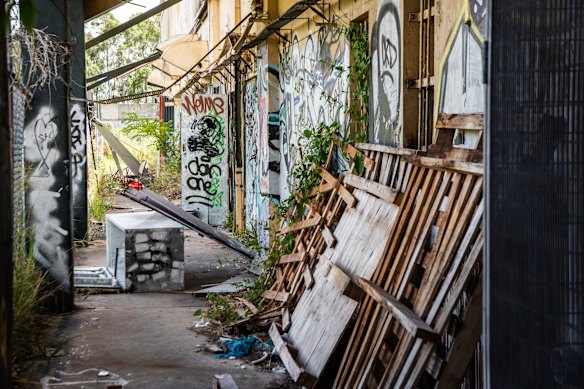
Upstairs, rubbish and debris cover the floor, a chandelier has fallen from the ceiling and years of graffiti mark the chipped walls.
Irving, who goes by the handle Histografixx online, is recounting his experience of photographing what has become one of Sydney’s most popular urban exploration sites – the Homebush Theatre.
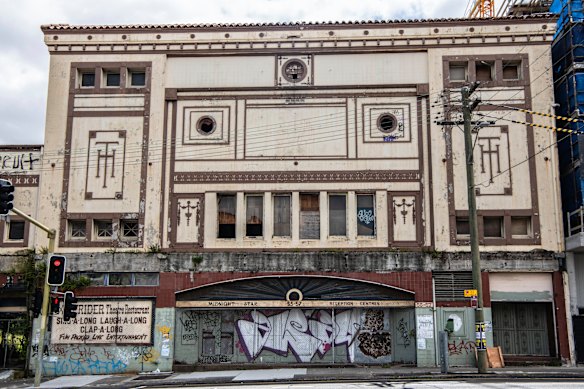
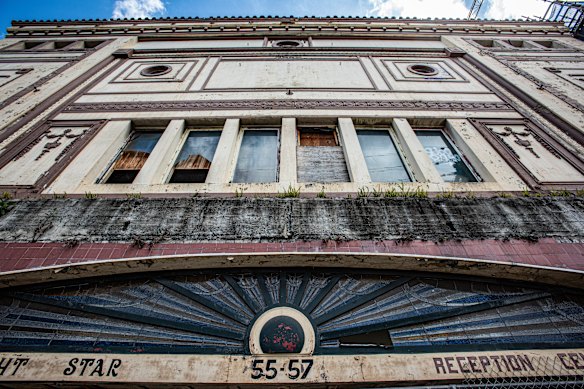
When it opened in 1925, the Homebush Theatre was the picture of luxury: an art deco “picture palace” featuring almost 2000 seats and a grand stage at its centre.
In the years that followed, the Parramatta Road building would live many different lives, including becoming the Homebush Ice Rink when the cinema closed in 1959.
In 1996, the former theatre had run out of luck and the doors shut for the final time.
Three decades later, the building bears the scars of years of neglect, a shell of its former glory. But through it all, remnants of what it once was remain on the face of the building: the letters ‘HT’ decorate both sides of the Homebush Theatre, above where the entrance used to be are the words Midnight Star Reception Centres and to the left, a sign advertising the Niterider Theatre Restaurant tells people to “sing-a-long, laugh-a-long, clap-a-long”.
There was one brief period of activity at the Homebush Theatre in the past 30 years. At the start of 2002, squatters began occupying the site, which they renamed the Midnight Star Social Centre. In a post shared to squat.net, the aesthetic of the building was described as “not dissimilar to a David Lynch film”.
“Velvet and chandeliers and olde worlde remnants of opulence,” it read.
For almost a year, it was used to hold raves, pirate cinema screenings and activist meetings, before the occupants were evicted by police over concerns it was being used as a nerve centre for anarchists.
Development challenges and what comes next
The last time a planning proposal was lodged for the site was in 2017. Walker Corporation had big plans: two residential towers would be built on the northern section of the block and the art deco facade of the former theatre would be maintained, while the rear portion of the building would be demolished for a shopping precinct.
Strathfield Council voted against the plan in 2018, citing concerns over the height of the towers and the “unacceptable” demolition of part of the building.
The proposal was formed in partnership with the owners of the building, a company called Oretone – a subsidiary company of Bondi-based liquor group Kemenys, according to ASIC records.
Brothers Andrew and Gabor Kemeny are listed as directors of the company. According to LinkedIn, Andrew is also the director of Kemenys, while Gabor, who also goes by Gabe, is the managing director.
This masthead contacted Kemenys for comment, with Andrew referring this masthead instead to Eugene Evgenikos, the managing partner of the Australian branch of Stanton Hillier Parker, a commercial real estate firm.
Evgenikos said its local heritage listing presented a challenge for redevelopment.
“One of the many challenges has been, given the heritage classification, the specialised improvements, the lack of commercial tenant demand, the cost of refurbishment with the dilapidated state of the improvements and the complexity to bring the building to comply with the building standards of today is totally prohibitive,” he said.
A Strathfield Council spokesperson said the heritage listing provides planning protections for the building, but does not require it to be repaired or reactivated.
“Its role is to ensure that the site’s heritage significance is properly considered, that alterations or demolition cannot occur without council consent, and that council decision-making appropriately balances heritage values with broader planning considerations,” the spokesperson said.
“The actual restoration, reuse or activation of the theatre is largely dependent on factors such as the willingness of the owner, the nature of any development proposals, the availability of incentives or heritage conservation agreements, and any specific policies adopted by council.”
The spokesperson said the council would be supportive of reactivation of the building, which falls within the Homebush Transport Oriented Development (TOD) accelerated precinct.
As for what comes next? Evgenikos confirmed the property is being prepared for market, with an expression of interest campaign to be launched soon.
The Sydney Morning Herald has a bureau in the heart of Parramatta. Email [email protected] with news tips.