
 2 months ago
69
2 months ago
69
When friends hear I’m going to Peru, I’m pummelled with the same question: “Are you going to Machu Picchu?”
The Inca Trail and its exhaustively photographed famous ruins feel less like an ancient mystery these days than a bucket-list box to be ticked. With strict daily visitor caps and tightly controlled tourist corridors, the Sacred Valley doesn’t feel so sacred.
Yet, there are still swathes of the Peruvian Andes that remain overlooked, with comparable ruins and terrain so unfathomably vast and untouched, you’re likely to have whole trails to yourself.
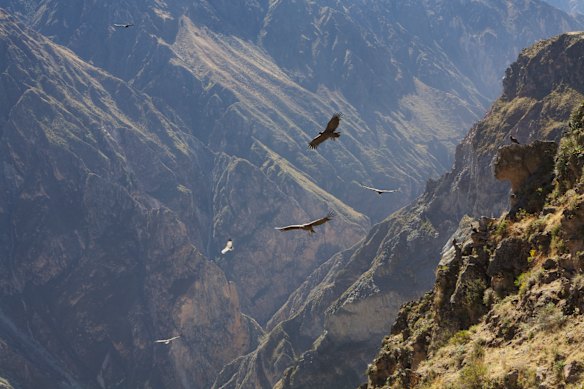
Colca Canyon flies under the radar, despite boasting one of the world’s deepest canyons – nearly twice the depth of America’s Grand Canyon, plunging 3400 metres at its deepest point.
This section of the Andes is famed for its thermal hot springs, dramatic volcanic backdrops and rare Andean condors – the largest flying birds of prey on Earth.
Sign up for the Traveller Deals newsletter
Get exclusive travel deals delivered straight to your inbox. Sign up now.
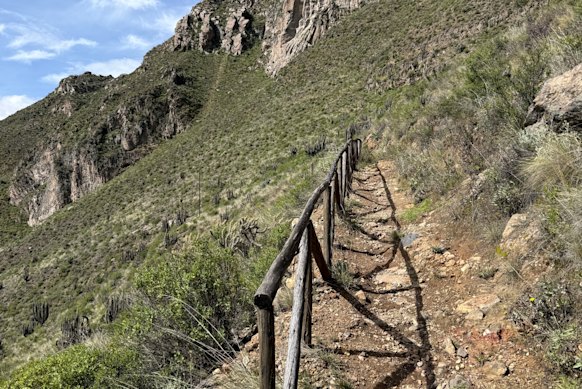
The main downside to this region is the physical toll that comes with the altitudes. We’ve been feeling the effects for days, even as our group of six approaches the trailhead to the Chimpa Fortress, a pre-Inca archaeological site built by the Collaguas more than 700 years ago. The return hike is a four-hour undertaking that begins at about 3330 metres above sea level, and rises roughly 715 metres before reaching the fort.
From the first step, the track launches into 45-degree inclines and instant lung burn. Locals recommend acclimatising for a few days in the colonial city of Arequipa before tackling these heights. Having spent just one night there, the transition is rough. We power through on mugs of coca and muna leaf tea, a minty traditional brew used to relieve the symptoms of altitude sickness, quietly hoping the mountain will reward us with a rare, out-of-season condor sighting.
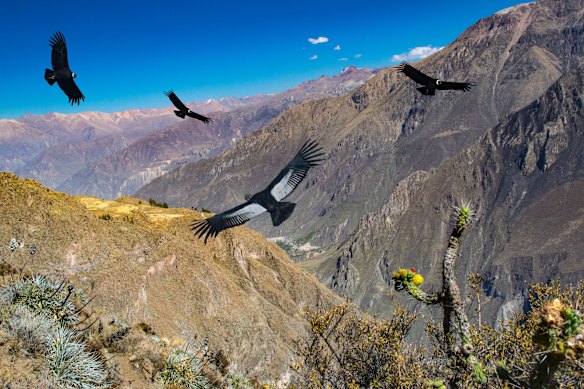
Most visitors keen for a glimpse of the region’s giant raptors bypass this gruelling trek entirely to join the tour buses crowding the famous Cruz del Condor viewpoint. But at least up here, we have the mountain to ourselves.
The uphill grind is made tolerable with the views. A terraced patchwork of potato, corn and quinoa crops unfold on the other side of the canyon in rippling shades of green.
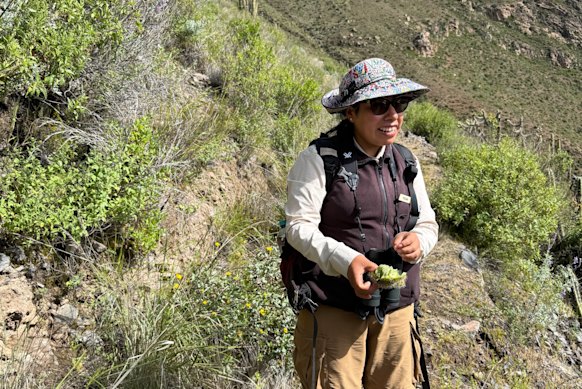
As we zigzag up the switchback trail, our guide, Yulisa Oxa, intuitively pauses at each turn to give us time to catch our breath. Gripping the timber railing, I haul myself up in sync with my strides, trying to mask my ragged gasps, certain the silence of the valley is amplifying my embarrassing lack of fitness to the rest of the group.
Suddenly, Yulisa breaks my concentration. “Look,” she says, gesturing to our left.
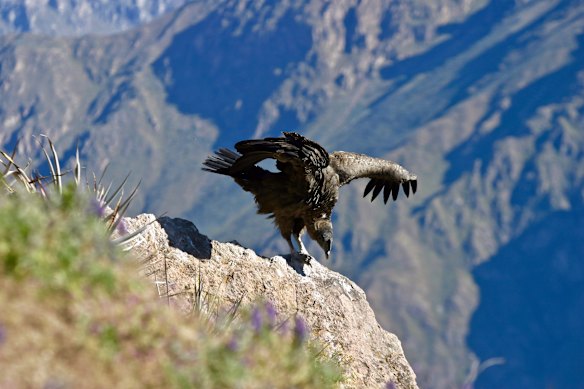
It takes a second to focus. Perched on a pile of rocks a kilometre away is a lone, dark figure jutting out against the canyon greenery. The regal creature stares up to the fortress. As we watch, it spreads its colossal wings and turns outward towards the valley, as though it knows we’re watching and can’t resist showing off its majesty.
“This is a young condor,” Yulisa explains. “You can tell because after eight years, its plumage changes colour, and it gets a white neck collar.”
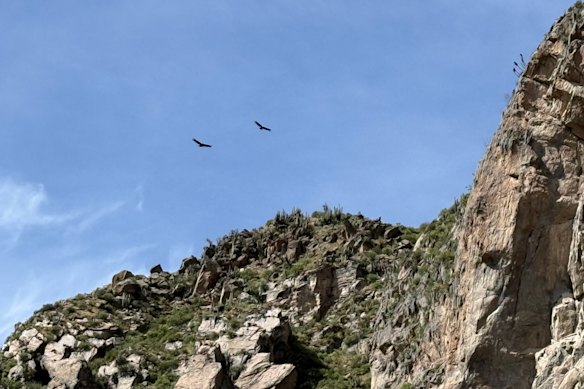
As we continue climbing, another emerges. Then five. Within minutes, 12 giant black silhouettes are circling on either side of us. Our small group is completely gobsmacked, heads whipping in both directions.
The Collaguas revered the condor as a deity, rulers of Hanan Pacha – the “upper world” above the clouds, a cosmic answer to heaven. Watching these giants glide effortlessly at heights of up to 5000 metres, riding the morning’s thermal currents, it’s easy to see why the ancient builders of this fort viewed them as sacred intermediaries with a direct line to their sun god.
Placing the fortress at the summit of the mountain wasn’t just a tactical move against rival tribes – it was also to ensure the site was under the watchful eye and spiritual protection of the mountain gods.
“There’s got to be a feast waiting for them down there,” one of our fellow hikers remarks. Yulisa agrees.
It’s highly unusual to spot this many in March, outside the dry season; the valley’s estimated 50-strong condor population tend to forage around the coast in the summer months, Yulisa says. May to November offers the best window for spotting them.
We press on. Along the way, Yulisa picks up a fallen sancayo, a native cactus fruit, from the dirt, breaking it open to reveal its jelly-like white flesh dotted with small black seeds, akin to a dragon fruit. “It’s tart, similar to a kiwi,” she says, before breaking into a grin. “We use it to make a Colca sour. Very refreshing.” We all agree this local riff on Peru’s pisco sour has some merit, and vow to try it.
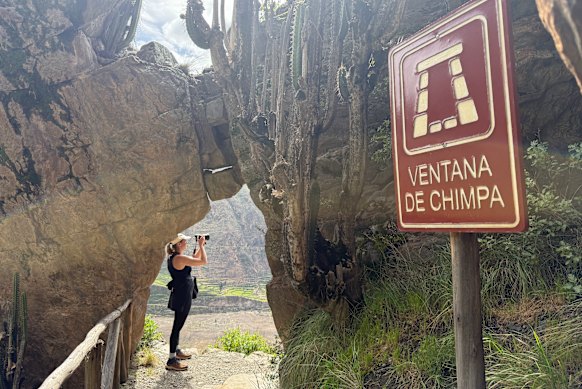
Halfway up, the trail delivers another surge of adrenalin at the Ventana de Chimpa, a viewpoint framed by a natural stone archway with a sheer drop. As I approach, I’m practising a very specific type of Andean meditation: mindful denial. If I don’t look down, where the cliff rapidly falls away and slopes sharply towards the canyon floor, I can pretend I’m not one misstep away from joining the condors in flight.
A fellow hiker offers to take my picture by the cliff; I grip one edge of the archway with a white knuckle, force a smile, then scurry back to the safety of the trail, with eyes locked on the heels of the person in front of me.
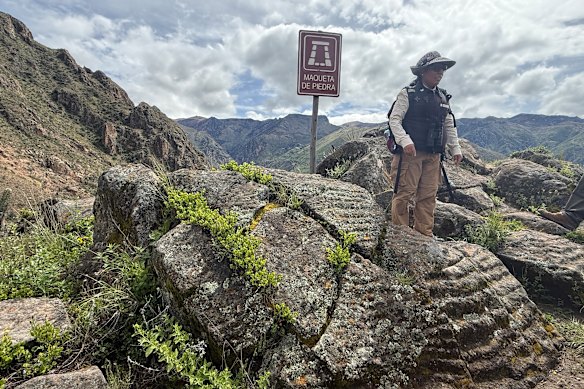
As we approaching the summit, we make our most remarkable discovery yet; an ancient rock carving once used as a 3D topographical map for the Collaguas to plan the surrounding agricultural terraces. It’s the original blueprints for the valley, etched into the rocks hundreds of years ago.
“That’s one of the coolest things I’ve ever seen,” I hear someone whisper, as I crouch down for a closer look.
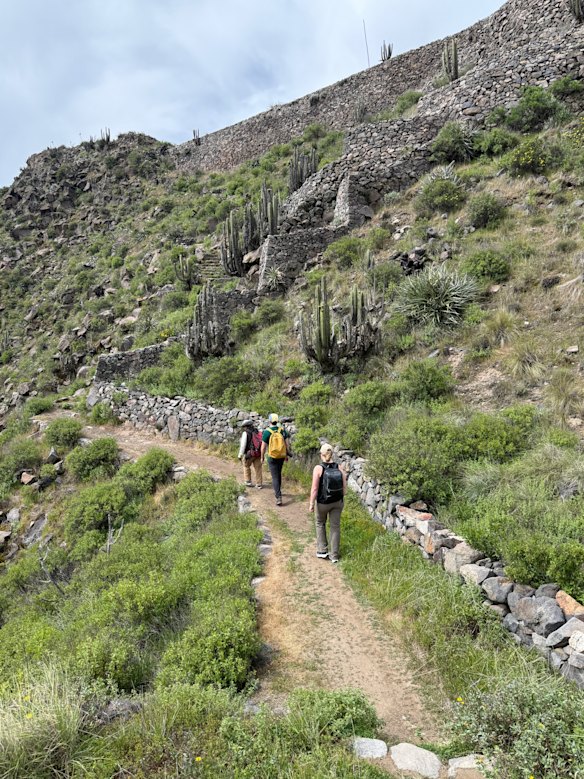
The final steps are some of the most harrowing, requiring a dizzying ascent up a zigzagging stone staircase with no rails to steady us. It leads us to a short stone tunnel that opens onto yawning views of the opposite valley.
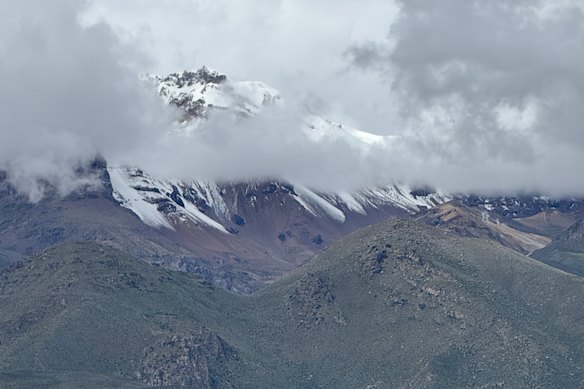
At the top of the fortress, the 360-degree panorama takes in the depth of the valley and, directly opposite, mighty Hualca Hualca, a 6000-metre extinct volcano whose snow-capped peak is temporarily poking through a veil of cloud. It’s the oldest volcano in the Ampato Volcanic Complex, a group of three volcanoes in the region including active Sabancaya.
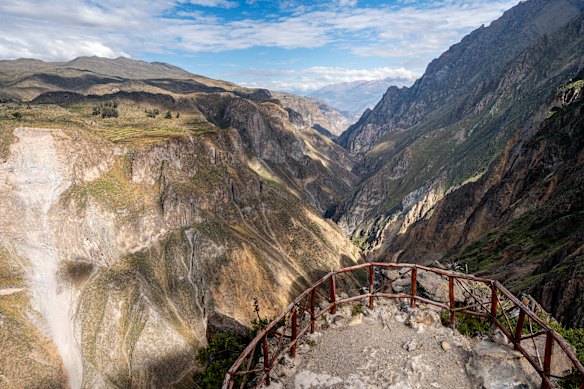
Before we descend, Yulisa leads us down a final path, scrambling over more rocks, and eventually reaching a stone staircase that coils around a rocky outcrop. I go first, stepping out onto a fenced ledge jutting over the abyss.
In front of me, the jagged ridges of the mountains braid into each other, swallowing the horizon. We’re easily twice as a high as any skyscraper back home.
We pause to take it all in. Soon we’ll be back at the trailhead, trading this majestic stillness for the warmth of hot coffee, French toast and lively conversation about the events of the morning. But for now, we soak in the sacred peacefulness of the valley, humbled in the face of these epic, ancient peaks.
Peru’s famous landmarks may be drowning in their own popularity, but out here on the volcanic edge of the Andes, the ancient world still knows how to keep a secret.
THE DETAILS
DO
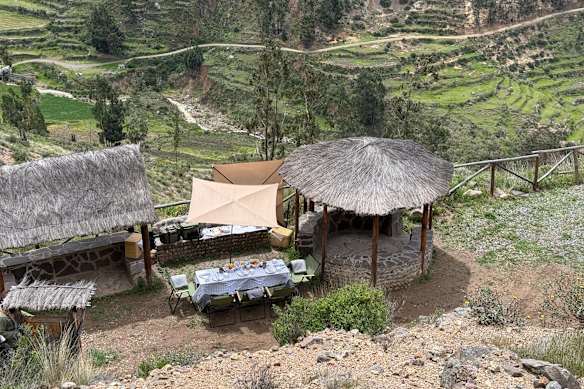
This guided Chimpa Fortress hike is one of the included experiences offered by Puqio by Andean. See puqio.pe
STAY
Abercrombie & Kent offers tailor-made itineraries to Peru, with optional stays at partner properties including: Cirqa, a half-board 16th-century former monastery in Arequipa, from $US562 ($793) a night; and Puqio by Andean, a fully inclusive luxury tented retreat in the heart of the Colca Valley, from $US1355 ($1913) a night. See abercrombiekent.com.au; andean.travel
The writer was a guest of Abercrombie & Kent.

















































