3 months ago
49
3 months ago
49
The community-governed era of the Collingwood Children’s Farm is coming to an abrupt end after the Victorian government directly appointed a disability service provider to take over its management.
The move was announced on the farm’s website last week and has sparked a fierce reaction among some locals. The takeover was triggered by a “real risk of insolvency” of the beloved inner-city farm, according to its leadership, after six consecutive years of operating deficits.
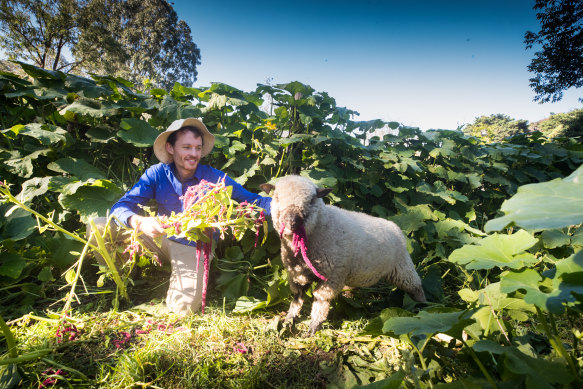
Simeon Ash gets some help gardening in the pumpkin patch at Collingwood Children's Farm.Credit: Jason South
Documents prepared for an upcoming vote at the farm’s January 28 annual general meeting reveal while the farm posted a modest operating surplus of $84,887 for the 2024-25 financial year, the result was artificial.
The farm’s CEO, Dr Marija Maher, told The Age that the surplus was only achieved by leaving key staffing roles unfilled for over a year.
Loading
“You can’t run an organisation like that,” Maher said. “If I attempted to bring those people in ... we would have been in such a huge deficit or insolvent.”
The farm’s main income source was ticket sales, which were highly weather-dependent, she said, while fixed costs for feeding farm animals were rising.
“Long story short, it was really evident to me that a very different solution needed to be found, and that the organisation was simply not financially viable to remain as it was,” she said.
Collingwood Children’s Farm was founded in 1979 as a community-led initiative to provide urban children living in nearby housing estates an opportunity to connect with nature and agriculture.
It sits on seven hectares of Crown land on the banks of the Yarra River next to the Abbotsford Convent. In the late 1990s, the state government sold adjacent land to private developers who planned to demolish heritage buildings for high-density housing, which triggered a massive community campaign that successfully lobbied to save the farm and convent for public use.
Under the new state-led transition, Wallara Australia Ltd – a large disability non-profit with an annual turnover exceeding $31 million – was appointed as the new committee of management on January 6.
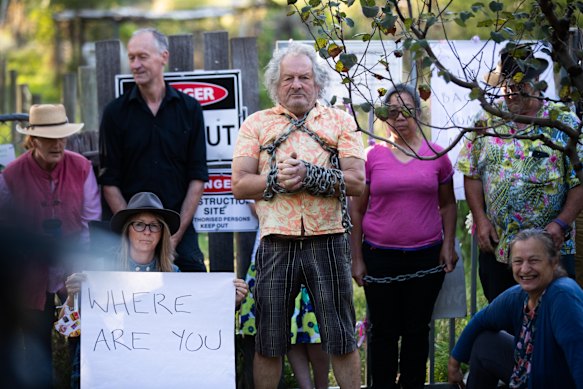
In 2022, inner-city gardeners chained themselves to the fences of their beloved veggie patches to stop the planned demolition of the Collingwood Children’s Farm community gardens after an eight-month furore over the future of veggie gardening on the site. Credit: Jason South
Wallara, which also runs Sages Cottage farm near Frankston, has committed to investing up to $1 million over the next 18 months into the farm’s run-down infrastructure.
Wallara CEO Phil Hayes-Brown said the core purpose and mission of the site would not change. “The local community will be able to enjoy the space just as they have for generations – with the added bonus of being able to provide meaningful employment for Melburnians with disabilities,” he said.
Hayes-Brown confirmed his organisation highly values the expertise of existing staff. “We ... can guarantee that there will be no redundancies or changes to these conditions for a mandated period,” he said.
Maher said the shift was a “good news story”, and that before this, she was looking at the prospect of a “fire sale” of animals and assets, as well as administrators being called in.
The farm has issued a statement saying the “animals, programs, events, school visits, and bookings continue unchanged”, and “the farm’s identity, values, and community role are preserved”.
However, Greens member for Richmond Gabrielle De Vietri slammed the transition as “privatisation” forced by state.
“Labor’s underfunding has pushed them towards privatisation just to survive,” De Vietri said.
Adam Promnitz, head of the Yarra Residents Collective, accused the government of orchestrating a deal while “no one is looking” during the holiday period, and argued the new structure silences local voices by winding up the incorporated association that gave members democratic voting rights.
The residents collective’s frustration stems from a 2021 crisis when community garden plot holders were abruptly locked out and some members had voting rights cancelled. Promnitz claimed the government has “despised the social contract the farm has with the community” ever since.
Maher was appointed CEO in 2024 and worked with the Department of Energy, Environment and Climate Action (DEECA) over the past year to find a new organisation to run the farm. She was adamant it was the only viable solution, and will herself give up her job in March as part of the process.
“We genuinely have nothing to hide,” she said.
An unknown number of members eligible to vote at the upcoming general meeting are being asked to dissolve the farm’s incorporated association entirely and hand its assets to Wallara. The appointment of the organisation is already complete.
City of Yarra Mayor Stephen Jolly, whose council holds one position on the current management committee, dismissed the notion the farm was being “privatised”.
“That’s just nonsense. It’s literally, objectively untrue,” he said. But Jolly did criticise the farm for poor communication of the plan, and urged a tweak to the proposed governance structure to give locals input into how the farm should be run.
“It’s like sacred lands for the public, not just because of its beauty, but also because of its history – they fought for it, to save it,” he said.
A spokesperson for the Department of Energy, Environment and Climate Action confirmed the farm approached the government in early 2025 for financial assistance and that the minister for environment provided support for the farm’s immediate financial position while it explored partnerships.
“The Collingwood Children’s Farm is not being sold off, it has been a vital part of the community for more than 40 years and this will not change,” the spokesperson said.
Start the day with a summary of the day’s most important and interesting stories, analysis and insights. Sign up for our Morning Edition newsletter.
Most Viewed in Politics
Loading