
 3 months ago
76
3 months ago
76
Nicholas Verso knows a thing or two about making children’s television. He’s won a Logie for his series Crazy Fun Park, and an Australian Directors’ Guild Award for his work on Grace Beside Me. More recently, Invisible Boys, though catering to a slightly older audience, made such waves at home and abroad that it earned a coveted Peabody nomination.
Yet, even with this impressive resume, Verso’s new ideas are falling on deaf ears.
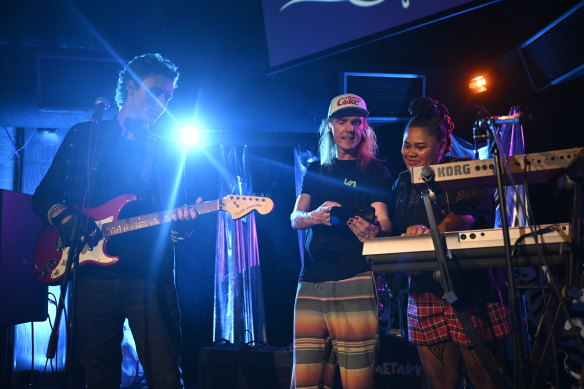
“People don’t even want to hear the pitch,” he says. “The ABC is the only door you can really knock on … No other network or streamer is interested in [young] audiences. YA is a dirty word in Australian commissioning now.”
In 2020, the then-Coalition government removed commercial quotas on children’s content. New research suggests that triggered a 97 per cent collapse in the total investment in commercial kids’ television. While mega-popular shows like Bluey and Play School continue building their empires, the commissioning of new shows has largely fallen by the wayside.
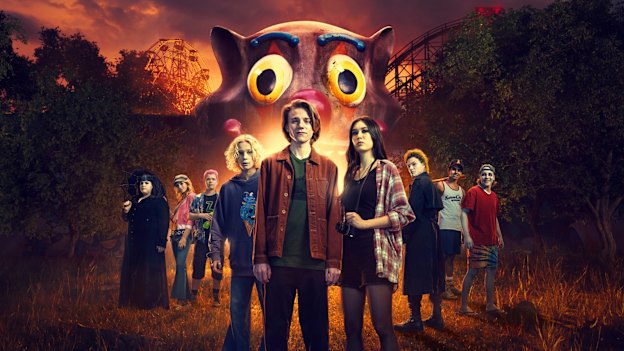
“If we don’t fix this, I give our industry 10 years before we’re over,” Verso says.
It sounds dramatic, but he may not be far off. According to a new report by RMIT’s Streaming Industries and Genres Network, released as part of consultation for the National Cultural Policy, children’s television is currently in crisis.
A perfect storm
According to Screen Australia, only five children’s shows went into production in 2024-25, down from 20 in 2018-19. Meanwhile, a historic low of 21 hours of new children’s drama entered production last year. Comparatively, 167 hours went into production in 2018-19.
Even at the national broadcaster, which has long been Australia’s primary children’s content commissioner, the output for kids is declining. Since 2018-19, the ABC has seen a 59 per cent decrease in new hours of Australian children’s content, according to the RMIT report.
In response, an ABC spokesperson says the broadcaster’s overall investment and expenditure in children’s content “has not declined, but rather our content slate has evolved towards externally produced content” since 2018-19. They claim the ABC’s overall investment in children’s screen programming increased by 9 per cent between 2018-19 and 2024-25.
“The ABC remains committed to increasing its spend on children’s programming year-on-year and to prioritising external productions.”
However, Dr Jessica Balanzategui, lead author of Australian Children’s Television at the Crossroads, says we’re seeing a “perfect storm of sector-wide contraction”.
“We have this paradox where we’re seeing the sector contract at this very cultural moment when local screen content is more important than ever for children’s social cohesion.”
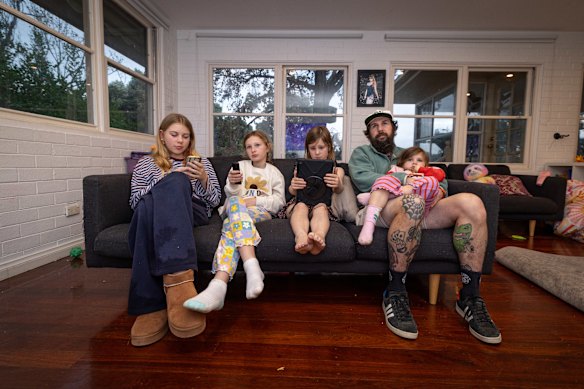
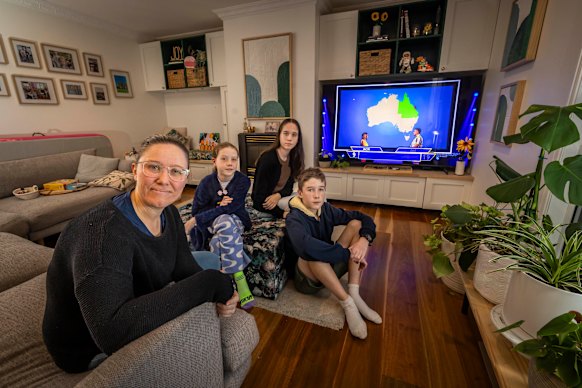
This isn’t just apparent in industry circles, but also in Australian living rooms. Jordan Canham, a father of five in Warrandyte, north-east of Melbourne, says his children almost exclusively watch American shows. The only local production they consume is the ABC’s Caper Crew. Other than this, Canham says he couldn’t name any new Australian kids’ shows from the past two years.
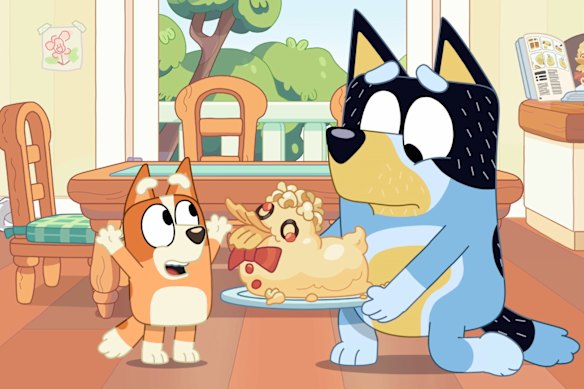
“We need bigger commitments to funding these shows,” he says. “It’s so important that the kids see Australian content. In the case of Bluey and Kangaroo Beach, they’re relatable and relevant to our way of life. They’re generally not pretentious, obnoxious and not based on over-glamorised stereotypical Hollywood storylines.”
Rising costs and streaming pains
The decline can largely be traced back to the 2020 removal of commercial quotas on children’s content. This erased any obligation for commercial broadcasters like Ten, Seven and Nine to air a certain number of kids’ productions each year.
The situation worsened as the cost of creating children’s television, particularly live-action shows, ballooned. According to the RMIT report, the average per-hour cost of live-action children’s production has tripled in the past five years.
These costs initially rose due to COVID-19, Balanzategui says, but then remained high as streaming proliferated, setting a precedent around production values.
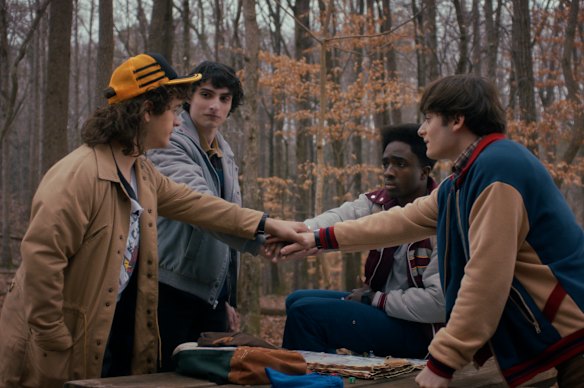
“A tent-pole Netflix show like Stranger Things, for instance, sets a certain standard around how content for young people should look. It’s also important for our sector to be able to sell the shows they make internationally to be able to make money from them and so that our local stories can contribute to global pop culture.”
SVODs (subscription video-on-demand) platforms such as Netflix once contributed considerable funding to commissioning children’s content, but that has also largely dried up over the past five years. The RMIT report notes there were no new SVOD Australian children’s commissions reported last financial year.
Between 2021 and 2025, the SVOD sector contributed funding to six Australian kids’ shows, the report states. Netflix’s acquisition of the back catalogue of Mako Mermaids, a franchise that stopped production in 2016, was included in that funding.
“Even if we look closely at the actual content that SVODs have funded, when it comes to specifically Australian kids’ shows in the past five years, it’s not much, and it’s heavily reliant on our broadcast and public screen agency sector.”
Balanzategui refers to this as the “SVOD mirage”: it creates the impression that there is plenty of children’s content available, however, much of it isn’t actually new or funded primarily by SVODs. Netflix was contacted for comment.
To tackle this, the Albanese government introduced new quotas late last year. Under the new laws, streaming services with more than one million Australian subscribers are required to invest at least 10 per cent of their total program expenditure for Australia (or 7.5 per cent of their revenue) on new local drama, children’s, documentary, arts and educational programs.
However, Balanzategui says this new legislation isn’t failsafe given it doesn’t specifically apply to children’s content. Without sub-quotas, there is no guarantee children’s programming will be prioritised.
This would be particularly disappointing given the quantity and quality of children’s shows commissioned by Australian commercial broadcasters in the past. There used to be a seemingly endless supply of iconic kids’ shows on TV, including Round the Twist, Dance Academy, Mr Squiggle and Mulligrubs.
Ten, Nine and Seven, as well as SBS were contacted for comment.
Under the new legislation, the ABC received an extra $50 million over three years to support the production of new Australian children’s and drama content. But Balanzategui says ABC leadership has already suggested – following the SVOD drive for premium content – that the broadcaster will focus on a few top-tier, easily commercialised shows rather than a wide array of programs.
However, according to an ABC spokesperson, the first commissions from this funding are both children’s productions: Bananas in Pyjamas and the Treehouse series.
What about YouTube?
YouTube is now the most popular platform among Australian children; however, the new quotas do not bring it into consideration. This means YouTube is not obligated to prioritise Australian-made content, or to make Australian content easily identifiable or discoverable.
With so many Australian children using YouTube as their primary entertainment platform, Balanzategui says there needs to be some kind of regulated algorithmic prioritisation of local content. Otherwise, children may drift further and further away from Australian stories.
The tween problem
Robyn Papworth, a Melburnian mother of three tweens, has found that the older her kids get, the harder it is to find them new shows to watch. Without solid YA options, they resort to reality programs like The Floor, I’m A Celebrity… Get Me Out Of Here! and Have You Been Paying Attention?.
Even classic Australian tween shows don’t work for her family.
“I used to watch Saddle Club, but I won’t let my kids watch it because it doesn’t show positive social role modelling between teenage girls,” Papworth says. “There’s just not much in that tween zone now, so that’s why we usually watch reality shows … And even some of that is a bit too inappropriate sometimes.”
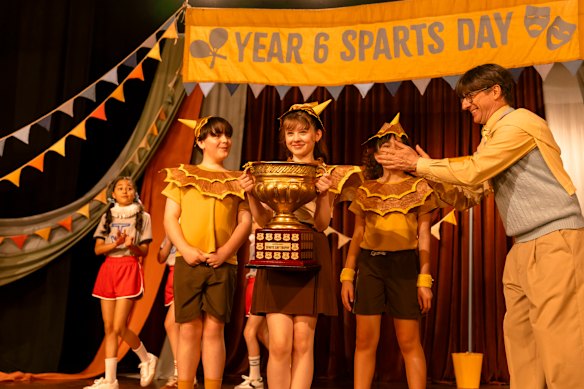
This is an issue for tween parents across the country. Australians aged 10 to 14 have been largely deprioritised across the sector, Verso says. Even the ABC recently chose not to renew licences for shows like Crazy Fun Park, MaveriX and The PM’s Daughter.
“If the ABC decides they don’t want to create anything for tweens, it just ceases to exist,” he says.
“Kids need these stepping stones. Once you graduate from Bluey, you need another show to go up to, and then another show after that … Basically, kids are going to hit a wall of Australian content around the age of 10 or 11, and then there’ll be nothing for them until their 30s. They’ll spend the next 20 years digesting American content.”
Of the shows that do exist, few are actually set in Australia. Verso was strongly advised to set his upcoming YA shows in the US to make them more “commercial”.
This is particularly worrying given the social media ban for under 16s. One of the driving factors behind this legislation was to redirect young Australians’ attention away from unregulated global platforms and towards more culturally enriching content. However, local age-appropriate entertainment is now alarmingly lacking.
“We’re not enhancing Australian culture or telling Australian stories,” Verso says. “I still remember that thrill as a kid when I saw the streets I lived on appear on TV. We’ve lost that because of this focus on numbers as opposed to the effect on culture.”
However, an ABC spokesperson says the broadcaster “continues to actively develop and commission shows for older children”, including recent titles like Do Not Watch This Show, Hard Quiz Kids, Caper Crew and Teenage Boss.
Pockets of hope
It’s not all doom and gloom. Australian Children’s Television Foundation chief executive Jenny Buckland says her organisation is commissioning more kids’ content than ever, including recent releases like Caper Crew, Knee-High Spies and Tales From Outer Suburbia.
Before 2020, Buckland said the organisation received just under $3 million per year in Commonwealth funding. After the removal of commercial quotas, they were given $20 million, which they spent over about four years. Now, their average funding sits at about $7 million a year.
However, much of the burden to commission this type of content now sits with the ACTF, SBS/NITV and ABC. Though Buckland considers this a joy rather than a burden, she admits it has resulted in the loss of “middle-ground” kids’ television.
“We’re left with high-end, ambitious content, meaning there’s fewer long-running, bread-and-butter dramas,” Buckland says. “Children develop a connection to shows when there are many episodes … If there are only 10 episodes, you need two or three seasons for kids to become really connected.”
Think of the children
What needs to be done to resolve this crisis? The RMIT report outlines six key suggestions.
While funding remains a major focus, Balanzategui says directly involving Australian children in kids’ programming could revolutionise the sector. It has already done so in Denmark, where its public broadcaster offered children junior editor roles on productions like Klassen.
“The Danish example shows that it helped make the program resonate more with tween demographics. Klassen recently reached its 1000-episode mark, Denmark’s longest-running series. It also helps build media literacy, and even maybe early talent development,” she says.
Buckland says this has ultimately become a children’s rights issue.
“There may be a $150 million American film shooting in Queensland or Melbourne. How many millions of dollars is the government putting in to support that? Meanwhile, the ACTF gets $7 million a year to invest in kids’ shows,” Buckland says.
“That seems like a pretty small amount comparatively, and that’s our children’s audience we’re talking about. Our children, our culture.”
Want more TV? We’ve got you.
- Newsletter: Find out the next TV, streaming series and movies to add to your must-sees. Get The Watchlist delivered every Thursday.
- John Safran: He made his name on Race Around the World, now the professional agitator is back where he began – as a judge. Plus, we review his new SBS documentary about free speech.
- Off Campus: The YA adaptation has broken streaming records, and its Australian star Josh Heuston is feeling the love.
- The Assembly: Why this much-loved ABC show is more than “inspiration porn”.
- Rolf Harris: A new ABC documentary gives the disgraced entertainer’s Australian accusers a chance to be heard.
- Video: Deputy TV editor Meg Watson on the TV shows she recommends watching right now (below)

















































