3 months ago
19
3 months ago
19
The property market finished 2025 in a different state to the way it began, as early hopes of mortgage relief were ultimately dashed.
Home values rose throughout the year as the Reserve Bank delivered three cash rate cuts, enabling buyers to borrow more. But by late 2025, economists were predicting there would be no more to come in this cycle.
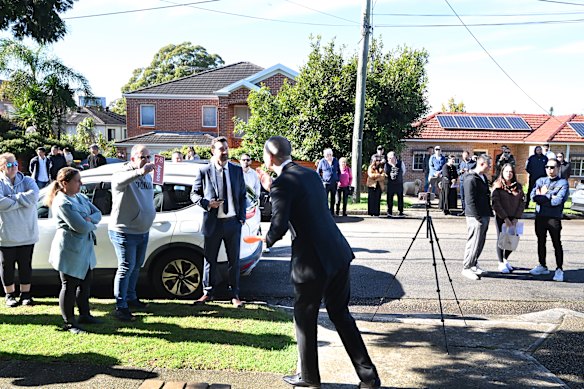
Property values rose about 7.7 per cent in 2025.Credit: Peter Rae
Cotality head of Australian research Eliza Owen said Australian home values rose 7.7 per cent over the year to the end of November, above the last calendar year’s result of 5.2 per cent – and above the 20-year average of 5.1 per cent.
The result was boosted by a property boom in the smaller capitals, however. Sydney home values rose a more modest 5.1 per cent and Melbourne 4.2 per cent.
“Falling rates pushed the market into outperformance this year,” Owen said. The cash rate is now 3.6 per cent.
Loading
“The rate relief delivered through 2025 created a relatively rapid response from the major banks in terms of reducing mortgage rates. And I think up until the final quarter of the year, there was a strong consensus that we would get further rate relief in 2026.”
She said this led to a strong start to the spring selling season, but that towards the end of the year, a pick-up in inflation changed the rate outlook which in turn started to affect the property market. This led to value growth plateauing in Sydney and Melbourne over the four weeks to mid-December.
“As we’ve come to the very end of the year, market conditions have turned pretty drastically from where they were during spring,” she said.
Owen added that ongoing high mortgage costs, despite the reductions this year, had prompted buyers to consider homes at the more affordable end of the market, pushing up their values. The cheapest 25 per cent of homes rose in value by 9.5 per cent this year, compared with only 6.2 per cent for the most expensive 25 per cent of homes.
“Stretched affordability has meant that middle- and high-income buyers have been diverted to the lower end of the property value spectrum, and that’s increased home values most in some relatively low-value pockets of the market,” Owen said.

Interest rate cuts meant buyers could borrow more.Credit: Joe Armao
Domain chief of research and economics Dr Nicola Powell recalled that rate cuts had been expected in 2024, but did not materialise until this year when they became a defining feature of 2025’s market.
“We saw the rate reductions provide greater momentum, particularly to Sydney, which is much more sensitive to changes in the cash rate,” she said.
“Melbourne is that market that had struggled to move into an established recovery – 2025 was a definitive moment for Melbourne,” she said.
Loading
During the year, first home buyers were given more options including an expansion of access to the Australian Government’s 5% Deposit Scheme. This allows purchases on a 5 per cent deposit up to set property price caps, and since October is available to buyers on any income.
The government’s Help to Buy shared equity scheme opened in December, allowing buyers to co-purchase with the government and reduce their mortgage repayments.
Powell said for many first home buyers the incentives would be a game-changer, but she agreed that more affordable properties were outpacing the upper end for price growth.
“First home buyers struggle in the face of rising prices, and that is basically what the market presented to them in 2025,” she said.
“So while they have been given a lever to get into the market through government schemes, ultimately they’re paying more for a home.”
She added that investors made a comeback in 2025 and are now just over 40 per cent of home loans that are being financed, albeit concentrated in the established market, which meant that the purchases were doing little to create new supply.
She described housing affordability as “extremely strained”.
“The aspiration of owning a home is still there, but the aspiration is changing.”
Loading
Ray White chief economist Nerida Conisbee agreed, describing housing affordability as “not great”.
“Obviously prices moved a lot this year,” she said. “The places that really felt it were places that were very cheap, particularly prior to the pandemic.”
She said the market in 2025 had been stronger than had been expected in late 2024, when price growth was slowing and even fell briefly. But hope for rate cuts as 2025 began marked a turning point, she said.
Now, she expects an interesting start to the market in 2026, as some economists warn interest rates could rise.
“A lot of what has driven price growth over the past five years has continued,” she said. “And we don’t have a lot of housing supply. But even talk of a rate rise will really slow things down.”
Most Viewed in Property
Loading