2 months ago
22
2 months ago
22
Opinion
December 9, 2025 — 3.45pm
December 9, 2025 — 3.45pm
In the immediate glorious years I first had no family responsibilities, I kicked out the jambs. Partied hard. Ate out a lot. Theatre. Music. Hell. Yeah. This is what life looks like after the kids leave school. Briefly.

After the kids left school, we partied hard. Credit: Getty Images
Then the bad emails started. No, they were not demands for money because of my apparent visits to porn sites. They weren’t even fake bills for services I’ve never had anything to do with (I mean, thanks for suggesting I buy penis-lengthening services but no need). Nor were they suggesting I could use a new web designer or buy Parisian jewels (hey, I could just use a ladder and get my own, right?).
What was once a night of culture and anchovy toasts became a test. These emails demanded feedback. For. Every. Single. Thing. I’ve. Ever. Done.
Night at the theatre? Feedback. Early dinner at a new bar? Feedback. An Australian Post delivery? Feedback. Deliveries of toilet paper? Feedback. A visit to pictures at an exhibition? Feedback (which in this case asks me to say whether I thought visiting the show made me feel proud to be Australian. Or similar. Ridiculous).
Shopping. Eating. Buying Christmas presents. It’s a shame I can’t deliver feedback on the cleanliness of some of the loos around the town. I have things I’d like to say to shopping centre operators around Australia. Such as pay your cleaning staff much more than you do. Employ more of them.
Loading
Thing is, these emails don’t want to know what I really think. If they did, they would be designed quite differently. I asked Joel Pearson, a professor of cognitive neuroscience at UNSW, what the hell was going on with my inbox.
He confirmed the worst. This is a nefarious plot by capitalists to get me to give them free labour. Ok, that’s not exactly how he put it because he’s a measured academic and I’m a cranky old woman with multiple competing priorities.
“They are trying to get free information back,” then he pauses. He’s indignant too. “They are actually asking me to do free work for them, squeezing us for more information.”
And he confirms what I’ve long suspected. They don’t want to know what I really think.
“You can design these questionnaires to get real feedback or you can design them to bias people to give more positive feedback.”
And guess what? These emails I get are really about trying to persuade me to respond in a jolly and cheerful way. Pearson says these are nudges, working on our cognitive biases to manipulate a more positive response.
In 2008, behavioural economist Richard Thaler and legal scholar Cass Sunstein popularised nudge theory, the way we are persuaded to make better choices. I’m guessing that’s what’s happening in these feedback forms. And by better, I mean reinforcing the decisions businesses have already made.
I want the opportunity to deliver sludges, not nudges, the possibility that I can give real feedback to help improve the service I’m getting. Sunstein and Thaler describe sludges as working towards evil – but nah, sometimes it’s just important to let people know what you really think.
People, I just want to give it to you straight. If you are, for example, putting on a performance of King Lear and you’ve got one of Australia’s greatest practitioners of comic timing as the Fool, make sure the audience can hear him. New bar in a groovy inner-city spot? Please don’t put baby (aka old people) in the corner. Sure, I’m going grey but, believe me, I know how to show people I’m having a good time. Which I didn’t in your dark and dingy booth in the back of the restaurant, far away from anyone under 35.
And let me quote Good Food’s fabulous wine writer Katie Spain on wine waiters and their strange responses when you ask for the wine to be cooler.
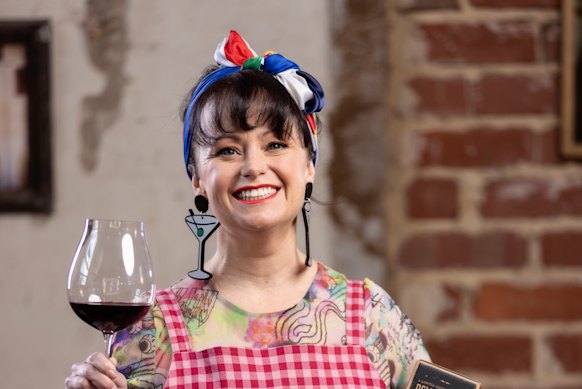
Katie Spain: “It is so simple to serve the wine at the right temperature”.Credit: Ben Macmahon
“It really annoys me. It is so simple to serve the wine at the right temperature. I don’t want to deal with one more staff member looking at me baffled when I ask for a chilled red wine. We live in Australia.” And if I wanted a wine so cold I couldn’t taste its contents, I would have asked for a frosé. Or a visit from Elsa.
Let me say this. If you are being a conscientious choice architect when you design your surveys, you are genuinely better off knowing what really happened to me when I consumed your product. If you want repeat custom. How do I know this doesn’t happen? On the very few occasions I’ve delivered tough love, not a single response.
As Pearson says, “I’m actually doing you a favour and helping your business.”
For free. I reckon we should all rise up and reject the surveylance society. We’ve all got better things to do with our time.
Jenna Price is a regular columnist for The Sydney Morning Herald and The Age.
Get a weekly wrap of views that will challenge, champion and inform your own. Sign up for our Opinion newsletter.
Most Viewed in National
Loading