3 months ago
19
3 months ago
19
A 33,000-square-kilometre expanse of land in south-west Queensland will be protected from major mining activity after federal Environment Minister Murray Watt placed the site of Indigenous significance on the National Heritage List.
Mithaka cultural landscape, which spans the Barcoo and Diamantina shires, has gained interest as the site of the East Lake Eyre Trade Route, believed to be the most extensive Indigenous trade and exchange network.
The area has multiple well-preserved sites, including quarries, standing gunyahs (homes), and stone arrangements. One of these quarries is the largest in the world created by a pre-agriculture society, and two of the housing structures date back to 1770 and 1787.
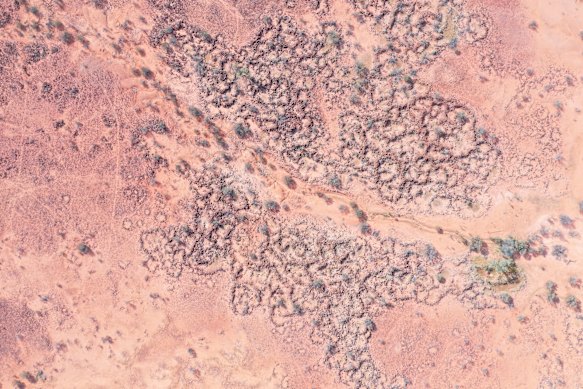
An aerial view of Mithaka quarries, one of which is the largest in the world created by a pre-agriculture society.
The site’s inclusion on the National Heritage List means anyone planning to carry out activities in the area will need a self-assessment of whether it could significantly impact the listed value of the area. This generally does not include day-to-day pastoral activities.
“The area tells the story of some of Australia’s earliest manufacturing and trade,” Watt said.
“It provides fascinating insight into village life on an important trade route, and holds an ongoing, meaningful cultural connection to the Mithaka People.
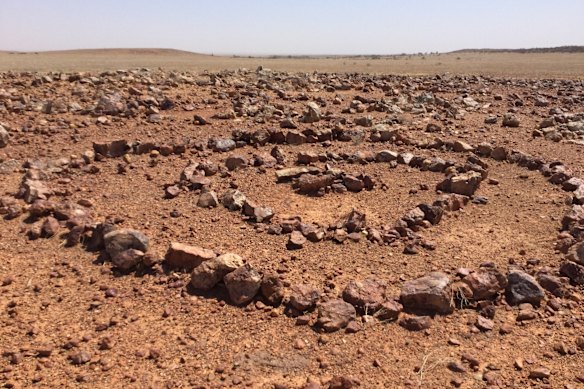
Some stone arrangements on Mithaka Country have links to constellations.
“The Mithaka traditional owners have been extremely hands-on in seeking this national heritage listing, which will protect this significant site into the future.”
The area’s cultural significance extends to being the site of one of the oldest examples of reconciliation between Indigenous people, white settlers, and the Native Mounted Police.
Stone arrangements at the site are believed to have been used for ceremonial and other activities, while some have links to constellations. Multiple Dreaming stories also originated within Mithaka Country.
To date, 600 sites have been recorded in a small section of the landscape, and researchers expect more to come.
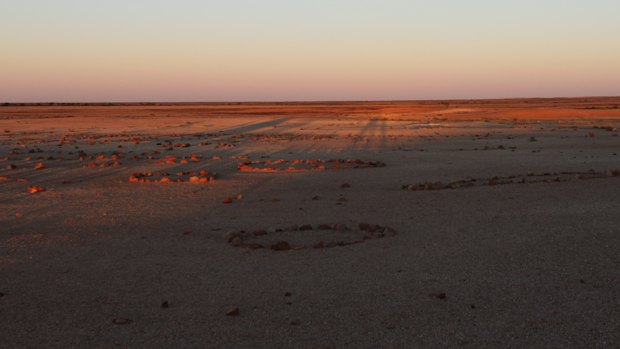
Stone arrangements on Mithaka Country were believed to have been used for ceremonial and other activities.
Traditional owners will now have access to the Australian Heritage Grants program, which will help with its management.
Earlier this year, Watt faced criticism from traditional custodians after the Albanese government approved Woodside’s North West Shelf gas project in WA.
The company’s continued operation of the huge project came with 48 conditions aimed at avoiding “unacceptable” damage to ancient rock art in the Murujuga National Park on the Burrup Peninsula.
The World Heritage-listed Aboriginal rock art, known locally as Murujuga, is up to 60,000 years old.
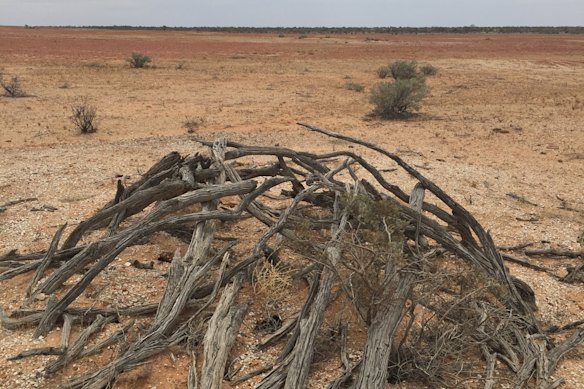
A Gunyah (house) on Mithaka Country.
Traditional custodians said the extension was a “slap in the face”, and that continued emissions from the project would damage the rock art.
Start the day with a summary of the day’s most important and interesting stories, analysis and insights. Sign up for our Morning Edition newsletter.
Most Viewed in National
Loading