2 months ago
27
2 months ago
27
February 1, 2026 — 6:00am
Scott Morrison’s contribution to the post-Bondi political debate this week, delivered from the safe distance of Israel, served to remind Australians of many things about Morrison, most of which we were happy enough to forget.
In the public mind, Morrison is still associated with the pandemic and all its privations, his Hawaii trip during the bushfires, his true-enough assertion that he didn’t hold a hose, the illegality of robo-debt, and the constitutional outrage of his secret ministries.
Pull on the Morrison memory thread, and it keeps unspooling – remember when, after the March 4 Justice in 2021, he said that it was a “triumph of democracy” that the women protesters had not been “met with bullets”?
“This is a vibrant liberal democracy. Not far from here, such marches, even now, are being met with bullets – but not here in this country. This is a triumph of democracy when we see these things take place,” Morrison told parliament.
If you squint, you can see what he was trying to say. But the conjuring of mass shootings of women was not the ideal message for marchers enraged by the ongoing catastrophe of violence perpetrated against them by men.
Many on Morrison’s side of politics hated that all men were scooped up into this slur. They refused any insinuation all men were inherently violent or misogynistic, or that they should all be made to answer for those of them that were. They even invented a social media hashtag for it: #notallmen.
Do Muslim Australians deserve a similar benefit of the doubt?
Morrison’s speech this week suggested that any such right is outweighed by the stark tragedy of the Bondi massacre – perpetrated by two Muslim men, one Australian, one Indian – apparently motivated by a vile antisemitic ideology.
Morrison said that “after December 14, all options to combat antisemitism must be on the table … that includes how religion is practised and governed in Australia”.
But he was only talking about one religion – Islam.
He called for “nationally consistent, self-regulated standards” for Islamic institutions, as well as “recognised accreditation for imams, a national register for public-facing religious roles, clear training and conduct requirements, and enforceable disciplinary authority”.
Furthermore, Australia’s Foreign Influence Transparency Scheme should be expanded to capture foreign funding of (Islamic) religious institutions.
He asserted that “these reforms are not about policing faith” and that “where similar weaknesses exist in other faiths, including my own … the reforms and requirements should apply.”
He said that in Australia, other faiths “operate under strong governance frameworks” that were “held to account” during the Royal Commission into Institutional Responses to Child Sexual Abuse, which neatly glosses over the fact that such governance clearly failed. Hence, the need for a royal commission.
In the Catholic Church in particular, “governance” did nothing to prevent, and much to enable, the mass criminality of the Catholic priests who sexually abused children for generations.
Morrison also praised countries such as Saudi Arabia, the United Arab Emirates, Egypt and Jordan, who “have reasserted authority over religious teaching” and disrupted extremist funding.
Not unrelated is the fact that these countries are repressive authoritarian regimes, which, in the case of Saudi Arabia, violently suppress women and Christians, among other groups.
What to make of this extraordinary Morrisonian intervention, delivered from so far away?
The Australian National Imams Council said the comments were “reckless, irresponsible and deeply ill-informed” and said that “to blame an entire community for the actions of a few criminal terrorists is unacceptable, rejected, and undermines our social cohesion”.
The Lebanese Muslim Association said that Morrison was “the last person the Australian Muslim community would ever seek advice from”.
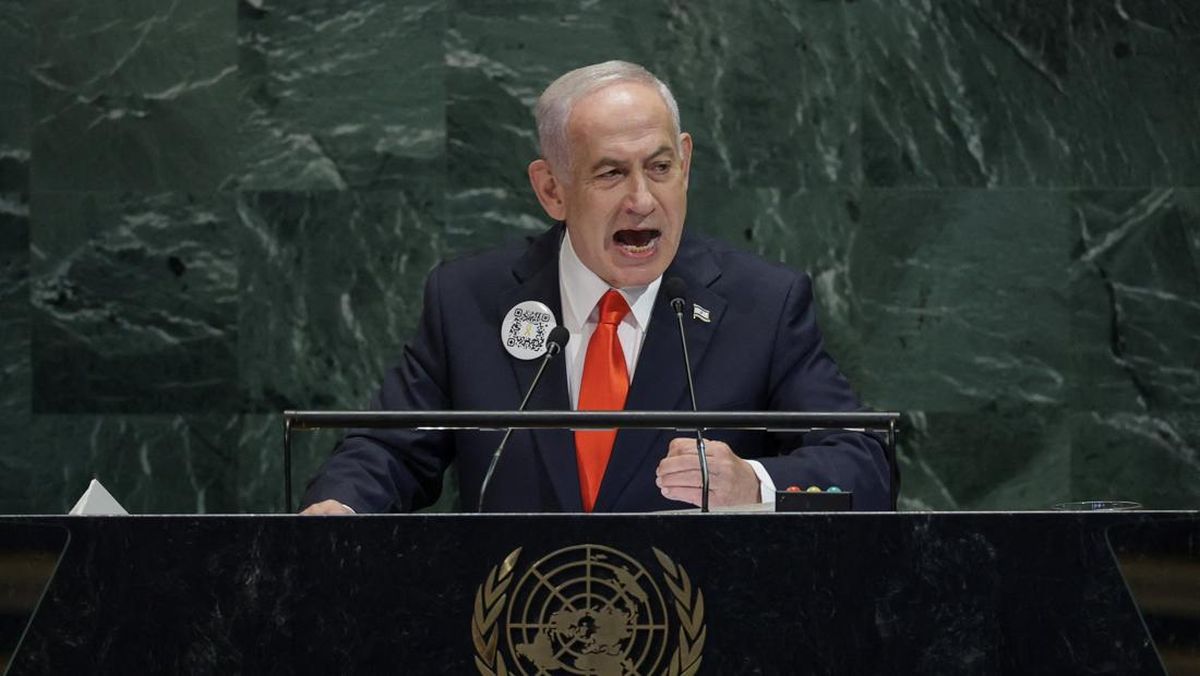
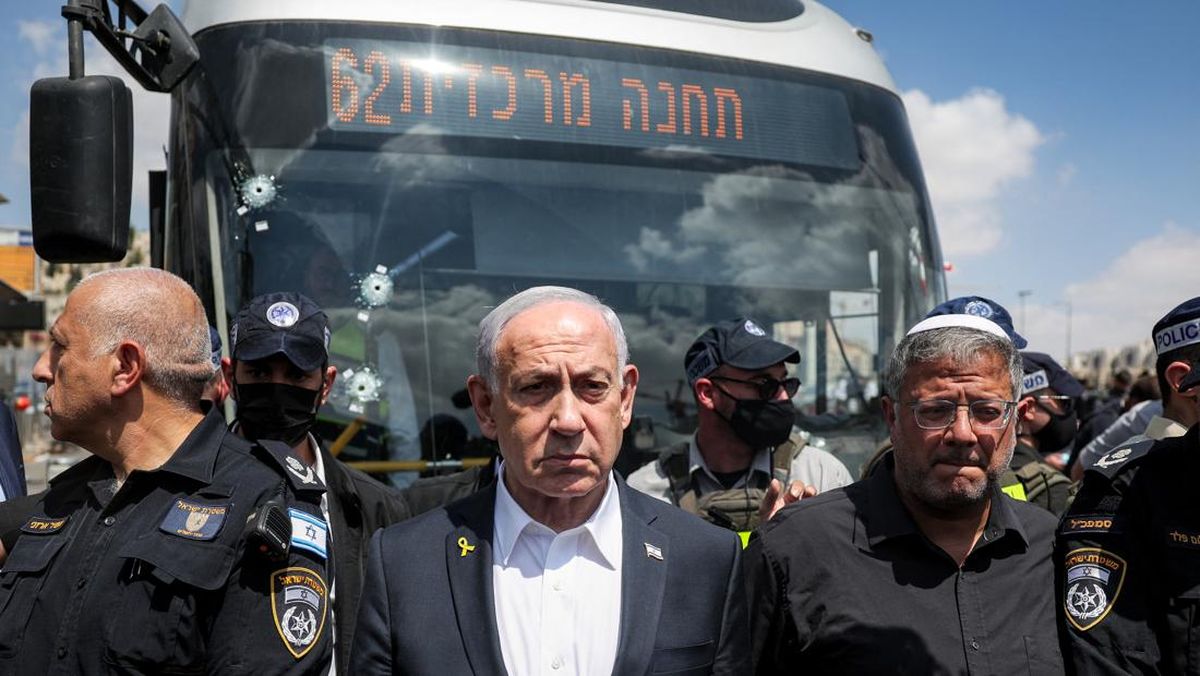
Morrison had a fan in Israeli Prime Minister Benjamin Netanyahu, who hailed him as a “terrific, terrific champion of our people”.
But as a former prime minister, his first duty, surely, should be to champion Australians, including Muslim-Australians. Morrison’s proposals amounted to an onerous, anti-liberal and utterly unworkable system of superintendence imposed on Muslim-Australians and no one else.
The former Liberal member for Cook also believes Muslim preachings should be translated into English (by whom, and how, it is not specified), which sounds a lot like the government would be undertaking surveillance of religious preaching. This, from a former PM who tried (and failed) to push through religious discrimination legislation. (That legislation failed to get up because some faith groups wanted protections enabling them to discriminate against gay and lesbian teachers, among other things. Even Morrison, a great champion of faith freedom, couldn’t argue that through his party room.)
Morrison implied there is a code of silence around this issue, which he was breaking with his speech.
“To treat such issues as taboo serves only those who wish to keep these influences opaque and in the dark,” he said.
But they’re not taboo. The fact that Islamic-inspired extremism exists is not a truth that dare not speak its name, stifled by the hand of wokeness and cancel culture. It is a threat that is named and already heavily surveilled.
In 2024, ASIO director Mike Burgess said Sunni-Islamic violent extremism posed “the greatest religiously motivated threat in Australia”.
He has also highlighted the threat of politically and/or ideologically related violence, including the critical threat of white nationalism (whose adherents align themselves with Christianity, not that Christians need to take responsibility for that).
The greatest evolution in security threats is the post-COVID confluence of conspiracy theorists, anti-government paranoiacs and gun-toting survivalist types who are radicalised on the internet. The internet is, of course, what usually radicalises religiously motivated Islamic terrorists, too.
The men and women who left Australia to fight for ISIS in Syria didn’t do so because their local mosque told them to. The call to arms came from their social media feed.
If Morrison wanted to make a serious, good-faith contribution to the post-Bondi reckoning, he would have done so at home. But he has done the job of opening the Overton Window in Australia, for people who wish to link ordinary Muslim Australians with the Bondi attacks.
This is pertinent, given the Liberal opposition has promised to release its immigration policy soon (a pledge now on hold indefinitely while they figure out their unseemly leadership squabble).
Liberal moderate Senator Andrew Bragg responded to Morrison’s comments by saying that “the Australian Muslim community has to take some responsibility for the behaviours we’ve seen exhibited over the last couple of decades”.
“The West has probably been too nice for its own good, and a lot of Western countries probably feel that they can’t be honest and open about some of the issues,” he told the ABC.
But in what way should we be less “nice”? And how would such a lessening of niceness achieve the strategic objective – to stamp out terrorism and antisemitism?
As Burgess said in 2024, “you cannot arrest your way to social cohesion”, or “spy your way to less youth radicalisation”.
The only way to chart through this era of tribalism, division and violence, which the Bondi massacre brought literally to our shores, is for people of moderation to raise their voices and hold the line, thankful, I guess, that we won’t be met with bullets for doing so.
Jacqueline Maley is a columnist and author.
Get a weekly wrap of views that will challenge, champion and inform your own. Sign up for our Opinion newsletter.