3 months ago
23
3 months ago
23
Harper Lee’s posthumously published stories are a mixed bag
We’re sorry, this feature is currently unavailable. We’re working to restore it. Please try again later.
By Peter Craven
January 7, 2026 — 12.00pm
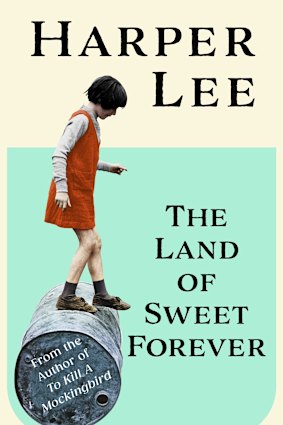
SHORT STORIES/ESSAYS
The Land of Sweet Forever
Harper Lee
Penguin, $49.99
When Harper Lee published To Kill a Mockingbird in 1960 she produced an instant classic which the world has taken to its heart with eventual sales of 42 million or more. It was admittedly a period when popular writing of the most accomplished kind like John le Carré’s The Spy Who Came in from the Cold and great masterpieces like Lampedusa’s The Leopard (or, more contestably, Pasternak’s Doctor Zhivago) rubbed shoulders with the latest James A. Michener or Irwin Shaw on those New Yorker bestseller lists and seemed to Baby Boomers like intimations of an adult sophisticated world.
To Kill a Mockingbird is a gorgeous and idyllic book even though it rehearses the terrible poignancy of what could happen to a black person wrongfully accused back in the Depression South. But it had a tremendous lilt and apprehension of the wonder of childhood. Mockingbird is an ode to a child’s eye view of a world full of sap and spirit and belief in the power of the human soul to remember and believe.
For the longest time the book was on a pedestal framed by human memory. Lee, at the age of 23, went to Manhattan, and she also worked assiduously on the vast amount of research necessary for her soul brother Truman Capote to write In Cold Blood, a book which is not suitable for children at all.
During this time there was the remote possibility that Lee might produce another novel, but it seemed she was too shrewd and too grateful. Then in 2015, a year before her death, we saw the publication of Go Set a Watchman which presented us with a figure based on the author’s father – who had an unmistakable family resemblance to the Atticus Finch embodied by Gregory Peck, but who had in the eye of history a dubious belief that the American blacks were not yet ready for full desegregation.
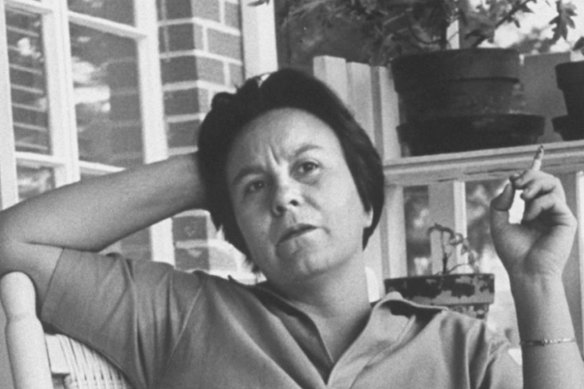
Harper Lee, visiting her home town. in Alabama.Credit: Donald Uhrbrock
It’s an interesting portrait with an imperfect focus, but it was neither a children’s story of eternal buoyancy nor an enhancing perspective on a difficult flawed subject. It’s a pity Lee allowed this muddied portrait to see the light of day though it’s the merest footnote to To Kill a Mockingbird because the writing shows an intelligent and effortful writer, but not an easeful one coming to terms with the all too human spectre of the father in the attic.
And so it is with this book which is compelling but fringed with difficulty. Girls have their first period and think they are going to get pregnant. Our emerging heroine thinks she’ll conceive because she kissed a boy with his pants down. The blatantly autobiographical daughter asks her father what would happen to someone who got rid of a baby. Electrocution, he says, it would be as great a crime as to kill a man. He adds that if she doesn’t shut up he’ll beat her bottom with his belt.
There’s the story of a woman who employs an unbelievably cultivated and competent African American man. It turns out that he was sentenced to 20 years in prison for a minor offence, and it’s a bit creepy how convincingly Harper Lee simulates the stench of yesterday’s horrors of segregation.
There’s another story about a young man who has been at Northwestern University and who introduces to the local Alabama Methodist church a set of musical variations that seem to the woman who dominates the story to simulate the music of the High Anglican Church. This leads to the iteration of the Oxford Movement in the early 19th century, to Pusey’s cry for a return to Catholic tradition.
Loading
This is done with a compulsive brilliance and so in its pyrotechnical ways are all the attempts at fiction in this strange collection of stories and essays which will electrify some and leave others cold. The central title story sheds light on both Mockingbird and Watchman. But the transition to the essays proper is a relief because it is done with expert clarity.
Lee talks about the Creek Indians of Alabama and of a long unread history in a style somewhere between Macaulay and Bulwer Lytton. It is done with a breathtaking elegance and it’s fun when she refers to someone as the Ayatollah Khomeini.
There is a late letter to Oprah in which she says: “And, Oprah, can you imagine curling up in bed to read a computer, weeping for Anna Karenina and being terrified by Hannibal Lecter, entering the heart of darkness with Mistah Kurtz, having Holden Caulfield ring you up – some things should happen on soft pages, not cold metal.”
It’s a good list, and you can hear the genius in every syllable of it.
The Booklist is a weekly newsletter for book lovers from Jason Steger. Get it delivered every Friday.
Most Viewed in Culture
Loading