3 months ago
29
3 months ago
29
Daniel De Simone,Investigations correspondent and Tom Beal

 Supplied
The UK government has paid "substantial" compensation to a man who was tortured by the CIA and remains imprisoned without trial at Guantanamo Bay after almost 20 years, the BBC can reveal.
Abu Zubaydah was the first man subjected to the CIA's "enhanced interrogation" techniques after 11 September 2001 attacks. It was claimed he was a senior al-Qaeda member. The US government later withdrew the allegation.
MI5 and MI6 passed questions to the CIA for use during Zubaydah's interrogations despite knowing of his extreme mistreatment.
He brought a legal claim against the UK on the basis that its intelligence services were "complicit" in his torture.
The case has now reached a financial settlement.
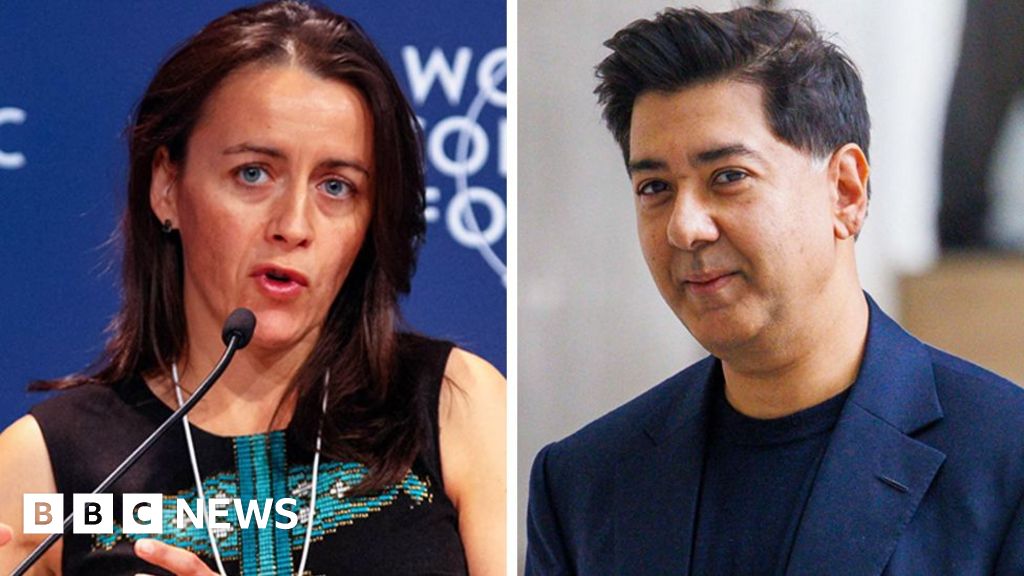
Prof Helen Duffy, international legal counsel for Zubaydah, said: "The compensation is important, it's significant, but it's insufficient."
She urged the UK and other governments that "share responsibility for his ongoing torture and unlawful detention" to ensure his release.
"These violations of his rights are not historic, they are ongoing."
Warning: The following section contains illustrations that some may find distressing

Helen Duffy, one of Zubaydah's legal representatives, is pressing for her client's release
The Foreign Office, which oversees MI6, said it would not comment on intelligence matters.
The exact amount Zubaydah will receive could not be publicly revealed for legal reasons, Duffy said. It was, however, a "substantial amount of money" and payment was under way.
She added he was unable to currently access the money himself.
Dominic Grieve, who chaired a parliamentary inquiry that examined Zubaydah's case, said the financial settlement was a "very unusual" situation, but what happened to Zubaydah was "plainly" wrong.
 Abu Zubaydah
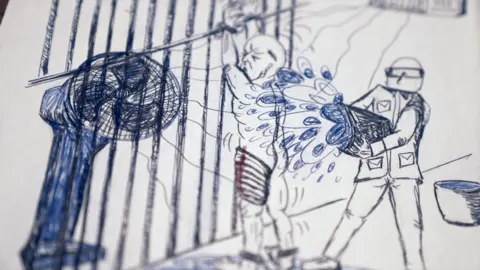
Zubaydah's own drawings show the torture he was subjected to
Zubaydah, a Palestinian born in Saudi Arabia, has been held at the US military prison at Guantanamo Bay, Cuba, since 2006 without charge or conviction.
He is one of 15 prisoners who are still there despite multiple judgments and official reports detailing his mistreatment.
He was been widely dubbed a "forever prisoner".
Zubaydah was first captured by the US in Pakistan in 2002, before being held for four years at a series of CIA "black sites" in six countries, including Lithuania and Poland.
"Black sites" were secret detention facilities around the world, outside the US legal system. Zubaydah was the first person to be detained in one.
After first taking custody of Zubaydah, CIA officers concluded that he should be cut off from the outside world for the rest of his life.
Internal MI6 messages show the agency considered his treatment would have "broken" 98% of US special forces soldiers if they had been subjected to it. Despite this, it was four years before British intelligence sought any assurances regarding his treatment in detention.
 Supplied
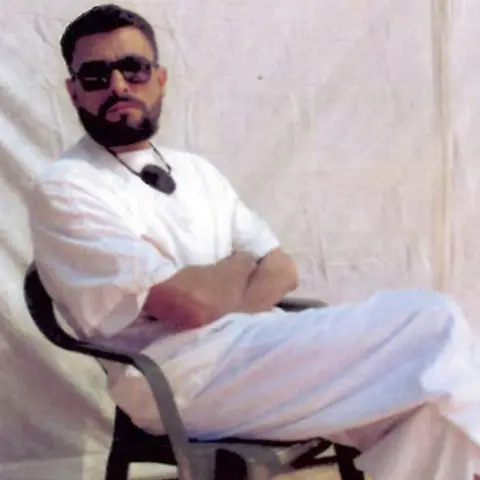
Abu Zubaydah was treated as a "guinea pig" for controversial US interrogation techniques
Zubaydah's capture was hailed as one of the biggest of the so-called war on terror.
President George W Bush personally publicised the capture, claiming he was a senior al-Qaeda operative who was "plotting and planning murder". These claims were later withdrawn by the US government, which no longer contends he was a member of al-Qaeda.
He has been described as a "guinea pig" for the highly controversial interrogation techniques employed by the CIA in the aftermath of 9/11.
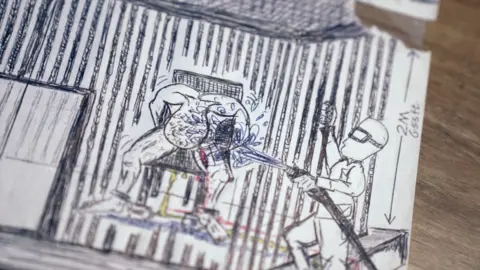
According to a US Senate Select Committee on Intelligence report on the CIA detention and interrogation programme, Zubaydah was routinely subjected to treatment that by UK standards would be considered torture, including being waterboarded 83 times (simulated drowning), locked in coffin-shaped boxes and physically assaulted.
Duffy said UK intelligence services had "created a market" for this torture by sending specific questions to be put to him.
The senate report was highly critical of how Zubaydah was treated, as was a 2018 report by UK Parliament's intelligence and security committee.
 Abu Zubaydah
Zubaydah was subjected to simulated drowning on multiple occasions
The parliamentary committee also criticised MI5 and MI6 for their conduct in relation to the alleged 9/11 mastermind Khalid Sheikh Mohammed, raising the question of whether he could bring a similar legal claim.
Neither the government nor Mohammed's lawyers would comment when asked by the BBC whether a case had been brought or settled.
Grieve said the UK had evidence the "Americans were behaving in a way that should have given us cause for real concern."
He continued: "We should have raised it with the United States and, if necessary, closed down cooperation, but we failed to do that for a considerable period of time."
Duffy said Zubaydah is keen to secure his freedom and build a new life.
"I am hopeful that the payment of the substantial sums will enable him to do that and to support himself when he's in the outside world."
But she stressed that would depend on the US and allies ensuring his release.