3 months ago
20
3 months ago
20
By Will Macpherson
December 23, 2025 — 9.34am
On England’s penultimate day in the idyllic Queensland seaside resort of Noosa, their popular strength and conditioning coach Pete Sim put a message in the tour WhatsApp group, asking if anyone wanted to go for a run the following morning.
This was no three-line whip. Join if you want, have a lie-in if you prefer. But it seemed the perfect opportunity for professional sportsmen to blow off some cobwebs, exactly halfway through the 10-day break between the second and third Ashes Test, with England sitting perilously 2-0 down in the series.

England players take a break from their Ashes preparations at Noosa.Credit: Seven News
As it was, just three members of England’s playing squad, and a few backroom staff, turned up for Sim’s 7.45am gentle jog into Noosa National Park. Two of the three players, Josh Tongue and Shoaib Bashir, were yet to play a Test (the third was Jamie Smith). This was not the first time a run had been proposed; a day earlier, Ben Stokes had invited his team-mates, but ended up exercising alone.
$10 schooners, golf ... and zero cricket
England’s professionalism was already under question in this series, after their amateurish warm-up, which coach Brendon McCullum now accepts was below the standard required. Noosa, though, was less “mid-tour break” more “stag do”. You can have too much of a good thing, and it is certainly hard to imagine a knees-up like this happening in the midst of any other major sporting event.
Some seemed not to bring their running shoes, but all the cricket kit stayed away. Harry Brook claimed cricket was not even discussed (clearly an exaggeration). There is a cricket ground in Noosa, but England did not use it. The North Melbourne Kangaroos, who finished 16th out of 18 in last year’s AFL ladder, were there, on their pre-season tour.
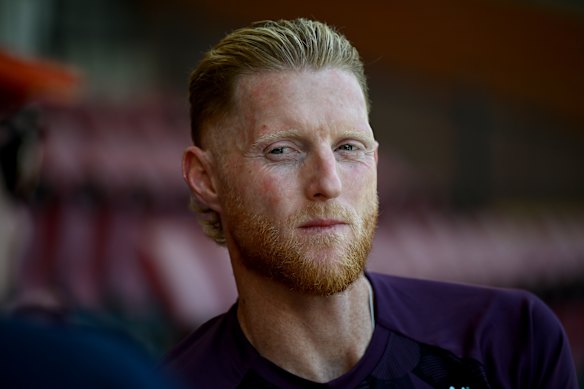
It’s been an arduous tour for England captain Ben Stokes.Credit: Getty Images
The cricketers, meanwhile, were on affluent Hastings Street. When the squad arrived on Tuesday, a group of players stumbled into Rococo Bistro (£5/A$10 for a schooner of local lager), possibly the most prominent position in town, and, with cameras honed in on them, stayed from early afternoon until close.
The next day, they repeated the dose, adding the Akubra hats made legendary by the veteran Queensland politician Bob Katter to make them even more conspicuous. The instructions were to not hide away, and England’s players followed them to the letter.
In the days that followed, they played golf at classy Maroochy River (the TV crews found them), while the visits to bars were at least kept to the evening. After drowning their sorrows after the Brisbane Test, it is no exaggeration to say some – certainly not all – players drank for five or six days.
Players enjoying a drink is nothing new in English cricket, and this team have enjoyed lavish bonding trips to Loch Lomond and Queenstown that they cite as helpful to their development. It feels like they have not curbed their instincts on the biggest stage. At the end of his press duties in Adelaide, assistant coach Jeetan Patel walked out saying: “Enjoy your evening. Have a pint, because I will be.”
There is a fundamental looseness about the set-up that was healthy in the early days post-COVID, but needed tightening up to win the biggest series.
This was the four-night “mid-series break” (they were at pains to say it was not a holiday) that was meant to provide an escape from perhaps the most intense sporting series of all, in a beautiful spot that sells itself as offering “the sweet life”. England had planned it more than a year earlier and were committed to it, whatever the score; in the circumstances, they hoped it would act as a circuit breaker on a tour heading south.
It did not quite do the trick, as a third loss in Adelaide confirmed a series defeat in just 11 days. Their performance improved slightly, but featured much of the same sloppiness seen before: dropped catches, tired decision-making, and a rapid fading of performance after a decent first day.
On the second morning, every member of the touring party headed to the beach for a slightly dusty game of “Pig”, the football-based game they use to warm up. Two local wags, radio hosts “Archie and Bretz” showed up with signs mocking England, and Stokes dutifully smiled for a photo. Even Joe Root, staying nearby with his family, joined, and the group headed for fish and chips en masse afterwards. Once that was done, the seats at Rococo’s were warmed once more.
The Noosa trip was McCullum’s idea. He has been coming here for years with his family (his wife is Australian, and he played in the Big Bash League for Brisbane Heat). He buzzed about town, picking off players for quiet chats, which is typical of his management style, and meeting the management. The likes of managing director Rob Key and selector Luke Wright had stayed away, keeping their distance on the Gold Coast.
Of an afternoon, McCullum might pop into the Noosa Surf Life Saving Club, the heart of the town, to have a quiet punt on the horses with Patel. It is no secret that this is his idea of paradise.
To be clear: England’s players did nothing outrageous in Noosa. Local TV crews or paparazzi sent two hours north from Brisbane would have caught them if they had. Whether local or one of the many England fans exploring the tourist hotspot, they were friendly and courteous with anyone who engaged with them (until one of their security detail fell out with a cameraman at the airport).
Whatever the score, there is nothing new about, or wrong with, taking a break to refresh minds and bodies mid-series, as Australia’s Alex Carey pointed out. In 2023, Australia’s squad scattered across Europe with their families partway through the Ashes. Carey took his family to Edinburgh, while others went as far afield as Majorca. The days of playing every state or county are long gone. But this did not feel like the best way to freshen up.
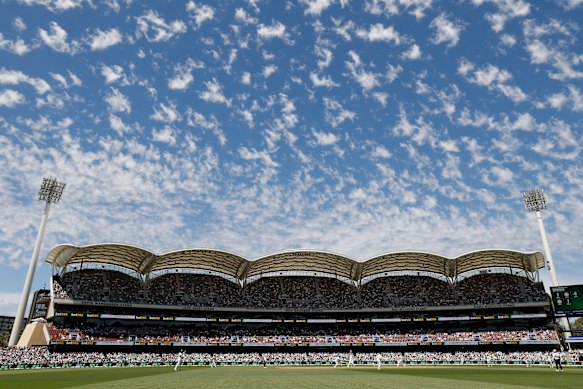
Adelaide Oval was the venue for the end of England’s Ashes hopes.Credit: Getty Images
Management seemed unaware of how hard Ashes tours are
But Root highlighted a curiosity: the squad’s allotted family time on the tour only began when they flew to Adelaide on December 14. Surely, on a trip planned so far in advance, it would have made sense for the players to recharge with their families in Noosa? McCullum values “connectivity” and “camaraderie” above almost everything else, but those with young children – such as the struggling Smith and Ben Duckett – could surely have done with seeing their families, rather than indulging with team-mates they had been on tour with for almost two months.
To do so, they would have had to put their head above the parapet in a team environment that does not reward that, not to mention dipping into their own pockets. This seems like another incidence of the management not understanding quite how hard the Ashes is.
Loading
By the time England arrived in Noosa, their tour was in a tight spot. Stokes had given a rallying cry before play on the final day in Brisbane, and more were to come on arrival in Adelaide, where they started with their most brutal training session in weeks, perhaps a recognition that there was something to sweat out.
Noosa was the latest reminder that England have tried to make this Ashes tour fun. But the truth is not much has changed since Sir Len Hutton said of Australia in 1954 that “the grounds are hard, the ball is hard, the men are hard. You need to be harder than they are to beat them”. There are no shortcuts in a series that is brutal – the fun part is not the doing, but enjoying the spoils of working hard and winning. Brook said that in Noosa, they had a “belting time”. That is all very well, but it did little for their chances of Ashes success on a tough tour that is really not about having fun.
Telegraph, London
Most Viewed in Sport
Loading