On this "Face the Nation with Margaret Brennan" broadcast, moderated by Margaret Brennan:
- Treasury Secretary Scott Bessent
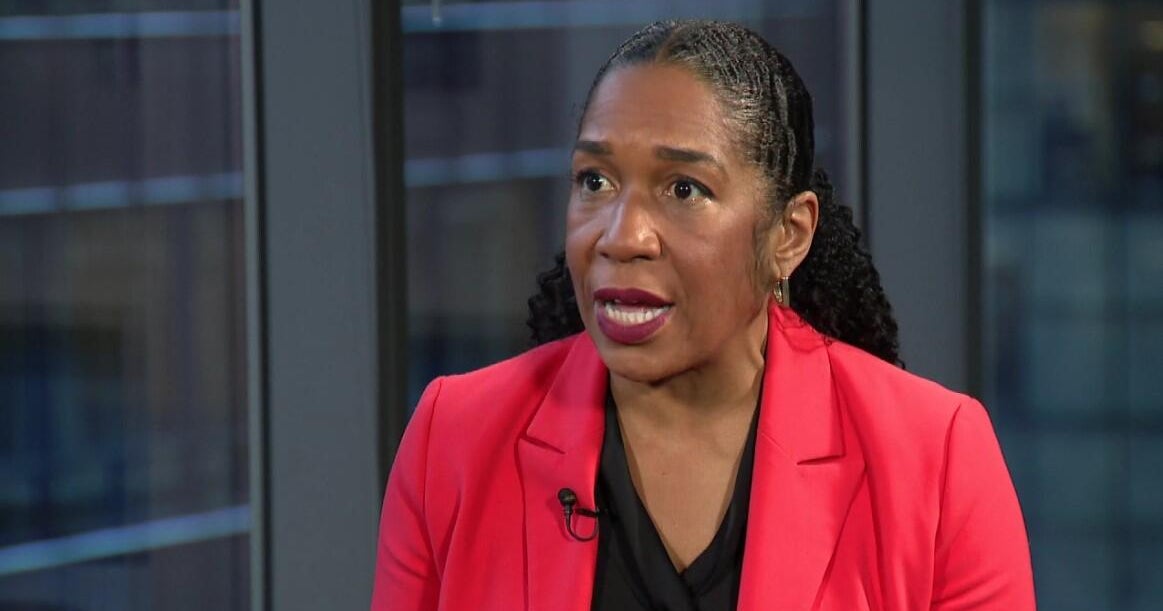
- Rep. Ilhan Omar, Democrat of Minnesota
- Rep. Jim Himes, Democrat of Connecticut
- Former FDA Commissioner Scott Gottlieb
Click here to browse full transcripts from 2025 of "Face the Nation with Margaret Brennan."
MARGARET BRENNAN: I'm Margaret Brennan in Washington.
And this week on Face the Nation: In this holiday season, with more Americans saying they're feeling the pain of higher prices, we will talk exclusively with Treasury Secretary Scott Bessent.
As Washington winds down 2025, there's still a lot of unfinished business for Congress and President Trump. And, as Trump's defense secretary, Pete Hegseth, doubles down on those boat strikes in the Caribbean…
(Begin VT)
PETE HEGSETH (U.S. Defense Secretary): We are tracking them, we are killing them, and we will keep killing them so long as they are poisoning our people with narcotics so lethal that they're tantamount to chemical weapons.
(End VT)
MARGARET BRENNAN: … the debate over whether they were lawful ramps up on Capitol Hill.
We will talk with the top Democrat on the House Intelligence Committee, Connecticut's Jim Himes.
Plus, the deportation roundups continue in the nation's cities, this time targeting communities in Minneapolis, including the congresswoman who represents most of the city.
(Begin VT)
DONALD TRUMP (President of the United States): Ilhan Omar is garbage. She's garbage. Her friends are garbage. These aren't people that work.
(End VT)
MARGARET BRENNAN: We will talk with Representative Ilhan Omar.
And, finally, a major change to vaccine guidance for newborns recommended by a panel of advisers chosen by Health Secretary Robert F. Kennedy Jr.
(Begin VT)
DR. CODY MEISSNER (Advisory Committee On Immunization Practices): We have heard do no harm is a moral imperative. We are doing harm.
(End VT)
MARGARET BRENNAN: Former FDA Commissioner Dr. Scott Gottlieb joins us to break it all down.
It's all just ahead on Face the Nation.
Good morning, and welcome to Face the Nation. We have a lot of news to get to.
And we begin with the secretary of the treasury, Scott Bessent.
Good to have you here.
SCOTT BESSENT (U.S. Treasury Secretary): Good morning, Margaret.
MARGARET BRENNAN: Mr. Secretary, a lot of people are out there holiday shopping. Here is how the president described back in April what to expect from this season.
(Begin VT)
DONALD TRUMP (President of the United States): Maybe the children will have two dolls, instead of 30 dolls, you know? And maybe the two dolls will cost a couple of bucks more than they would normally.
(End VT)
MARGARET BRENNAN: Was the president's prediction then correct?
SECRETARY SCOTT BESSENT: Margaret, it's actually been a very strong holiday season, and the – you know, we've seen across the – all the income cohorts thus far. And so there's nothing to say that there are two dolls, instead of 30 dolls.
MARGARET BRENNAN: The president was wrong to predict lower numbers of purchases and higher prices?
SECRETARY SCOTT BESSENT: The economy has been better than we thought. We've had the 4 – 4 percent GDP growth in a couple of quarters. We're going to finish the year, despite the Schumer shutdown, with 3 percent real GDP growth.
MARGARET BRENNAN: Well, the maker of Tonka trucks, their CEO said it's going to cost 40 bucks for their toys right now because of tariffs and inflation. It was 30 bucks the year before that, 25.
Prices in the toy space are accelerating, and people are feeling that.
SECRETARY SCOTT BESSENT: Well, Margaret, inflation is a composite number, and it's roughly the same year over year. And if we were to look at all imported goods, imported goods inflation is below the inflation number.
MARGARET BRENNAN: The inflation number, you mean the…
SECRETARY SCOTT BESSENT: The PC – the PCE number, which is about 2.9 percent. Imported goods inflation is about 1.8. It's the service economy that's generating inflation, which actually has nothing to do with tariffs.
MARGARET BRENNAN: But when we hear from, for example, the president, when he says that affordability is a con job by Democrats, that seems to just not be resonating with consumers that have been polled by CBS.
Sixty percent of Americans polled by this network told us President Trump makes prices and inflation sound better than they really are. And his approval rating in the economy is now down to 36 percent in our latest poll. On inflation, approval is even lower, at 32 percent.
Don't you need to show that you feel the pain?
SECRETARY SCOTT BESSENT: Well, Margaret, I think the president's frustrated by the media coverage of what's going on and…
MARGARET BRENNAN: Yes, this is the polling of average Americans.
SECRETARY SCOTT BESSENT: No, no, but – yes, but I think…
MARGARET BRENNAN: I mean…
SECRETARY SCOTT BESSENT: … the average Americans, they are hearing a lot from media coverage.
And I will tell you that affordability has two components. There is inflation and then there is real incomes. Real incomes are up about 1 percent. And what we're not going to do is say that Americans don't know what they're feeling. We've been working on it every day.
I was on your show on March talking about affordability. The – we've made a lot of gains, but, remember, we've got this embedded inflation from the Biden years, where mainstream media, whether it was Greg Ip at "The Wall Street Journal," toxic Paul Krugman at "New York Times," or former Vice Chair Alan Blinder, all said it was a vibecession, the American people don't know how good they have it.
Now, Democrats created scarcity, whether it was in energy or overregulation, that we are now seeing the – this affordability problem, and I think, next year, we're going to move on to prosperity because…
MARGARET BRENNAN: You do think there is an affordability problem?
SECRETARY SCOTT BESSENT: Sorry?
MARGARET BRENNAN: You do believe there's an affordability problem?
SECRETARY SCOTT BESSENT: Oh, I – I think the Biden administration created a terrible…
MARGARET BRENNAN: No, but now. We're nearly 12 months in. You said the president would own the economy at this point.
SECRETARY SCOTT BESSENT: I – the – the – yes, I said that the Biden administration created the worst inflation in 50 years, and maybe, for working Americans, the worst inflation of all time.
And we have pulled that number down, that Strategas Research does something called the Common Man index. Under Biden, the accumulated inflation number, as measured by CPI, was about 20 percent. Their index showed 35. This year, for the first time, the Common Man index is below the inflation index because the basket of goods for working Americans, food, gasoline, rent, is coming down.
So I wrote an essay March 12, 2024, and it talked about the three I's, immigration…
MARGARET BRENNAN: Yes.
SECRETARY SCOTT BESSENT: … interest rates and inflation.
Immigrant – mass, unfettered immigration depressed wages, caused housing prices to go up. The president has closed the border. That is fixed. Interest rates have come down. The bond market just had the best year since 2020. And now we are working on inflation. And I expect inflation to roll down strongly next year.
MARGARET BRENNAN: Well, I mean, grocery prices are up nearly 3 percent compared to last September.
The president seems to be acknowledging that grocery prices, or at least beef prices, are a challenge, because he put out this order just yesterday saying they're going to investigate corporate price gouging for high beef prices.
Isn't suing the food companies the same thing the Biden administration did, and it didn't really work? How is this any different?
SECRETARY SCOTT BESSENT: Well, nothing the – nothing the Biden administration did worked.
MARGARET BRENNAN: So why are you doing it?
SECRETARY SCOTT BESSENT: And the – because this isn't the same thing. If they – if they had done this, if they'd done it properly, we'd be in a different spot. And, like, beef is one component. Thanksgiving Turkey was down 16 percent.
MARGARET BRENNAN: Well, I know you are working on the trade front and for American farmers and the prices that they are experiencing, that they're feeling a pinch about not having a market to sell into, necessarily.
SECRETARY SCOTT BESSENT: Not – not anymore.
MARGARET BRENNAN: Well, the agricultural secretary just said that the president is going to announce a bridge payment for farmers this week to give them short-term relief while you're working on these – finalizing these trade packages.
SECRETARY SCOTT BESSENT: Well, the – the…
(CROSSTALK)
MARGARET BRENNAN: There are these low crop prices, and the soybeans in particular.
I know you spoke with China's vice premier Friday. Are they going to speed purchasing up?
SECRETARY SCOTT BESSENT: Well, they're not going to speed purchasing up. They're in the cadence that we agreed to. Soybean prices are up about 12 or 15 percent since the agreement with the Chinese. They are going to buy 12.5 million metric tons.
But, Margaret, I'm involved in the agricultural industry. I run a soybean farm, and I can tell you…
MARGARET BRENNAN: You own one. You invest in it.
SECRETARY SCOTT BESSENT: Sorry?
MARGARET BRENNAN: You own or invest a soybean farm.
SECRETARY SCOTT BESSENT: And people in my family go out and work on it. I actually just divested it this week as part of the – my ethics agreement, so I'm out of that business.
But I probably know more about any treasury secretary than – about agriculture since the 1800s. And I can tell you that what farmers need is certainty. And we have put that in place with this trade deal, 12.5 million metric tons this year, 25 million metric tons for the next three years for soybeans, also sorghum, the – and lumber.
MARGARET BRENNAN: So – so, those purchases, just to clarify, those will be this year? Because I heard you say this past week that some of the purchases wouldn't take place until February.
SECRETARY SCOTT BESSENT: Well, for the – for the season, so the crop year.
MARGARET BRENNAN: The season year?
SECRETARY SCOTT BESSENT: Yes.
MARGARET BRENNAN: OK.
But why – if everything's fine, then why do farmers need a bridge payment from the Agricultural Department?
SECRETARY SCOTT BESSENT: Sorry?
MARGARET BRENNAN: Why would farmers need a bridge payment from the Agriculture Department then?
SECRETARY SCOTT BESSENT: Because these prices haven't come in, because the Chinese actually used our soybean farmers as pawns in the trade negotiations.
And we are going to create – create this bridge, because, again, agriculture is all about the future. You've got to start financing for planning next year, when things will be very good.
MARGARET BRENNAN: I want to ask you about something that was announced this past week, the Trump Accounts, and building on this concept.
S, parents, as I understand, are going to be able to open these accounts via the Treasury for their kids. They're tax-deferred investment vehicles to U.S. citizen children under 18, get $1,000 from the government for babies born between 2025 and 2028.
So there are going to be restrictions on what the money can be used for, college tuition or their first house. Is that right?
SECRETARY SCOTT BESSENT: No, it is, the federal government for children born in the period you just described, is going to put $1,000 into these Trump Accounts. It will be invested in a widely diversified, low-cost index, and then it will be available…
MARGARET BRENNAN: In the stock market, in an exchange-traded fund or mutual fund.
SECRETARY SCOTT BESSENT: So, in essence, it is a trust fund. It is a piece of the American economy for every child, and they will be able to take it out when they're 18, or they can convert it to a more IRA-type program and keep it for their retirement.
MARGARET BRENNAN: So, there won't be the restrictions I mentioned there about how they use the money?
SECRETARY SCOTT BESSENT: No.
MARGARET BRENNAN: OK.
So there was also a broadening of this, this past week, with the Dell Foundation…
SECRETARY SCOTT BESSENT: Yes.
MARGARET BRENNAN: … making a significant investment in the American children.
So how is this going to work? Why structure it this way, instead of a savings account, for example?
SECRETARY SCOTT BESSENT: Well, a savings account just gets interest. This is the compounding power of the stock market.
As Warren Buffett says, don't – don't bet against the American stock market. Don't bet against the economy. And this is going to bring a whole group of new investors into the market. We're going to couple it with a big amount of financial literacy, so that children understand what they own.
The incredible gift by Michael and Susan Dell will be the – is a program that philanthropists, foundations can do to top up these accounts. And we are expecting – we're already – Treasury is already in discussions with foundations, with major philanthropists to top up these accounts.
It could either be for all children, or you can specify it by zip code, a school district, or you can do what the Dells did, and say that it will be – won't apply to the zip codes of the top 20 percent of earners.
MARGARET BRENNAN: And more information is going to be coming out on how to use this and access it?
SECRETARY SCOTT BESSENT: Yes, in the coming weeks, we'll do that, and then the official kickoff will be July 5.
MARGARET BRENNAN: Before I let you go, I want to ask you about this massive fraud out in Minnesota, and the state welfare program has been under federal investigation since all the way back in 2022.
The president told you, though, this week, to look into Somalis who – quote – "ripped off that state for billions of dollars." He said they contribute nothing. What exactly are you investigating?
SECRETARY SCOTT BESSENT: Well, Margaret, to be clear, the initial fraud that was discovered by the IRS, for which I'm the acting commissioner, it was discovered by IRS Criminal Investigations Unit.
This was not an endogenous thing that the state of Minnesota decided. We had to go in and clean up the mess for them, and this is part of the continued cleanup. A lot of money has been transferred the – from the individuals who committed this fraud, including those who donated to the government, governor, donated to Representative Omar and donated to A.G. Ellison.
But they've been transferred to something called MBSes. The – and those are…
MARGARET BRENNAN: Mortgage-backed securities? What do you mean?
SECRETARY SCOTT BESSENT: Sorry?
MARGARET BRENNAN: Transferred to what?
SECRETARY SCOTT BESSENT: These are money the bureau services, and they are wire transfer organizations that are outside the regulated banking system, and that money has gone overseas.
And we are tracking that, the – both to the Middle East and Somalia to see what the uses of that have been.
MARGARET BRENNAN: OK, but you have no evidence of that money being used to fuel terrorism, which is what some conservative writers are alleging?
SECRETARY SCOTT BESSENT: Well, that's why – that's why it's an investigation. We started it last week. We'll see where it goes.
MARGARET BRENNAN: OK.
SECRETARY SCOTT BESSENT: But I can tell you that, you know, it's terrible.
You know, Representative Omar tried to downplay it, said, oh, it was very - - the – it was very tough to know how this money should – should be used.
MARGARET BRENNAN: Yes.
SECRETARY SCOTT BESSENT: She was gaslighting the American people.
MARGARET BRENNAN: Well, we'll talk to her.
SECRETARY SCOTT BESSENT: Yes.
But, you know, when you come to this country, you got to learn which side of the road to drive on, you got to learn to stop at stop signs, and you got to learn the – not to defraud the American people.
MARGARET BRENNAN: Well, there are plenty of – plenty of criminal behavior from communities well beyond the immigrant community.
But we'll talk about this with Representative Omar shortly.
Thank you, Mr. Secretary.
SECRETARY SCOTT BESSENT: Good.
MARGARET BRENNAN: We'll be back in a minute. Stay with us.
(ANNOUNCEMENTS)
MARGARET BRENNAN: And we're joined now by Minnesota Democratic Congresswoman Ilhan Omar.
Welcome to the program.
REPRESENTATIVE ILHAN OMAR (D-Minnesota): Thank you, Margaret.
MARGARET BRENNAN: We have a lot to get to with you, but I want to pick up on where the treasury secretary just left off.
He alleged that people who were tied to you or your campaign were involved in this broad, brazen scheme to rip off the Minnesota state welfare system. Do you want to respond to that? Do you know what he is referring to?
REPRESENTATIVE ILHAN OMAR: I really don't, and I don't think the secretary himself understands what he's referring to.
We obviously had people who were able to donate to our campaign that were involved. We sent that money back a couple years ago. And, actually, I was one of the first members of Congress to send a letter to the secretary of ag asking them to look into what I thought was a reprehensible fraud that was occurring within the program.
MARGARET BRENNAN: So this was – just for our audience, the Biden era Justice Department called it the largest COVID fraud scheme in the country, and this was pocketing COVID era welfare funds, more than a billion dollars in taxpayer money that was stolen. It was pretty, pretty shocking.
Of the 87 people charged, all but eight are of Somali descent, and that has added to the spotlight being put specifically on your community. Why do you think this fraud was allowed to get so widespread?
REPRESENTATIVE ILHAN OMAR: Well, I want to say, you know, this also has an impact on Somalis, because we are also taxpayers in Minnesota.
We also could have benefited from the program and the money that was stolen. And so it's been really frustrating for people to not acknowledge the fact that we're – you know, we're also, as Minnesotans, as taxpayers, really upset and angry about the fraud that has occurred.
MARGARET BRENNAN: So, do you think, though, that there was a failure by the Democratic state government to police itself? This is a brazen fraudulent activity here.
REPRESENTATIVE ILHAN OMAR: Yes. And that is what I alluded to in my letter that I had sent to the secretary of ag was to see where things were going wrong. How can this amount of money disappear fraudulently without there being alarms being set off?
MARGARET BRENNAN: Yes.
REPRESENTATIVE ILHAN OMAR: And it is something that, you know, we have to continue to investigate. We have to continue to ask those questions.
MARGARET BRENNAN: Because, as you know, one of the initial defenses by the organization at the heart of the fraud, Feeding Our Future, was to claim the probe was due to racism. Do you think that this was all about negligence, or that it was, like, political fear of alienating the Somali community?
REPRESENTATIVE ILHAN OMAR: So, you have to remember that the woman who led the program is a Caucasian woman. And that was her way of making sure that this would continue to happen by using whatever rhetoric that was available to her.
We do know that, when the money was stopped, they did sue the A.G. Attorney General Keith Ellison defended the department in that lawsuit. It was a judge that said it should continue, that money…
MARGARET BRENNAN: Yes.
REPRESENTATIVE ILHAN OMAR: … should continue to go out. And so this wasn't something that people were not looking at. There was always those – those alarms.
And we will continue to understand where things might have gone wrong as these investigations continue and as these fraudsters are prosecuted and sent to jail.
MARGARET BRENNAN: Well, it's going to have impact for your community, because we've already heard that the head of Medicare and Medicaid say they're going to have a new policy that applies to Minnesota. You heard the treasury secretary say they're investigating.
But there's another thread here, because House Republicans and the treasury secretary just now talked about a link to terrorism, a possible link. He said they're just now beginning to look into it. How confident are you that that's a false claim?
REPRESENTATIVE ILHAN OMAR: I'm pretty confident at the moment, because there are people who have been prosecuted and who have been sentenced.
If there was a linkage in that – the money that they had stolen going to terrorism, then that is a failure of the FBI and our court system in not figuring that out and basically charging them with – with these – with these charges.
And so I do know that, for many years, this sort of like alarm that there is money being transferred through the airport in bags and going to terrorism has all – that accusation has always existed. There has never been here and there in those accusations.
But, if that is the case, if money from U.S. tax dollars is being sent to help with terrorism in Somalia, we want to know.
MARGARET BRENNAN: Yes.
REPRESENTATIVE ILHAN OMAR: And we want those people prosecuted, and we want to make sure that that doesn't ever happen again.
MARGARET BRENNAN: So there are 80,000 people of Somali descent in your state, but the president has been very focused not just on them, but on you.
In this extraordinary Cabinet meeting, he said, Somalis – quote – "come from hell, they complain and they do nothing but bitch."
Take a listen.
(Begin VT)
DONALD TRUMP (President of the United States): These are people that do nothing but complain. They complain, and from where they came from, they got nothing. We don't want them in our country. Let them go back to where they came from and fix it.
(KNOCKING SOUND)
(APPLAUSE)
PRESIDENT DONALD TRUMP: Thank you very much, everybody.
(End VT)
MARGARET BRENNAN: That knocking is vehement agreement from his Cabinet members there. I just wonder what the reaction is in your district to have that from the highest office in the land.
REPRESENTATIVE ILHAN OMAR: It's disgusting. It's completely disgusting.
These are Americans that he is calling garbage. And we feel like there is an unhealthy obsession that he has on the Somali community and an unhealthy and creepy obsession that he has with me.
I think it is also really important for us to remember that this kind of hateful rhetoric and this level of dehumanizing can lead to dangerous actions by people who listen to the president.
MARGARET BRENNAN: And 95 percent of the Somalis in your state are U.S. citizens…
REPRESENTATIVE ILHAN OMAR: Yes.
MARGARET BRENNAN: … just for clarity there.
But the president has restricted all immigration processing, including asylum claims from Somalis already on U.S. soil, along with 18 other countries. ICE reports it has rounded up about 19 people, and they put out press releases with the images of about five of them that they say are the worst of the worst.
Is that the entirety of the crackdown to date?
REPRESENTATIVE ILHAN OMAR: Yes, so far, we know, of the people that they have picked up in Minnesota, about five of them are Somalis.
And from what I have read and from the people that I have spoken to, all of them had already had orders of removal. So these are not people who are undocumented, but people who have committed crimes and who should have already been sent out of the country.
MARGARET BRENNAN: I want to ask you something else that the architect of the president's immigration policy, Stephen Miller, said.
On Thanksgiving day, he posted: "No magic transformation occurs when failed states cross borders. At scale, migrants and their descendants recreate the conditions and terrors of their broken homelands."
What do you make of this argument of failure to assimilate and sort of ruining America? How do you understand this?
REPRESENTATIVE ILHAN OMAR: I mean, when I think about Stephen Miller and his white supremacist rhetoric, it reminds me…
MARGARET BRENNAN: That's how you hear it.
REPRESENTATIVE ILHAN OMAR: Yes.
It reminds me of the way the Nazis described Jewish people in Germany. And, you know, as we know, there have been many immigrants who have tried to come to the United States who have turned back, you know, one of them being Jewish immigrants.
We know the way that people were described who were coming from Ireland, Irish immigrants.
(CROSSTALK)
REPRESENTATIVE ILHAN OMAR: We know the way in which people were described back then when there were Italian immigrants.
And, to me, you know, we're – we're, yes, of course, ethnically Somali. We are in this country as Americans.
MARGARET BRENNAN: Yes.
REPRESENTATIVE ILHAN OMAR: We are citizens. We are a productive part of this nation, and we will continue to be.
MARGARET BRENNAN: Congresswoman Omar, thank you for your time today.
And we'll be right back with a lot more Face the Nation. Stay with us. You.
(ANNOUNCEMENTS)
MARGARET BRENNAN: We will be right back with the top Democrat on the House Intelligence Committee, Congressman Jim Himes of Connecticut, and former FDA Commissioner Dr. Scott Gottlieb.
(ANNOUNCEMENTS)
MARGARET BRENNAN: Welcome back to Face the Nation.
We turn now to the top Democrat on the House Intelligence Committee, Congressman Jim Himes. He joins us this morning from Connecticut.
Welcome back to Face the Nation.
REPRESENTATIVE JIM HIMES (D-Connecticut): Thanks for having me, Margaret.
MARGARET BRENNAN: You are one of the few lawmakers shown the classified version of this September 2 video of the U.S. strikes on an alleged drug boat near Venezuela, four strikes in total, we have learned.
You met with Admiral Bradley, who commands Special Operations, as well. The president of the United States says he is open to this video being made public. Do you think it is essential that it become public, and are you confident it will be?
REPRESENTATIVE JIM HIMES: I think it's really important that this video be made public. It's not lost on anyone, of course, that the interpretation of the video, which, you know, six or seven of us had an opportunity to see last week, broke down precisely on party lines.
And so this is an instance in which I think the American public needs to judge for itself. I know how the public is going to be react – is going to react, because I felt my own reaction.
You know, I have spent years looking at videos of lethal action taken, often in the terrorism context. And this video was profoundly shaking – shaken. And I think it's important for Americans to see it, because, look, there's a certain amount of sympathy out there for going after drug runners.
But I think it's really important that people see what it looks like when the full force the United States military is turned on two guys who are clinging to a piece of wood and about to go under, just so that they have sort of a visceral feel for what it is that we're doing.
MARGARET BRENNAN: Why was it – why did it shake you so much? What specifically was bothering you?
REPRESENTATIVE JIM HIMES: Well, you know, and this is sort of the distinction, and there's a lot to unpack here about whether this is an authorized military action, which it is not, and right on down to whether these were legitimate – legitimate targets, and they were not.
But let me go back to some of the reviews I have done of other lethal action. Oftentimes, when the Department of Defense takes a strike against a terrorist in Yemen or Pakistan or wherever, you watch a video of guys fully armed with AK-47s and sidearms and bombs and you name it, and they're on their way to do something terrible.
And, in this instance, you may have had bad guys. I have no doubt that these guys were involved in the running of drugs. Now, whether they were running it to the United States or Europe is yet another question.
But, in that instance, these guys were about to die. Had the United States just walked away, their little piece of wood would have gone under the waves.
And as many times as Tom Cotton may say that it doesn't matter what they were doing, it matters essentially what they were doing, because, under the law – and if you spent 15 minutes in law school, you know this – under the law, if someone has been struck and is – continues to engage in hostilities, points a gun at you, has a gun, they may be a legitimate target.
But if they are outside of combat, they are not, and attacking them is a violation of the laws of war. And these guys – and this is why the American people need to see this video. These guys were – were barely alive…
MARGARET BRENNAN: Yes.
REPRESENTATIVE JIM HIMES: … much less engaging in hostilities.
MARGARET BRENNAN: Well, the DOD Law of War Manual seems to hinge a lot of that on whether the person is wholly disabled from fighting, and that is where the secretary of defense has used language saying they're about to return to the fight.
I'm going to play for you what Secretary Hegseth said at the Reagan Forum Saturday. He described what was happening with these four strikes on the alleged drug running boat.
(Begin VT)
PETE HEGSETH (U.S. Defense Secretary): A couple hours later, I was told, hey, there had to be a reattack, because there were a couple folks that could still be in the fight, access to radios. There was a link-up point of another potential boat. Drugs were still there. They were actively interacting with them, had to take that reattack.
I said: "Roger. Sounds good."
(End VT)
MARGARET BRENNAN: Does what Hegseth said match what Admiral Bradley told you?
REPRESENTATIVE JIM HIMES: Well, there was a lot of lack of clarity over exactly what Pete Hegseth's role here was.
But Pete Hegseth has no credibility on this matter, right? Remember, a week after this strike, there was a briefing for Congress. Why was a follow-up strike taken? The answer then, in the first week of September, was, a follow-up strike was taken because we needed to clear the wreckage so that there wasn't a danger to navigation.
That was explanation number one. Explanation number two, right before we watched the video, was that they might have had a radio, and they might have been radioing a boat, and they might have been trying to recover the cocaine. And then, when you actually watch the video, you realize they don't have a radio. They're barely hanging on and not slipping beneath the waves.
Then, we get this thing of how they're trying to right the boat. This was about a 40-foot boat that had just been hit with a massive piece of munitions. The conflagration probably destroyed everything in that boat. But, oh, maybe they might have swum under, gotten a radio, probably waterlogged, and radioed a boat that we're not even sure was there.
So what we've had is a series of shifting explanations, oh, and including the fog of war, right? You know that Hegseth said, well, they took the second strike because of the fog of war.
There was no fog. The military watched this boat very carefully – or I shouldn't even say boat. They watched the wreckage of the boat very carefully for a long period of time before they took the second strike.
So, look, what Pete Hegseth says about this strike has zero credibility at this point.
MARGARET BRENNAN: Do you have confidence in Admiral Bradley?
REPRESENTATIVE JIM HIMES: You know, Admiral Bradley, this was my first meeting with him. Anyone who has ever worked with Admiral Bradley will tell you that he has a storied career and that he is a man of deep, deep integrity. And, frankly, I have no reason to doubt that.
What it raises is, what happens when an apparently good man like Admiral Bradley is placed in a context where he knows that, if he countermands an order that he is perhaps uncomfortable with, it is very likely that he will be fired, when he works for a guy, Pete Hegseth, who wrote a book about how we shouldn't observe the laws of war, about how we need to be lethal, et cetera.
It's interesting to think about how a good man in that context maybe does something that, if he weren't in that context, he might not do.
MARGARET BRENNAN: Well, Senator Tom Cotton, the chair of the Senate Intelligence Committee, said there were dozens of JAG lawyers observing all of this.
On NBC this morning, he said all 11 people on the suspected drug smuggling boat were valid targets because the U.S. had high confidence they were part of a foreign terrorist organization.
Do you know, were these high-level cartel members?
REPRESENTATIVE JIM HIMES: No, of course not. Of course not.
MARGARET BRENNAN: Who were they? If the U.S. had high confidence…
REPRESENTATIVE JIM HIMES: You think Pablo Escobar back – well, first of all, first of all, let's be super clear about this.
I don't think we knew the identities of any of the people in the boat. We might have known one or two. I don't know. But we certainly didn't know the identities of all 11. So nobody can characterize who all these people in any of these boats are.
Now, I have enough confidence in the intelligence community to know that these are probably not guys out fishing or guys out, you know, being tourists and stuff. They are almost certainly running drugs. But this really matters, for the reason that you said.
You know, if you're going to occupy an immense amount of the American Naval combat capability, you'd like to believe that you're going after the leaders, the cartel leaders…
MARGARET BRENNAN: Yes.
REPRESENTATIVE JIM HIMES: … the – the kingpins, as they say.
What we're doing here is, we're taking out the equivalent of the corner drug dealer in the Bronx, right, which, by the way, we should arrest the corner drug dealer in the Bronx. But the main reason we do that is to go after the kingpins, who, I promise you, are sitting in very comfortable villas right now in Colombia and Venezuela and everywhere, and watching as…
MARGARET BRENNAN: Yes.
REPRESENTATIVE JIM HIMES: … much of the United States Navy is dedicated to taking out their lowest-level employees.
MARGARET BRENNAN: So, I hear you saying they were not on an internal military target list for high-value individuals. That's what I hear what you're saying.
REPRESENTATIVE JIM HIMES: Well, this is an interesting question. I'm not at all convinced that there is a list of individuals.
MARGARET BRENNAN: OK.
REPRESENTATIVE JIM HIMES: Now, this is what we do in the terrorism world, right? We designate high-value targets, we designate individuals.
I have no reason to believe, and, in fact, I doubt that there are any individuals on a list anywhere. What we are doing – and I'm not going to get terribly specific about it, for obvious reasons, but what we are doing is we're picking up that this boat may be carrying drugs.
And, to the administration, it doesn't matter who's in that boat, because - - and, look, they're saying this – because, if this boat is actually carrying drugs, then we can strike it. So, no, I don't think there is a list of individuals. I don't think we have any idea who precisely the individuals in these boats are.
MARGARET BRENNAN: So, as I understand it, these are signature strikes. This is an intelligence assessment based on signals intelligence saying this is who we believe these individuals to be.
You know, some of these defenders of the Trump policy, like conservative columnists, have argued this is a precedent that was set by the Obama administration, which used signature strikes to kill alleged al Qaeda operatives, including a U.S. citizen at one point in Yemen.
Do they have a point here that the drone policy has long allowed the killing of suspected criminals even without due process?
REPRESENTATIVE JIM HIMES: Well, there's a couple of really important distinctions.
And you'll remember that the Obama administration, there was a lot of debate over whether signature strikes were OK or not. The most important distinction is that Congress authorized the war on terror. There was an authorization for the use of military force.
The original sin of this whole thing – whether you think we should be wasting these guys or not, the original sin is that there is no congressional authorization. And then, in the Obama administration, they did have a list of individuals, right, often high-value targets, or HVTs, as we've referred to them.
And then the question was, if you have an HVT, a high-value target, in a jeep in Northern Pakistan, and there's a guy next to that HVT, you know, how do you feel about taking that strike? You want to take down the high- value guy, but what about the young guy next to him? Well, the young guy has an AK-47, and the young guy was actually arranging for the transfer of explosives.
You have that conversation, and then you decide whether you're going to take the strike, right? Now what we're doing – and, again, don't – I don't think that there's a list of individuals anywhere. They're just saying, that boat is carrying drugs. And even though military is not authorized by the Congress of the United States, we're taking out the boat, and we don't give a damn about who's on it.
MARGARET BRENNAN: Well, and when you say "I don't think," you are a member of the Gang of Eight, so, presumably, that information should be shared with you if it does exist.
I want to ask you before I let you go. Signalgate, people may remember a few months ago that Trump – a Trump official added a journalist to an online group on Signal and shared advanced information of an upcoming bombing operation in Yemen.
The Pentagon inspector general said Hegseth's actions risked operational security and violated federal laws on record keeping. Hegseth said he'd do the same thing all over again. Are your Republican colleagues saying in private that they have problems with what happened?
REPRESENTATIVE JIM HIMES: Absolutely, they're saying it in private.
In public, of course, they're saying that it was perfect exoneration, right, that this report – and you read the key line, that this report that said that the secretary of defense put his troops and the mission at risk, that that's total exoneration.
Now, I didn't hear the comment about: I would do this again.
But if Pete Hegseth said he would do that again – and, look, again, you don't need to be a military expert to understand that sharing operational details before an operation is a really, really, really bad idea. If Pete Hegseth said that, that he would do that again, you know, he's just reinforcing what we all know, which is that he has absolutely no business in that job.
One of the most sensitive and difficult jobs to do in the United States government is being done by somebody who put his own people and the mission at risk.
MARGARET BRENNAN: He said he lives life without regret at the Reagan Forum. That was the phrase, to be more exact.
But, Congressman Himes, always good to have you on the program. I will have to leave it there for today.
We'll be right back.
(ANNOUNCEMENTS)
MARGARET BRENNAN: For a look at some recent changes to U.S. public health policy, we're joined now by former FDA Commissioner Dr. Scott Gottlieb. He also serves on the boards of Pfizer and UnitedHealthcare.
Welcome back.
DR. SCOTT GOTTLIEB (Former FDA Commissioner): Thank you.
MARGARET BRENNAN: You know, there was some pretty big news on Friday, and the American Academy of Pediatrics said they are deeply alarmed that the CDC vaccine advisory panel, ACIP, voted in this 8-3 decision to change this 30-year-long policy regarding hepatitis B and newborns.
They are now recommending delaying the dose until a child is 2 months old, instead of within 24 hours of birth. What does this decision mean for families of newborns?
DR. SCOTT GOTTLIEB: Yes.
Well, look, I think we first need to understand why we give that birth dose of the vaccine, because the idea of giving a vaccine to a newborn, to a lot of parents, sounds discomforting, that the first thing a child is going to face when they're born is going to be a vaccine within the first 24 hours.
For a child over the age of 5, if they develop hepatitis B infection, if they're exposed to it, they're going to have a 95 percent chance of clearing that infection, and they'll go on to develop lifelong immunity.
For children between the ages of 1 and 5, they only have about a 25 to 50 percent chance of clearing the infection. So, about 25 to 50 percent of kids will develop chronic infection, and about a quarter of them will go on to die from hepatitis B if they're between the ages of 1 and 5. So children are more vulnerable to this virus and can't clear the infection.
But, when you're talking about a newborn, an infant, 90 percent of newborns who become infected – and they'll become infected during delivery – will go on to develop chronic infection. They won't be able to clear the hepatitis B. And about 25 percent of them will die from sequelae of that infection either from liver disease, cirrhosis or from liver cancer.
So we have this unique opportunity by giving this birth dose and the subsequent inoculations to virtually eliminate the chance that a newborn can contract hepatitis B and go on to develop chronic infection.
MARGARET BRENNAN: Yes.
DR. SCOTT GOTTLIEB: It's almost 99 percent effective at preventing that chronic infection. And the refrain is…
MARGARET BRENNAN: And…
DR. SCOTT GOTTLIEB: And one final point. The refrain is – oh, sorry, please.
MARGARET BRENNAN: No, no. And this decision now is to wait two months before giving that dose.
DR. SCOTT GOTTLIEB: Right.
MARGARET BRENNAN: The president of the United States came out and said, this was very good because hep B is only transmitted sexually or through dirty needles.
DR. SCOTT GOTTLIEB: Yes, look, that's the problem. That's simply not true.
The fact is, there's a refrain that, if you just test the moms during – while they're pregnant, you can detect whether they have hepatitis B, and, if they have hepatitis B, you continue to give that birth dose.
But the reality is, many moms don't get tested, even though they intend to. Many times, those test results aren't checked. And the tests themselves have a false negative rate, meaning they're going to say you don't have hepatitis B, when, in fact, you do, of about 2 percent.
That may not sound like a lot, but that 2 percent is going to translate into at least 1,000 babies being born and getting infected with hepatitis B. There was one modeling estimate that estimated, in the first year of this new guidance, there's going to be 1,400 children, infants contracting hepatitis B.
MARGARET BRENNAN: Wow.
DR. SCOTT GOTTLIEB: And, again, 25 percent of them will die from that infection.
MARGARET BRENNAN: Well, we look at this because there is this broader scrutiny of vaccines right now by the Trump administration.
And, in this board decision, which the public could listen into, it was publicly broadcast, the board was handpicked by RFK Jr., who is a skeptic here of vaccines. From those who voted against the decision to delay, one of them who you heard at the top of the show said, the CDC is doing harm.
Another said: "No rational science has been presented, and the committee must accept responsibility when harm is caused."
Those are pretty extraordinary statements. If the group making a decision that has such high consequences for the most vulnerable Americans isn't basing it on science, no rational science, what does that indicate about what comes next?
DR. SCOTT GOTTLIEB: Well, look, this is – the ACIP, by and large, except for a handful of members, are anti-vax activists who were put there to carry out a specific agenda.
And, look, the secretary, to his credit, has been very honest about what his intentions are here. He's the most prominent anti-vaxxer in the country prior to coming into this position, and he stated that his goal is to eliminate childhood immunization or many of these childhood immunizations.
And I think they're going to take a methodical approach and slowly chip away at this. This is a big unforced error, insofar as ACIP was a esteemed body that a lot of states tie their own decision-making to. And what we're seeing right now is, as a group, it's being degraded, and I don't think it will ever be restored.
I don't think you can just flip the switch and restore this where people are going to suddenly respect its decisions again. There's about 600 state laws that were tied to decisions ACIP made. About 17 states have already passed new legislation saying they will no longer respect the decisions of ACIP.
The insurers came out and said they're going to tie their own coverage decisions to the professional bodies, like the American Academy of Pediatrics, and not ACIP.
MARGARET BRENNAN: Wow.
DR. SCOTT GOTTLIEB: So, I think, in time, ACIP is going to be fully degraded as a decision-making body, and it's going to be more symbolic.
MARGARET BRENNAN: Yes.
DR. SCOTT GOTTLIEB: There will be certain states that – that adhere to it, but it will be more symbolic.
MARGARET BRENNAN: So, you – this week, we saw a big sell off in biotech stocks following these reports that the FDA, which you used to run at the first part of the Trump administration, is now going to require one study to clinch approval of vaccines.
You were one of the former commissioners who put out this really extraordinary editorial in "The New England Journal of Medicine" arguing that the FDA and top vaccine regulator Dr. Vinay Prasad are changing policies in a way that's going to slow down new and better vaccines.
What specifically is the problem you see? Because this isn't just hep B. This is the vaccines of the future you're saying just won't be created.
DR. SCOTT GOTTLIEB: Right.
So, Vinay Prasad, who is the head of the Biologics Center, also oversees the vaccine division, he also has been appointed the head of biostatistics, the chief medical officer of the agency and chief scientific officer – so he occupies a lot of positions – put out a memo saying that they're going to do away with or move away from what they call immunobridging studies.
These are studies that allow you, for well-validated vaccines like the flu vaccine, to be able to demonstrate each year that the vaccine – the new vaccine that's formulated against a circulating strain can elicit antibodies that are effective against that particular strain, and that could be the basis of approval, rather than requiring new outcome studies every year to prove that the vaccine actually reduces the incidence of influenza.
For established vaccines, where we know that antibody production is a good correlate for immunity, this has been a longstanding practice. It's – we do it for flu vaccine. We do it in COVID certainly. We do it for things like pneumococcal vaccine, the vaccine for pneumococcal disease, where we look at serotypes, circulating bacterial serotypes.
This allows us to update vaccines as these viral and bacterial strains change and as the composition of the strains change in time to provide protection for the fall respiratory season. If they move away from this, which is what he said they plan to do, we're just not going to be able to update vaccines each season, as we've done historically, to accommodate whatever the circulating strain is.
MARGARET BRENNAN: And 12 former FDA commissioners came out saying they're deeply concerned about what is happening.
That memo that made clear the changes that are happening within the FDA from Dr. Prasad was obtained by CBS, and it claimed that career FDA staff are making changes in part because they found at least 10 children have died after and because of receiving the COVID vaccine, referred to it as a profound revelation, and said – and asked, did it kill more healthy kids than it saved?
The administration to date has not backed up information to back up these claims, but – but what questions do you have for the FDA commissioner? Because they're arguing they're doing this to help people.
DR. SCOTT GOTTLIEB: Yes, look, well, first of all, one thing doesn't flow from the next.
So, the idea if, in fact, they found cases where the COVID vaccine was linked to tragic deaths, it doesn't then follow that you make these policy changes. In fact, the policy changes wouldn't address what their concerns are related to the COVID vaccine itself.
These are – every case needs to be carefully adjudicated. It's tragic to see any suspected case that could be linked to a vaccine. And these were looked at previously by the FDA, and I don't believe that the new FDA had access to the case level data.
Analysis of cases, individual cases that get filed with the agency where there is a death in proximity to vaccination, and some of these are filed by the manufacturers themselves, are very subjective and require the good will the people involved in that.
And so I think that they should make that analysis public…
MARGARET BRENNAN: Yes.
DR. SCOTT GOTTLIEB: … so it could be scrutinized and people can get comfort in it.
They've already backed away from the 10. There's reporting from Endpoints that now…
MARGARET BRENNAN: Yes.
DR. SCOTT GOTTLIEB: … they're saying it's eight or nine. So, they're already backing away from it.
MARGARET BRENNAN: OK.
And HHS said they will eventually make that data public. We'll look for it when it comes out.
Dr. Gottlieb, thank you for your analysis today.
We'll be back in a moment.
(ANNOUNCEMENTS)
MARGARET BRENNAN: Our Lesley Stahl spoke with Congresswoman Marjorie Taylor Greene about her relationship with President Trump for 60 Minutes.
(Begin VT)
LESLEY STAHL: I'm going to ask you about this almost solid support he has among Republicans in Congress. Is there in that support fear? Does the support come about because they're afraid that they will get death threats?
REPRESENTATIVE MARJORIE TAYLOR GREENE (R-Georgia): I think they're terrified to step out of line and get a nasty TRUTH Social post on them, yes.
LESLEY STAHL: And they're watching what happened to you.
REPRESENTATIVE MARJORIE TAYLOR GREENE: Yes.
LESLEY STAHL: Behind the scenes, do they talk differently?
REPRESENTATIVE MARJORIE TAYLOR GREENE: Yes.
LESLEY STAHL: How?
REPRESENTATIVE MARJORIE TAYLOR GREENE: Oh, it's – it would shock people.
LESLEY STAHL: Well, let's shock people.
REPRESENTATIVE MARJORIE TAYLOR GREENE: OK.
I watched many of my colleagues go from making fun of him, making fun of how he talks, making fun of me constantly for supporting him, to, when he won the primary in 2024, they all started, excuse my language, Lesley, kissing his ass and decided to put on a MAGA hat for the first time.
(End VT)
MARGARET BRENNAN: You can see more of Lesley's interview tonight on 60 Minutes at 7:00 p.m. Eastern.
We will be right back.
(ANNOUNCEMENTS)
MARGARET BRENNAN: That's it for us today. Thank you all for watching.
Until next week, for Face the Nation, I'm Margaret Brennan.