3 months ago
34
3 months ago
34
“Mutual recognition should be a pathway for competence, not a way around standards,” Lovegrove said.
“The system would improve materially if minimum qualification and experience criteria were nationally agreed and consistently applied, so mobility supports competence rather than circumvents standards.
“The difficulty arises where a jurisdiction with higher entry benchmarks is required, under mutual recognition, to accept practitioners from a system with more relaxed qualification and registration requirements. Mutual recognition is about professional portability, but it does not assume equivalence of regulatory thresholds,” he said.
Since it came into effect in 1988, the Trans-Tasman Mutual Recognition Arrangement has allowed workers in most occupations requiring professional registration, other than medical doctors, to transfer between Australia and New Zealand. Under the agreement, regulators in each country automatically accept those deemed to have “equivalent” qualifications by the other country.
Over the past three years, the number of teachers registering in New Zealand and then transferring to Victoria has more than doubled from 196 to 520, despite some not meeting the minimum qualifications required to work in Australian classrooms.
While New Zealand’s education regulator registers teachers after they complete a three-year teaching degree or one-year post-graduate diploma, Victoria’s minimum standards require a four-year teaching degree or a two-year post-graduate diploma, and also demand greater supervised classroom experience and English-language competency.
But because of the Trans-Tasman Mutual Recognition Arrangement, the Victorian Institute of Teaching is obligated to register the underqualified teachers transferring from New Zealand who would not qualify if they had applied directly to Australian regulators.
Following a surge in applications from New Zealand-registered teachers, Victorian Institute of Teaching chief executive officer Martin Fletcher said his agency was engaging with NZ authorities to address these issues, with policy changes such as NZ government incentives allowing applicants with proof of a job offer being able to gain immediate residency likely to stem the stepping stone trend.
“We’ve seen a significant rise in mutual recognition applications from New Zealand over the past two years, and while most applicants meet our standards, we’re working closely with our NZ counterparts on policy issues to address cases that fall short,” Fletcher said.
“We recognise the need for more teachers and welcome overseas applicants looking to teach in Victoria. To better support applicants who completed their studies outside of Australia, we’ve recently implemented a successful overseas qualification pre-assessment service.”
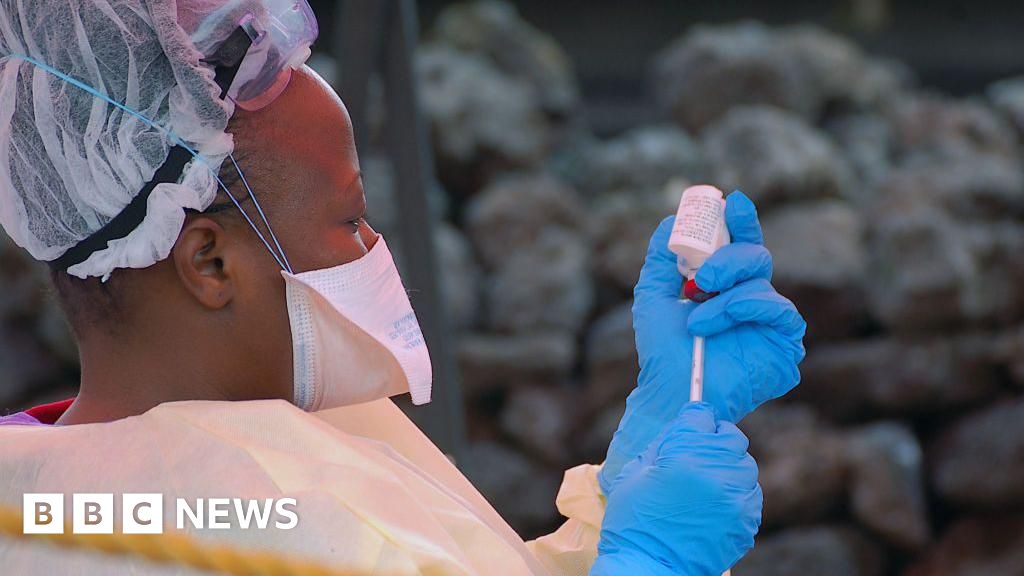
New Zealand has also become a back door into Australian hospitals, with 10 times more internationally qualified nurses registering through Trans-Tasman Mutual Recognition Arrangement than four years ago – rising from 1268 nurses in 2020-21 to 12,037 in 2024-25.
The loophole has led to a host of unintended consequences, including the exodus of thousands of nurses in the South Pacific that has pushed their health systems to breaking point.
Nine out of 10 of the NZ-registered nurses arriving in Australia last year did not actually train in New Zealand, but instead applied for registration there from third-party countries. Once accepted by the New Zealand nursing authorities, many immediately applied for a “verification of good standing” so they could use trans-Tasman mutual recognition as a shortcut to Australian registration.
While these nurses are highly skilled and would meet Australian standards if they applied to the Nursing and Midwifery Board of Australia, side-stepping the Australian watchdog and registering via New Zealand can cut application times, red tape and costs.
In the past two years alone, more than 24,000 New Zealand-registered nurses have come to Australia, despite there being only 54,000 nurses employed in New Zealand itself. The situation has become so blatant that in August, the Nursing Council of New Zealand released a report stating trans-Tasman mutual recognition had turned the country into a “stepping stone” for overseas nurses who had no intention of moving there.
“Some nurses moving, or applying to move, to New Zealand have the intention of moving on to Australia, enabled by the Trans-Tasman Mutual Recognition Act 1997 (TTMRA) and driven by the potential for higher nurse earnings in Australia,” a Nursing Council of New Zealand report found.
“New Zealand is not the only stepping stone country for international nurses, but the issue has been pronounced for New Zealand, partly because of the TTMRA.”
Australian Nursery and Midwifery Federation national secretary Annie Butler said the union had been talking to Commonwealth and New Zealand authorities about multiple issues driven by this trend.
“We do know that there is a bit of a stepping stone issue of people coming, having no intention, really, of contributing to the workforce in New Zealand, but doing what they need to do there in order to get to Australia,” she said.
“A bigger problem for us is the decimation we’re causing of other countries in particular, in particular the South Pacific.”
Butler said that under the current system, Australia was recruiting from countries where there were more health professionals working abroad than inside their borders, such as Fiji, Samoa and Tonga. She said this meant there were not only issues in equivalence of education, but that Australia was taking away from their South Pacific neighbours rather than bolstering their workforce.
“We have a responsibility of a good global citizen to make sure that we are supporting other countries where we can and contributing to improved global health,” Butler said.
In December, a report by Public Services International (PSI) warned this drain on Pacific nations was pushing the healthcare of these systems towards a crisis.
It also found workers who came to Australia and New Zealand from these nations were exposed to exploitation when they arrived, including working at care facilities for wages below their level of skill.
Tom Reddington, PSI’s secretary for the Oceania subregion, said Pacific health systems were being “hollowed out to prop up the care economies of richer neighbours”.
“This is leading to a workforce crisis in Pacific Island health systems which are on the brink.”
Fiona McDonald, a co-author of the report from the Centre for Future Work, said migration policy and underinvestment in the Pacific could not be treated as separate issues.
“Our research shows that if Australia and New Zealand keep recruiting from health systems that are already stretched to breaking point – without investing back in training, staffing and decent work in the Pacific – they are effectively offloading their care crisis onto their neighbours,” she said.
“That is not sustainable, and it is not just.”
Other Australian health professions feature among a host of workforces now registering more internationally trained employees via New Zealand regulators than they register themselves, including:
- More than four out of five overseas-trained Chinese medicine practitioners registered in Australia over the past two years came via New Zealand.
- Of the 103 paramedics who registered in Australia over the past two years, 90 transferred using trans-Tasman mutual recognition.
- Double the number of overseas-trained physiotherapists are choosing to register via New Zealand than those directly applying to Australian authorities, encouraged by application fees costing less than a third, dramatically shorter wait times and the potential to avoid undergoing a skills assessment.
- The number of builders, including surveyors and inspectors, registering via New Zealand is increasing year-on-year, however the figures remain small with only 30 in the past five years.
- Although the numbers remain small, the rate of plumbers registering via trans-Tasman mutual recognition rose sharply from 10 in 2023 to 32 in 2024.
- Aircraft engineers registering via trans-Tasman recognition soared from single figures a year since 2017 to more than 30 a year after 2023, with the exception of 2019-20 when there were 32 ground crew registering via New Zealand.
- The number of commercial aircraft pilots registering from New Zealand rose dramatically in the years after the COVID pandemic, from 37 in 2021 to 88 in 2022, and has continued to rise more slowly in subsequent years to 138 in 2024 and 116 up until December last year.
- Flight instructors registering from New Zealand have risen from 11 in 2021 to 62 in 2024, and 42 to December last year.
A Civil Aviation Safety Authority spokesperson said they were confident aviation professionals licensed in New Zealand met all necessary requirements to work in Australia, and also needed to complete a proficiency check before they could fly in Australia.
Despite a near doubling in the number of electricians using mutual recognition agreements to work in Victoria since 2021 (290 to 441), the state’s electrical regulator does not keep track of how many electricians are registering via New Zealand.
Energy Safe Victoria told this masthead it did not differentiate between electricians using mutual recognition agreements to transfer from New Zealand or other Australian territories, as electricians from both countries work to the same technical standards which are overseen by the Electrical Regulatory Authorities Council.
“Energy Safe Victoria routinely works with regulators and industry in other states and territories and New Zealand to co-ordinate regulatory strategies that ensure technical and safety standards for electrical work,” an Energy Safe Victoria spokesperson said.
But the differences in who can perform electrical work and how, and between licenses across jurisdictions, is one of the most glaring examples of issues with Australia’s automatic mutual recognition agreements, according to a 2021 Australian Council of Trade Unions’ submission to the introduction of an Australian Automatic Mutual Recognition scheme.
In June, the ACTU again warned the “complete lack of attention being given to harmonisation and licensing standards” between Australian jurisdictions – and the need to protect domestic licensing schemes from lower international standards – could see a lowering of standards through mutual recognition schemes.
Loading
A spokesperson for the federal Health Department said trans-Tasman mutual recognition was a legitimate pathway for health workers in New Zealand or Australia to gain registration in either country.
“National boards regularly review these pathways to ensure they remain effective, and that public safety is not compromised,” they said.
In July, the Victorian government shut down its Overseas Qualification Unit, a service that previously assessed whether an individual’s overseas qualifications could be officially recognised in Australia. When asked what the future of the unit was, or whether alternative arrangements had been made to assess overseas qualifications, a Department of Jobs, Skills, Industry and Regions spokesperson said the outcomes of a review were yet to be finalised.
Start the day with a summary of the day’s most important and interesting stories, analysis and insights. Sign up for our Morning Edition newsletter.