
 2 months ago
57
2 months ago
57
From the birthplace of the Romantic poets to the pulsing drumbeats of Brazil, our global writers share the definitive, soul-stirring cultural trips of a lifetime, the ones that left them changed forever.
Me, myself and Ipanema
By Justin Meneguzzi
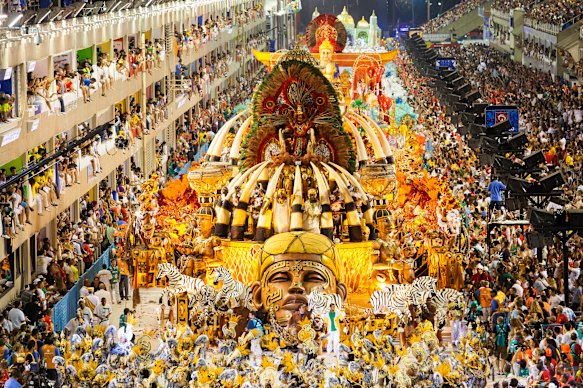
A condom the size of a missile is parading down Rua Riachuelo. The press of revellers, soaked with enough cachaca that a stray match would blow the place up, is so dense that the carnival float barely has room to squeeze through the narrow streets of Rio de Janeiro. It’s morning, I think. I can’t tell you what time it is because I was up all night dancing the samba and my phone is dead. I can tell you this: the vibe is buzzing.
I’m privileged to have visited all seven continents, usually seeking out quiet places away from the crowds where I can watch a grizzly bear or leopard seal, but the frenetic, chest-thumping atmosphere of Brazil’s carnival festival is still one of my most memorable trips.
Sign up for the Traveller Deals newsletter
Get exclusive travel deals delivered straight to your inbox. Sign up now.
In retrospect, choosing a notoriously high-risk city with a challenging Portuguese dialect might not have been the best choice for a first-time backpacker, but I am ready to be thrown in the deep end. It was sink or swim, and Ipanema’s beaches are invitingly warm. Within hours of leaving the airport, I’ve walked past flaming garbage bins, watched highway traffic divert around people passed out in the middle of the road, and I’ve been swindled out of $20 for a can of Coke.
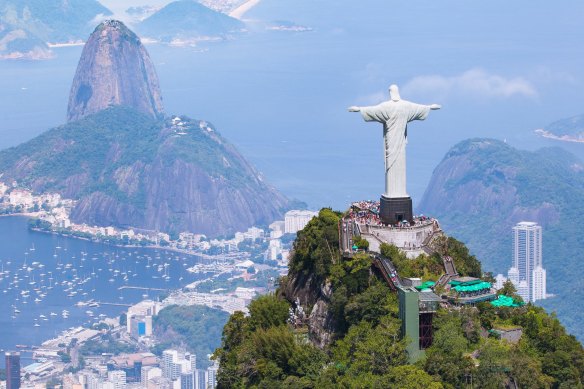
Rio de Janeiro is grungy, but it is also intoxicatingly beautiful. A sweaty climb in soupy heat is rewarded with spectacular views from Mount Corcovado, where Christ the Redeemer welcomes me with open arms. On Copacabana Beach, I embrace Brazil’s barely-there swimwear fashion. I game the scales at ‘kilo’ buffet restaurants, where you only pay for the weight on your plate. Then there are the blocos street parties. Starting at sunrise, the free parties raucously march from one side of the city to the other and finish well after dark.
Samba schools bring their feathered, hip-shaking best to the Sambadrome, a stadium purpose-built for their annual pageant.
The city’s gorgeous and strange are all drawn out by the incessant march of drums and, in the cacophony of colour and sound, it’s best not to ask too many questions and just go with the flow. It’s a lesson I’ve carried ever since.
THE DETAILS
Carnival takes place in mid-February (dates vary each year). Ticketed events are available online but be careful of scam websites. Adventure World’s five-night carnival package includes accommodation, transport, and tickets to the Sambadrome’s Carnival Parade, from $4365 a person. See adventureworld.com; visitbrasil.com
Deeply moving
by Fiona Carruthers
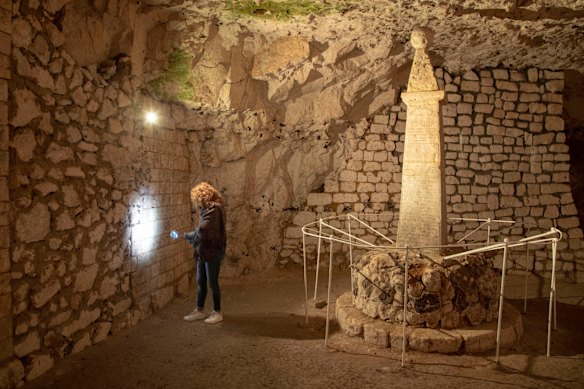
Standing 30 metres or so below ground level, on a chilly November day in northern France, in a vast network of caves and chambers known as the Underground City of Naours, I’m initially cursing my travel choice. I could have been above ground in somewhere like sunny Majorca.
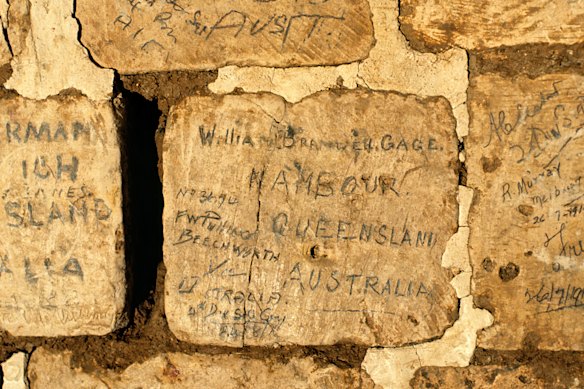
The feeling doesn’t last long. Down here, in a silent underworld devoid of natural light and noise, it’s easy to hear the heartbeat of the dead, and feel their presence immortalised in the 3000-plus signatures scrawled across and carved into the chalky limestone rock by World War I Allied soldiers, during their precious days of leave from the Western Front After an hour, I’m reluctant to leave despite having no feeling left in my feet.
Naours is a 30-minute drive north of Amiens, a vital logistics hub during the Battle of the Somme. I came here in 2017 on the tail end of an Australian media tour of the ANZAC experience – flown over to join Australian then Governor-General Sir Peter Cosgrove for a centenary service to mark the battle of Polygon Wood, fought in late 1917, during which 5770 Australians were killed or wounded.
Over five days, we ticked off all the usual suspects of Australian “military tourism” up here, including the newly built Sir John Monash Centre at the Australian National Memorial in Villers-Bretonneux, as well as nearby Victoria School – built between 1923 and 1927 as a gift from school children in Victoria.
We quietly wept (it’s impossible not to) in the numerous poplar- and oak-lined cemeteries around towns like Ypres in Belgium, and marvelled at “Napoleon’s Roads”, so-called as they feature trees planted during the Napoleonic era to help shade marching troops. And we quietly smiled when we ducked into one of the older-style bistros only to spot small plastic sprigs of wattle, furry koalas – even the odd Akubra propped up on the bar. No one could accuse the locals of forgetting.
But amid all the nostalgia, emotion and big-ticket memorials, the hauntingly simple site of Naours remains among my most memorable moments that overseas travel has ever delivered – quite simply through the force of this very unusual experience that felt like military tourism, meets archaeological dig, meets getting up close and personal with ghosts long-dead, yet eerily present.
The network of caves was discovered in 1887 and turned into a tourist attraction – the main aspect of which now is that it contains the largest known site of World War I graffiti on the Western Front, made with lead pencils and pocket knives from 1916 to 1918, mostly by Australian troops, along with British, American and Canadian soldiers.
Typically, you’ll find men’s names and often their battalion, service number, or a simple address – such as “C. Fitzhenry, Paddington, Sydney NSW” – written in both confident and more shaky hands, revealing something of their background and social status.
“You have to remember they were watching their friends get killed all around them,” a local tour guide explains. “Most of them who came down here would have fully expected to be dead in a few days, once they returned to their position in the trenches. The signatures are sort of a statement: ‘I was here – I’ll probably be dead tomorrow or next week, but I was here now, today’.”
THE DETAILS
Located 141 kilometres north of Paris, Villers-Bretonneux is a great place to start any tour of the Western Front. See trainline.eu. Numerous websites can help you navigate Australia’s part in Western Front history. See dva.gov.au/wargraves-projects; remembrancetrails-northernfrance.com; sjmc.gov.au. For Naours, see citesouterrainenaours.fr; somme-battlefields.com. Boronia Travel Centre’s three-day Western Front tour costs from $1780 a person, twin share. See battlefieldtourspecialists.com.au
Bean curd, done that
By Terry Durack
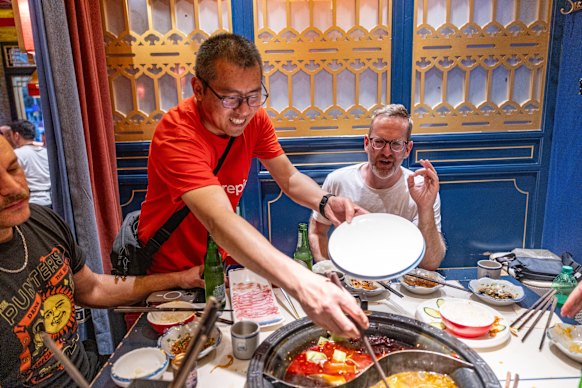
Growing up in Melbourne, I was obsessed with Chinese food, from dim sum to drunken chicken. By the early 1990s, I decided I had to know more. I had to visit China. As luck would have it, renowned cookery teacher and author Elizabeth Chong was hosting a study tour with a group of top chefs from Chinatown. I signed up in an instant.
It was like travelling with a rock group. The chefs were treated as visiting dignitaries. Brass bands and smiling school children met us everywhere we went. Every meal became a banquet. We ate every part of the duck except the quack at the Quanjude He Ping Men Roast Duck Restaurant in Beijing and crunched on grasshoppers in the Long Hua Yao Shan herbal restaurant, where everything was good for us. Ants were good for rheumatism and scorpions for weight loss. Then came the braised bull testicles. What were they good for? “The bull.”
Our chopsticks danced like rain over lily flowers, black fungus, red dates and lotus seeds. In Xi’an, a 24-course banquet of bean curd at the Yu Lan used no meat, yet such were the chefs’ skills, each dish, from sunflower bean curd to fish-fragrant bean curd, was distinct and delicious.
In Chengdu, we sweated over hotpots of frogs’ legs and eel at China Gourmet World, dipping them into vats of dark, oily broth festooned with chillies as local families gathered outside the window to watch in awe.
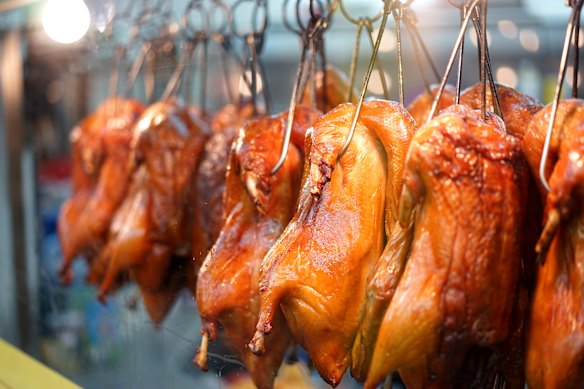
On our final evening in Guangzhou, we feasted on red-spotted lizard in double-boiled chicken broth, slippery strands of jellyfish, snake in winter melon, steamed crab, and the exquisitely cracker-crisp skin of suckling pig.
In just two weeks, I attended 28 full-scale banquets and ate a grand total (I counted) of 700 dishes. I walked the Great Wall, saluted the terracotta warriors and sailed down the Yangtse, moving by plane and train from bustling Beijing to hard-working Xi’an, other-worldly Guilin, steamy Guangzhou, laid-back Chengdu and romantic West Lake, where veils of silken mist sweep the water.
By the end, it was almost too much; every day drenched with history and laced with stories. As one wise observer said, “you are gazing at flowers from a galloping horse”.
But every time we sat down to a meal, time slowed. The banquet table became our world, as we bickered like family, laughed, told stories, drank warm beer, and ate and ate and ate.
Every time I sit at a large round table to this day, I feel the joy of those meals; that world of discovery, and that sense of bonding. In that sense, the trip has never ended.
THE DETAILS
Australian tour companies such as Intrepid, Wendy Wu and On the Go have comprehensive China itineraries around cultural sites and regional cuisines. Intrepid’s 12-day Real Food Adventure small-group tour of Beijing, Xi’an, Chengdu and Hong Kong costs from $4090. See intrepidtravel.com.au; wendywutours.com.au; onthegotours.com.au
Italy in the slow lane
By Justine Costigan
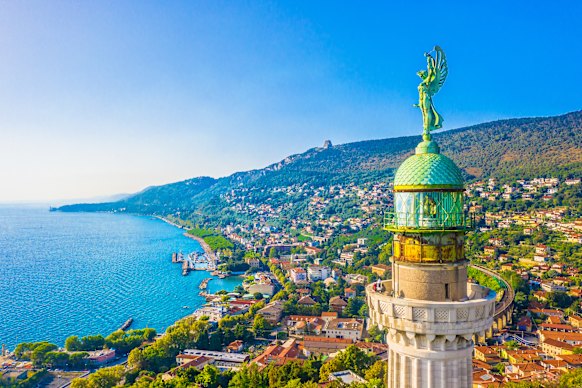
Of all the travel experiences I’ve shared with friends and family, there’s only one that always elicits envy. It’s the time my partner and I decided to relocate to Italy, temporarily leaving Australia behind for almost half a year of la dolce vita.
Instead of visiting countries we’d never been to, city-hopping across Europe or gorging on famous museums, galleries, restaurants and beaches, we simply wanted to go back to a country we loved, and stay there. No rushed itineraries, no fixed plans, no overtourism, no bucket lists – just a rough concept centred around nature, culture, food and a little serendipity.
We wanted to be able to repeat the experiences in Italy we loved best, from the daily passeggiata and aperitivo to being surrounded by beauty, history and culture. Most of all, we looked forward to the interactions that make life in Italy so appealing – the conversations with locals anyone with even just a smattering of Italian can enjoy, if you’re prepared to make the effort.
As well as stays in the Renaissance city of Ferrara and elegant Turin, we rented a small apartment in the old town of Trieste for a month. It had a kitchen the size of a bathroom, a bedroom and a bath, but no shower. Most days we’d work at the tiny kitchen table in the morning, then head outside, our plans for the afternoon dictated by the weather and our mood. On sunny days we’d stroll through the port or hike the Adriatic coast, or head further into Friuli-Venezia Giulia for a taste of alpine Austria, or even across the border to Slovenia and Croatia.
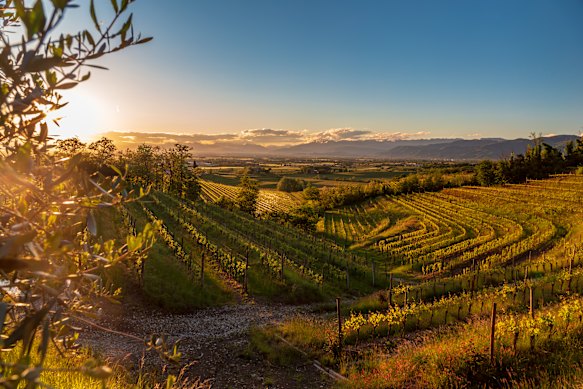
Arriving at the tail end of summer, we had a few weeks’ warmth before the Bora swept down from the mountains to darken the streets and whip the gulf into a frenzy, blowing Triestini into cosy bars and wine cellars, and old-school seafood restaurants along the port. We were welcome there and in the city’s many elaborate Habsburg Empire and art nouveau cafes, where some of Italy’s most acclaimed writers, and the Irish novelist James Joyce, once gathered. Walking home, we passed Roman ruins and spotted hedgehogs.
Although we could have visited most of Italy in the same period of time, the idea we imagined turned out to be true: by staying longer in just a few places, it seemed as if all of Italy (and much of Europe) came to us instead.
THE DETAILS
Apartment stays longer than a fortnight are usually heavily discounted. For stays of a month or more, in shoulder season and excluding major tourist destinations, expect to pay between $400 and $700 a week for a small, central, furnished one- to two-bedroom apartment in Italy.
On the trail of Byron
By Julietta Jameson
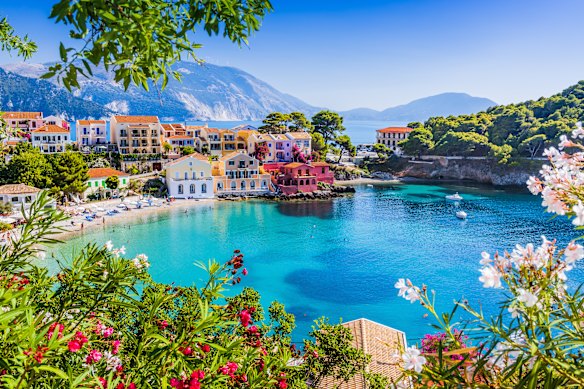
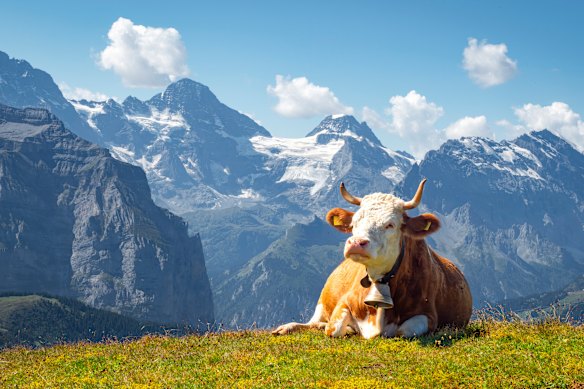
I’m riding the train from Geneva to Milan. Out the window, next to a chocolate-box chalet, a cow with a bell around its neck chomps on impossibly green grass, seemingly oblivious to the snow-peaked Swiss Alps rising into a cobalt sky behind her.
Already, early in this self-planned itinerary, my inner world feels graffitied with indelible memories. The Alps have delivered another.
I’m following in the footsteps of the notorious 19th-century Romantic poet, Lord Byron, who crossed the Alps by carriage in 1816. Bryon’s journey was one of exile and search for belonging. I have a passion for Byron guiding me. (I also have a book deal.)
On his final Grand Tour Lord Byron based himself in Geneva, Venice, Ravenna, Pisa, Genoa and Kefalonia before his death on the Greek mainland. I trace that arc.
After echoing his crossing of the Alps, I attend the opera at La Scala in Milan because he did.
In Venice, priced out of the Grand Canal where he resided, I rent a small apartment in Cannaregio cycling along the Brenta – where Byron rode his horse – past grand Palladian villas.
In stunning Ravenna, I stay at a guesthouse just off Piazza del Popolo where I grow to love the bell chimes that punctuate the day and night.
In Pisa, I stay in an apartment in a 14th-century palazzo, just doors from where Byron lived – objectively terrible but magnificent in spirit, with a Roman column improbably sprouting in the middle of the room.
An overnight ferry from Brindisi in Italy carries me to the Ionian island, Kefalonia, where I choose a simple homestay and explore by car. On the mainland, I linger in Patras – an unexpected highlight. Byron came to the region for war, eventually dying not far from here. It’s the end of my trip, but much less dramatically, I choose to settle into Patras’ laidback rhythm.
What elevates this journey is intent. Every stop is part of a thread.
You don’t need a book deal to travel this way. Follow a writer, an artist, a piece of music, a family story – anything that draws you in. Research it. Savour the planning. Then go slowly enough to let it unfold.
When a trip is built around a passion, it becomes more than a holiday. It becomes something you carry with you, long after you return home – a trip of a lifetime.
THE DETAILS
For similar group travel, try cultural tour companies such as Renaissance Tours, Academy Travel and ASA Cultural Tours, whose current program includes “Rambles with the Poets”, a literary exploration of Wales. See renaissancetours.com.au; academytravel.com.au; asatours.com.au
Five road trips of a lifetime
By Brian Johnston
Route 66, US
This is a grand 4000-kilometre journey across eight states from Chicago to Santa Monica, but the last third from Albuquerque will blow you away. Desert scenery is sumptuous, and this road celebrates pop culture in motels, diners, milk bars and gas stations. See visittheusa.com.au
Garden Route, South Africa
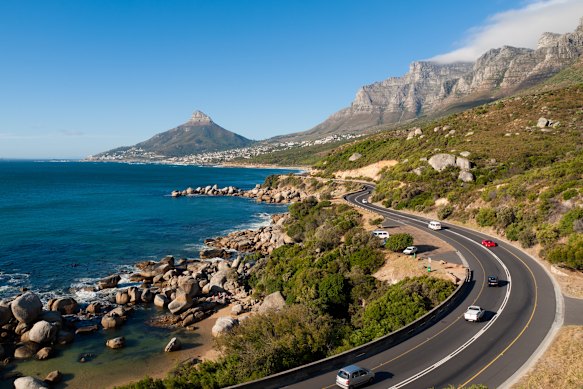
Less about gardens than coastlines, mountains, forests and lagoons where psychedelic flamingos wade. This 317-kilometre section of the 2255-kilometre N2 national highway packs in beauty and rugged landscapes, but tourist towns and their comforts are never far away. Extend it to include a safari and you’ll be thrilled. See southafrica.net
Stuart Highway, Australia
This classic route from Port Augusta to Darwin, via Alice Springs, brings you the outback in all its splendour and eccentricity, yet on a sealed road that requires no special driving skills. Think gold-rush towns, national parks, quirky pubs and kangaroos. See northernterritory.com; southaustralia.com
Route 1 Ring Road, Iceland
This island nation has the weirdest, most wonderful scenery anywhere and you can take it all in on a 1300-kilometre route that circumnavigates its coast. Gear up for fjords, waterfalls, glaciers and lava fields that look like landscapes from another planet. See visiticeland.com
Romantic Road, Germany
Looking for a journey with less drama and driving and greater cosiness? This southern German route links Bavarian castles with handsome medieval trading towns and plump, culture-rich cities Augsburg and Wurzburg. No complaints about the pretty countryside, local white wines and satisfying cuisine either.
See romantischestrasse.de

















































