3 months ago
13
3 months ago
13
Families of those killed in the Bondi Junction mass stabbing will call for attacker Joel Cauchi’s psychiatrist to be investigated, an inquest into the tragedy has been told, after she gave “belligerent” and “shocking” evidence at a hearing earlier this year.
The NSW State Coroner has also been told that the state’s mental health system is under-resourced, crisis-driven and failing to keep people safe.
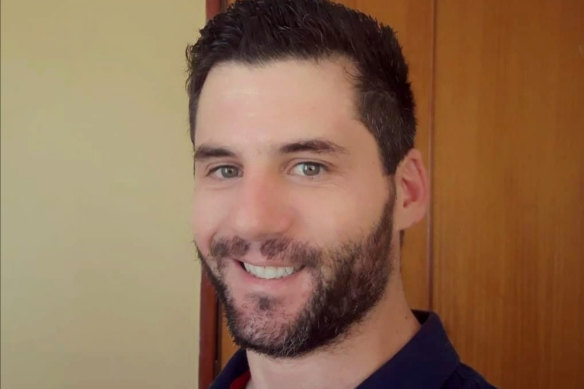
An inquest has heard of Joel Cauchi’s troubled mental health history.Credit: Facebook
Cauchi, 40, was shot dead by a NSW Police officer after he stabbed 16 people in the shopping centre on the afternoon of April 13, 2024.
Six people were killed; Dawn Singleton, 25, Ashlee Good, 38, Jade Young, 47, Yixuan Cheng, 27, Pikria Darchia, 55, and Faraz Tahir, 30. A further 10 people were injured but survived.
Loading
NSW State Coroner Teresa O’Sullivan in May heard weeks of evidence from their grieving families, first responders, survivors of the attack and experts.
The inquest resumed this week to hear submissions from the same parties, starting with counsel assisting Peggy Dwyer, SC, on Tuesday.
Dwyer’s strongest condemnations were reserved for Queensland psychiatrist Dr Andrea Boros-Lavack, who treated Cauchi at a private clinic between 2012 and 2020.
Boros-Lavack had weaned Cauchi off his anti-psychotic medicine in his final year at her clinic and disregarded the concerns of his mother, who feared her son was slipping back into psychosis, the inquest heard on Tuesday.
Under questioning in May, Boros-Lavack had disagreed with every other expert consulted by the inquest who had unanimously concluded that Cauchi was psychotic at the time of his attack.
“That was nothing to do with psychosis. He couldn’t have organised himself to do what he did. I think it might have been due to his sexual frustration, pornography and hatred towards women,” Boros-Lavack said at the time.
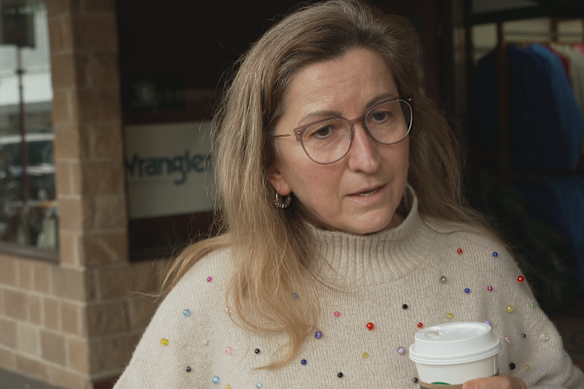
Andrea Boros-Lavack, who treated Bondi Junction killer Joel Cauchi from 2012 to 2020.Credit: A Current Affair
The following day, Boros-Lavack recanted her claim under pressure from barrister Sue Chrysanthou, SC, who was cross-examining the psychiatrist on behalf of victims’ families.
“The answer was shocking, it was genuinely shocking and Dr Boros-Lavack resiled from it the next day – as she should,” Dwyer said on Tuesday.
“It was exceptional, the level of belligerence and confrontation that Dr Boros-Lavack demonstrated in the witness box.”
Loading
Dwyer said Boros-Lavack was attempting to craft a narrative to justify why she took Cauchi off his medicine.
The grieving families will on Friday urge O’Sullivan to refer Boros-Lavack to the healthcare regulators.
Cauchi had been diagnosed with schizophrenia at age 17 after experiencing hallucinations. His symptoms decreased in the years that he was medicated but were never truly resolved, the inquest heard.
Clinical notes from his teenage years record Cauchi seeing human-sized frogs who were trying to swallow him, and demons under his skin.
“He talked about how the devil had entered his body,” Dwyer said.
As an adult, he became fixated with knives, pornography and violence as his symptoms waxed and waned.
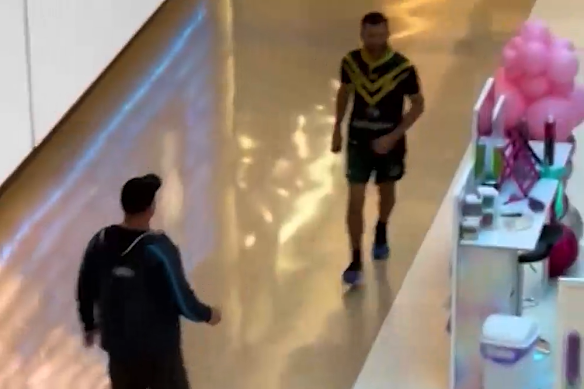
CCTV footage of Cauchi (right) at Westfield Bondi Junction.Credit:
The inquest heard that Cauchi’s parents had tried hard to get him treatment and keep him well cared for, but their son repeatedly slipped through the cracks.
On Tuesday, Dwyer told the coroner that the mental health system in both Queensland and NSW was chaotic and failing to keep people housed and safe. She said it was also crisis-driven – meaning it waits for people to deteriorate before intervening in their broken lives.
Loading
“There is a serious lack of adequate, community-based treatment focused on chronic care needs, and a lack of housing for people [with chronic mental health problems],” Dwyer said on Tuesday.
Dwyer noted that some experts have estimated there are 3000 people in Australia living unhoused with chronic mental health issues, and Cauchi was one. He lived at Maroubra beach in the weeks before his death.
Decades of underinvestment by governments has seen beds in Sydney CBD’s four main shelters fall from 1150 in 1991 to fewer than 300 today, and people such as Cauchi are shuffled between prisons and temporary accommodation at great cost to the state, she said.
“It’s not a political statement to say we need significant investment in those areas to keep the community safe,” Dwyer said, urging ministers to address the shortfall.
The coroner will be urged to make findings to NSW Health, and the government more broadly, to reverse the decline of services and housing, and to develop mental health outreach services in the state.
“It’s imperative this results in action, not just another report,” Dwyer said.
The inquest will resume on Friday.
Start the day with a summary of the day’s most important and interesting stories, analysis and insights. Sign up for our Morning Edition newsletter.
Most Viewed in National
Loading