3 months ago
24
3 months ago
24
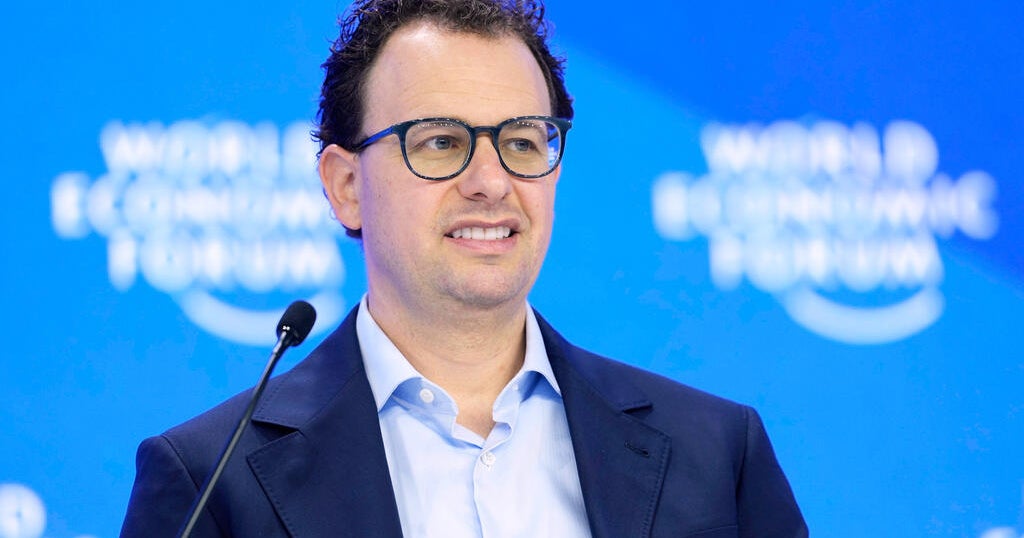
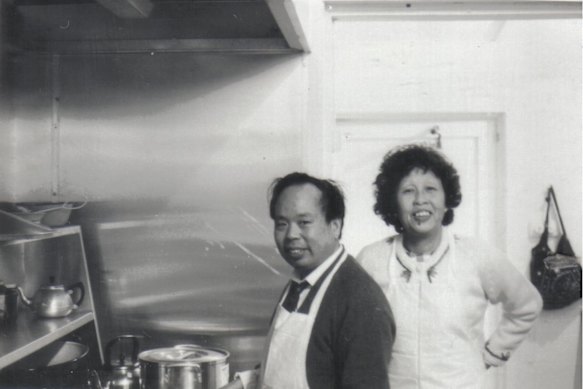
Before Aron D’Souza decided to become what he calls a “great man of history”, before he launched a personal crusade against the International Olympic Committee, and way before he masterminded the destruction of a renowned New York gossip site in a landmark legal case that involved wrestler Hulk Hogan admitting that he did not, in fact, have a 10-inch penis, Aron D’Souza worked, as a kid, in a Chinese restaurant in suburban Melbourne. The restaurant, called Hai King, belonged to his grandmother. D’Souza would sweep the floors and take out the garbage. It was fun, hanging out with the adults. But the bit he really enjoyed was sitting at the counter, behind the cash register. “It was one of those old manual ones that had a bell,” he tells me. He was a small, cherubic boy, with delicate brown eyes that could charm the birds from the trees. “Grandma liked me to man the register – that way, customers would give more tips.”
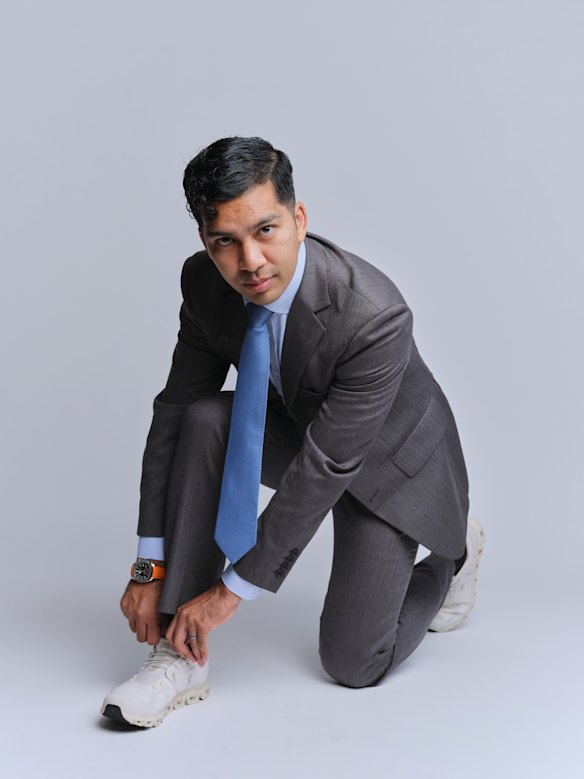
D’Souza no longer works in restaurants, but he still has soft brown eyes, and he is most definitely still charming. Though trained as a lawyer, he is in practice one of those occupationally indeterminate world professionals: venture capitalist, tech entrepreneur and “thought leader”, as well as an epic networker and self-publicist; “the type of character”, as The Guardian recently put it, “for whom LinkedIn was invented”. Born in Melbourne, he now lives in London and New York, but his home is anywhere there is an interesting – or lucrative – project to pursue or party to attend. He holidays annually with a small clique of AI billionaires, including Peter Thiel, the co-founder of PayPal, and Sam Altman, the boss of OpenAI. And like Altman and Thiel, he has a knack for generating controversy by turning what seem like random thought experiments into reality. “Aron doesn’t wait around for someone to tell him an idea is approved,” says international swim coach and collaborator, Brett Hawke. “He trusts what he sees.”
In June 2023, D’Souza announced a new global sporting event called the Enhanced Games, where athletes would be allowed to use performance-enhancing drugs. Under strict medical supervision, athletes would be able to avail themselves of any number of substances that are currently banned by the World Anti-Doping Agency, including human growth hormone, testosterone and anabolic steroids. (No illegal drugs, such as cocaine and methamphetamine, would be permitted.) The idea, which journalists dubbed “the steroid Olympics”, was blithely provocative. Doping in sport was an open secret, D’Souza claimed, so why not make it legal? He accused the International Olympic Committee of being corrupt and greedy, and of exploiting athletes, who earned a pittance while the Olympics brought in billions. At the Enhanced Games, there would be no national teams and no bloated opening ceremonies. Athletes would compete solely for themselves and get paid well to do so – $US250,000 ($360,000) for winning an event, and $US1 million ($1.4 million) for breaking a world record. D’Souza’s vision was ambitious, even grandiose. The games, he insisted, weren’t just a sports event but an epochal shift. Enhanced by cutting-edge science, the athletes would unlock the full potential of human ability, creating, in effect, superhumanity. “To reach beyond our present limitations is not merely a right,” D’Souza co-wrote in the First Declaration on Human Enhancement, a kind of charter for the games, “but a sacred duty.”
Not surprisingly, few people took the games seriously. US Anti-Doping Agency CEO Travis Tygart described it as “a clown show”. World Aquatics executive director Brent Nowicki called it “a farce”. The games were “unfair [and] unsafe”, according to Australia’s Olympic chef de mission for Paris 2024 and former Olympic gold medallist Anna Meares. “It’s a joke, to be honest.” Even the athletes were dubious. “When I first heard about the idea, I thought it couldn’t be a real thing,” American world champion swimmer Megan Romano tells me.
But as time went by, momentum shifted. In early 2024, D’Souza’s friend Peter Thiel invested in the games, as did biotech billionaire Christian Angermayer. Athletes began to sign on. The first was Australian swimmer and former Olympian, James Magnussen, who told a sports podcast in February 2024 that for $US1 million, he’d “juice to the gills” to break the 50-metre freestyle record. Others would follow: sprinters, more swimmers (including Romano), and weightlifters, many of them Olympic medallists. In early 2025, Donald Trump Jr, who D’Souza describes as a “visionary”, announced that he too was putting money into the project. Then, finally, a date was set: May 24, 2026, in Las Vegas. Suddenly, the “steroid Olympics” didn’t seem so far-fetched.
D’Souza, who is 40, has round cheeks and plump lips. He is slightly prim and immaculately put together. When I meet him in Melbourne, in October, he is wearing spotless trousers, a navy-blue, zip-necked Enhanced Games pullover, and a rose gold Jaeger-LeCoultre Reverso Duoface wristwatch, which, as I discover later, sells for about $30,000. “He’s always dressed well,” says friend and fellow tech entrepreneur Kyle Grant-Talbot. “He looks like someone follows him around and tailors things onto his body as he goes.” He also doesn’t smoke or drink alcohol or coffee. And he never, ever swears.
“This is my first trip to Melbourne in two years,” D’Souza explains, taking a seat in the living room of a house he’s renting in Albert Park. “As much as I love Australia, you can’t run a global business from here. The travel is just a killer.”
D’Souza comes from a long line of risk-takers. His family on his mother’s side came to Australia from China to work on the goldfields in 1851, settling in Melbourne. His father arrived from India as a lab technician in the 1960s. Aron, the youngest of three brothers, was born in Melbourne in 1985. A year later, his father found work as a research scientist in San Diego, and the family relocated. Despite living in the US, they still felt Australian: every year, they would return to Melbourne to visit their grandparents, who ran Chinese restaurants and owned real estate. When 9/11 happened, D’Souza was finishing high school in the US. “It was scary,” he says. “You thought, ‘Is World War Three gonna start?’ ” D’Souza’s parents sent him back to live with his grandmother in Melbourne, where they thought it would be safer.
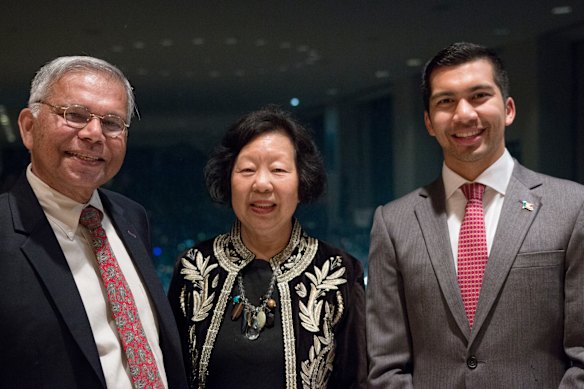
In 2002, D’Souza went to Monash University, where he studied sociology, politics and art history. “I’m told, the first triple major ever.” He did a PhD in legal philosophy and intellectual property at the University of Melbourne and wrote a book on Aboriginal iconography. He then had a revelation. “I decided, ‘You know what? I want to be someone important.’ ” But how? He remembered how, as a boy, he would sometimes peruse the annual reports of companies that his father had shares in. “I’d read the directors’ biographies,” D’Souza tells me. “And I realised all these significant Australian company directors went to Oxford University. That was the place that great Australians, particularly lawyers, go to study.” He applied and, in 2009, was accepted. “And it was the best decision I ever made,” he says. “Because in the first week at Oxford I met Peter Thiel.”
A former commodities trader and law clerk, Thiel, then in his early 40s, was already one of the biggest names in Silicon Valley, thanks to his success with PayPal and his early investment in Facebook. He had come to Oxford to give a speech. D’Souza was introduced to him by a mutual friend. Straight away D’Souza asked Thiel: “You’re one of the richest, most famous individuals in the world. You mustn’t have any problems?” Thiel said no, he had lots of problems, the most pressing of which was a celebrity gossip website, based in New York, called Gawker. Thiel told D’Souza that Gawker was publishing “all this horrible stuff” about his companies. Worse, in 2007 Gawker had outed him. Thiel was thinking about buying Gawker Media, the company that owned the website, for $US30 million. “That’s a terrible idea,” D’Souza told him. “You’re paying off your enemy.” Litigation seemed like an obvious option, but Thiel didn’t want to sue Gawker, as that would only attract more attention. D’Souza then had an idea: if Thiel didn’t want to sue the website, he could find someone who did and covertly fund their court case. “You engineer a proxy war until Gawker goes bankrupt,” D’Souza says. Thiel liked the idea, and asked D’Souza to write a proposal. Eighteen months later, in April 2011, the two men met for dinner in Berlin. D’Souza laid out his plan. “I said it’d take five years and $US10 million to effectively destroy Gawker,” D’Souza tells me. “And Peter said, ‘Great, where do I wire the money?’ ”
Together with a Hollywood lawyer named Charles Harder, D’Souza began searching for a proxy plaintiff, eventually settling on the retired pro wrestler, Hulk Hogan. In 2012, Gawker had published a short clip of Hogan (whose real name is Terry Bollea), having sex with Heather Clem, wife of his best friend, a Florida shock jock named Bubba the Love Sponge. Hogan claimed the video had been secretly recorded and released without his consent. When Gawker refused to remove the clip, Harder approached Hogan and offered him free legal representation. Hogan agreed, and Harder filed a lawsuit on his behalf for invasion of privacy.
The strategy was “sui generis”, says D’Souza. “No one else had done it.” It was also incredibly stressful. It was imperative that no one knew who was bankrolling the case: neither Hogan nor Harder, and certainly not Gawker’s lawyers. For three years, D’Souza worked as an intermediary, shuttling between Thiel, Hogan and Harder. (Thiel didn’t meet Harder or Hogan until after the case concluded.) The trial produced some memorable moments: at one point, Gawker’s lawyer asserted that Hogan could hardly claim his privacy had been invaded when he had made a habit of publicly discussing his sex life, as when he boasted on radio about having a 10-inch penis. Hogan responded that he had been talking about his character Hulk Hogan’s penis – not his own. Hogan responded, “I do not have a 10-inch penis … Terry Bollea’s penis is not 10 inches.” The implication was that while Hulk Hogan’s sex life was fair game, Terry Bollea still had a right to privacy.
In March 2016, Hogan/Bollea won, and was awarded $US140 million (about $200 million) in damages. Gawker went bankrupt and closed. Thiel described the case as “extraordinary”, and “one of my greatest philanthropic endeavours”. But it also raised difficult questions about the role of dark money in the law, and the power of billionaires to silence critical media. For D’Souza, however, it was an unqualified triumph. “To this day, Peter and I remain very, very good friends and partners and collaborators,” he tells me. “It’s not just that we’re both entrepreneurs and problem-solvers, but we’re also gay, and so we have a common group of friends.”
Sam Altman once described D’Souza as “obsessed with status and power”. In his book on the Gawker trial, journalist Ryan Holiday noted how D’Souza was known in Silicon Valley as a “professional son”, adept at finding older patrons in want of a protégé. Certainly, Gawker gave the young Australian an entrée into a world of exceptional wealth and opportunity. “There’s this group of us, 15, 20 of us, that are gay entrepreneurs, and we’ve all holidayed together for years,” D’Souza tells me. “It’s an extraordinarily tight community that has propelled me, and all of us together, to the heights of capitalism.” Included in the group is Thiel, Altman and German biotech billionaire Christian Angermayer. “We all met at the same time,” Angermayer tells me. “On a summer holiday in Europe with Peter. We were all newbies, but we became real friends.”
The fact that all these men are gay is no accident, according to D’Souza, who cites “The Best Little Boy in the World” theory, after the 1973 book of the same name, which posits that closeted young men often overachieve in order to deflect from their sexuality. “If you’re the captain of the football team and you’re studying really hard to go to Harvard, no one asks why you don’t have a girlfriend.” D’Souza says that all of his friends are “the best little boys in the world. They all went to the fanciest universities and won all the prizes and go to the gym compulsively and look beautiful.”
I ask him what his life would be like had he been straight. “I probably wouldn’t even be a partner at a mid-tier Australian law firm,” he says. “I’d probably just be a very normal, working-class kind of person.”
D’Souza has always been an assiduous planner. I can imagine him strategising his way from the dinner table to the couch every night, ensuring that he optimises his chances of success every step of the way. “He was the first person I knew who had such a clear plan for his life,” says Kyle Grant-Talbot, who played rugby with D’Souza at the University of Oxford in 2014. “One day he showed me how he’d put his whole life into a pitch deck – all the checkpoints, the targets, the goals.” One goal was to become chancellor of Oxford; another was to engineer a paradigm shift sufficient for him to make it onto the cover of Time magazine. “Like a Steve Jobs with the iPod moment,” says Grant-Talbot. “Or Sam Altman with Open AI.”
In the 2010s, in addition to taking on Gawker, D’Souza co-founded Sargon, a technology infrastructure company, a now-defunct ethical superannuation fund called Good Super, and The Chief of Staff Association, a lavishly funded networking organisation for hyper-aspirational young professionals. He also toyed with a scheme to reduce lines at airport security and another to fund an Australian poet laureate. But nothing was especially exciting. There were certainly no paradigms to shift.
Then, one day in December of 2022, he was lifting weights at Equinox, an upscale gym in Miami Beach, Florida, when he spotted what he describes as an Adonis across the room. He approached the man and asked how he got so fit. “Steroids,” came the reply. This was hardly a revelation – “Miami is a very enhanced city,” he tells me – but something about the exchange stayed with him. He remembered a story he’d read in Wired magazine, years before, called Steroids for Everyone!, which advocated for a global athletics competition where performance-enhancing drugs were permitted. Perhaps it was an idea whose time had finally come? After all, he figured, these drugs made humans stronger and fitter, so why ban them? D’Souza sketched out a plan for an alternative Olympics where elite athletes could choose for themselves what substances they took. In June 2023, he had Thiel and Angermayer over for a Sunday roast at his house in London and explained the idea. They loved it.
Investor Donald Trump Jr says the games are ‘about excellence, innovation and American dominance on the world stage’.
“I like ideas that change society’s view of something that has been grossly [misunderstood],” says Angermayer on a Zoom call from Rwanda, where he serves part-time as economic adviser to President Paul Kagame. “And if I see a business opportunity in changing that view, that excites me.” Angermayer, who is 47, made his money in crypto-mining and biotech. But he’s perhaps best known for his pharmaceutical company, Atai Life Sciences, which develops psychedelics-based medicine to treat psychiatric conditions. The Enhanced Games is controversial, he says, but “so was the idea of bringing psychedelics back into the medical world, and we changed that over the last 10 years”. The games weren’t “just a sports event”, says Angermayer, who is now listed as a co-founder. “It’s really like a change of the view on a certain topic.”
D’Souza went hard out of the blocks, with a publicity pitch straight from the futuristic TV series Black Mirror. The games website openly celebrated past drug cheats, including disgraced cyclist Lance Armstrong, as brave athletes, and “reinstated” their world records. It also co-opted the language of civil rights. “‘Doping’ is a colonialist slur,” the website read, “that reeks of symbolic and historic violence against both the Black and enhanced populations.” D’Souza told a journalist that being “enhanced” is like being gay “50 years ago … It’s stigmatised, it’s marginalised.” The website even featured a section, since removed, on the trials of “coming out” as enhanced to your family and friends. Such rhetoric got people’s attention, but did little for the games’ credibility. Indeed, comparing the burden of a drug cheat to the legacy of slavery and institutionalised homophobia was seen by many as profoundly offensive. “It felt like somebody was completely drunk and writing this copy,” Dr Michael Sagner, a longevity specialist who D’Souza brought on board as an adviser to the games, told the Financial Times. (Despite his reservations, Sagner remains in his role.)
Former US president Joe Biden had been opposed to the games: in early 2024, his administration expressed “deep concerns” about the event at a WADA conference in Switzerland. But when Donald Trump took power, the culture changed. Suddenly, the White House became a kind of drop-in centre for an Ayn Randian alliance of anti-ageing influencers, venture capitalists and technolibertarians. Podcaster Joe Rogan, who himself uses testosterone replacement therapy, came out in support of the games, as did Angermayer’s friend, Donald Trump Jr, who appeared to relish the prospect of an American uber-mensch. “This is about excellence, innovation and American dominance on the world stage — something the MAGA movement is all about,” Trump Jr said when announcing his investment in the games in 2025.
‘Justifying the event on commercial grounds … sends a despicable message to the community and young people.’
Australian Olympic CommissionThe games’ messaging remains futuristic: D’Souza still describes the event as a launchpad for “superhumanity”. Angermayer seems to view it as something more akin to the Super Bowl, with plenty of entertainment, “a half-time show, maybe some surprise guests”. And he is less antagonistic to the IOC. “The Olympics shouldn’t be worried about us!” Angermayer says. “We are just something different. I think there will be a category in the Guinness Book of Records: what is the enhanced world record, and what is the normal one.”
Sports bodies say the games are dangerous. “Drugs in sport are banned primarily for health reasons,” a spokesperson for the Australian Olympic Commission tells me. “Taking drugs can negatively impact athletes’ health and can lead to death. Justifying the event on commercial grounds is exploitative and callous – it sends a despicable message to the community and young people.” According to Tom Murray, president emeritus of The Hastings Center for Bioethics in the US, the games’ organisers “don’t give a damn about the athletes’ welfare or the meaning of sport”. The event, Murray tells me, “will just add another layer of myth to the story that may tempt young athletes to fall prey to the lure of doping”.
But Maximilian Martin, the Enhanced Games CEO, denies this. “There is nothing that is happening [at the games] that is illegal,” he tells me. Athletes, who must be aged 18 or older, will only be consuming “clinically approved substances that doctors prescribe to patients every single day”. Martin, who is German, has perfect blond hair and perfect white teeth, and looks like something out of a 1990s Euro boy band, except that he actually made his money in investment banking, data centres and Bitcoin. “There will be strict medical oversight,” he insists. The games has assembled a scientific advisory board which will design a regimen of performance-enhancing drugs specifically tailored to each athlete, according to their baseline health and chosen event. “That’s because a) every athlete is different, and b) every event is different,” Martin explains. “Just imagine the difference in skill that you need to win the 100-metre race versus a marathon.”
No doubt there will be great interest in what the athletes are taking, especially if they break records. Indeed, the organisers seem to have bargained on this, with the website offering Enhanced Games-branded testosterone supplements and injectables (“for those who refuse to feel average”). But the athletes themselves have no obligation to disclose their drug protocol. In February 2025, Greek swimmer and four-time Olympian, Kristian Gkolomeev, unofficially broke the 50-metre freestyle world record at a promotional event staged by Enhanced Games in the US. Gkolomeev, who had been taking performance-enhancing drugs for two weeks prior to the swim, clocked 20.89 seconds – 0.02 seconds faster than the current official record by Brazilian César Cielo set in 2009. (Gkolomeev’s result has not been certified by World Aquatics.) Gkolomeev said he wouldn’t disclose his drug intake for fear that others might try to replicate it without the appropriate supervision.
Other athletes are more candid. American swimmer Megan Romano, who will compete in the women’s 50-metre and 100-metre freestyle, says she is thinking about taking human growth hormone or testosterone. “But I still have to do the full body assessment to see what I’ll perform best on,” she says, speaking via the phone to me from Las Vegas. “I need to figure out what’s safe.”
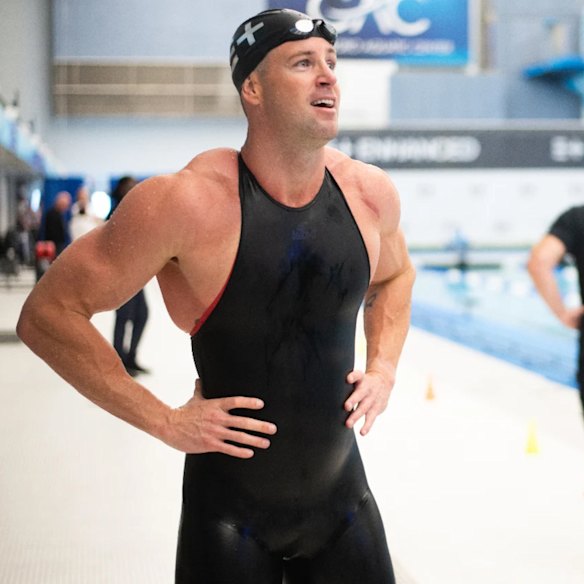
Romano’s participation in the games is driven in large part by curiosity. “Clean athletes have gone all of their careers clean, so now it’s exciting for us to see how our bodies are going to react [to being enhanced],” she says. But there is also, of course, the money. Enhanced paid Gkolomeev $US1 million for his record-breaking promotional swim. He later told journalists that the money was “more than I could make in 10 careers”. The prize pool for the games is $US25 million – most of it from private capital, although some sponsors, as yet unnamed, are said to be onboard. Enhanced pays its athletes a base salary from the moment they sign up, as well as covering their training, nutrition, recovery services and housing. For athletes who receive little or no help from their sport’s governing bodies, this is an attractive prospect. “As an athlete, you have no relationship with the Olympic committees or World Aquatics,” says James Magnussen. “They are relevant every four years. Outside that, they don’t pay you, they don’t support you, they don’t look after you.” Magnussen cites Ian Thorpe’s famous gold-medal win in the men’s 400-metre freestyle final in the 2000 Sydney Olympic Games. “Think what that did for Australia,” he says. “For national pride. For kids swimming. What do you think that’s worth? I think it’s worth $1 million. But he got paid nothing from the IOC.”
With all his talk of “society” and “the future”, D’Souza seems made for public office. But his politics remain opaque. He has a portrait of Barack Obama on his living room wall in London, and his superannuation fund, Good Super, once featured a “Dump Trump” option. But like the games he founded, he has veered ever deeper into MAGA territory, which is to say, libertarian, hyper-capitalist and slightly paranoid. He now identifies as an “effective accelerationist”, a techno-supremacist, anti-democratic philosophy that advocates super-charging capitalism to trigger transformative change. “It’s only the top 1 per cent who matter,” he tells me. “These are the people who are going to be the value creators” in the economy of the future. He asserts that immigrants are entirely to blame for Australia’s housing crisis, and that in an AI-dominated future, the only chance for humanity is to be enhanced. “Superhumanity is the only thing that matters now,” he says. “And I accept the political patronage of anyone who believes in that mission.” Anyone? “Anyone.” Despite both the founders being gay, the games have even taken money from Prince Khaled bin Alwaleed bin Talal Al-Saud, of Saudi Arabia, where homosexuality is punishable by beheading. “Prince Khaled believes in superhumanity,” D’Souza says. “And I’m very happy to accept his help.”
D’Souza is alive to the ethical dissonance here: he just doesn’t care about it. Besides, it’s perfectly consistent, in his mind at least, with the history of his forebears, who were, from the moment they arrived here, eminently pragmatic. They came for the Gold Rush. They sold picks and shovels. They bought real estate and built restaurants. “My grandparents made fried rice until their 80s so that I could have the best education in the world,” D’Souza tells me, leaning forward in his seat. “And they said, ‘Go and focus on doing something truly great with your life.’ ” So that’s what he’s going to do. He will change the project of humanity. He’ll be part of the one per cent who matter. He will do whatever it takes to show the world that he is a great man of history.
Get the best of Good Weekend delivered to your inbox every Saturday morning. Sign up for our newsletter.