2 months ago
24
2 months ago
24
Everyone loves the Metro Tunnel. As an economist, it’s up to me to burst your Munnel bubble
Opinion
December 10, 2025 — 5.05am
December 10, 2025 — 5.05am
The Melbourne Metro Tunnel opened last week to widespread acclaim. Everyone seems to be having fun riding through, which is why it falls to a dour economist to potentially spoil the party by asking the essential question: do the Munnel’s numbers stack up?
In 2016, the economic case for the Melbourne Metro Tunnel appeared exceptionally strong. Even under conservative assumptions, the benefits were expected to exceed the costs by a wide margin. Using realistic inputs around discount rates and wider economic benefits, the project’s case looked very compelling with a benefit-cost ratio of 3.3, meaning it would provide $3.30 of benefit for every $1 invested.
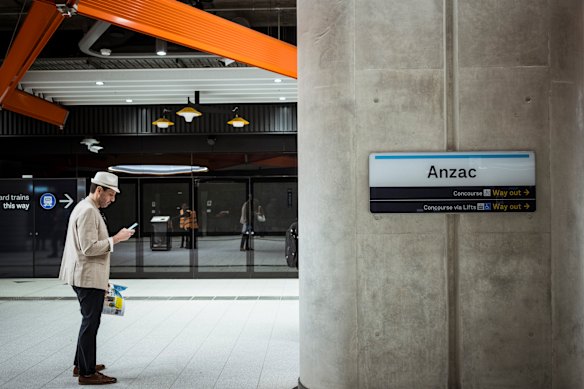
A slump in train patronage means Metro Tunnel doesn’t stack up like it once did.Credit: Chris Hopkins
Many aspects of the business case turned out to be surprisingly accurate. Population forecasts were largely correct. Construction timelines were also largely met. Costs did rise, but the final overrun was about average by global standards and lower than the blowouts seen in many comparable projects. The project’s cost increased from an original nominal estimate of $10.9 billion to about $15.5 billion – a rise of about 42 per cent. Again, not bad considering the pandemic and inflation that occurred during the period.
However, the projections for train patronage tell a very different story. The business case assumed metropolitan rail use would grow steadily over time, forecasting a doubling of weekday boardings from 750,000 in 2011 to 1.5 million in 2031. These forecasts look shaky.
Currently, train patronage remains well below pre-pandemic levels. This dip is even more striking when you consider that our population has grown significantly during this time. This stagnation is not just people working from home – train riders remain scarce even on weekends.
These numbers have significant implications in an evaluation of the Metro Tunnel’s benefits. Much of the project’s value came from expanding capacity to move large numbers of commuters in and out of the CBD during peak times. With demand for those trips materially lower than expected – and with hybrid work now a persistent feature of the labour market – the realised benefits may fall well short of what was assumed.
We calculate this shortfall to be about 50 per cent when comparing 2024 patronage (plus a generous 15 per cent growth buffer) with the original 2031 forecasts.
Take for example Flinders Street Station. That had just over 50,000 passenger entries each workday in 2011, forecast to rise to more than150,000 in 2031 without the Melbourne Metro. In 2024, however, it averaged just 61,000 entries. Even allowing for 15 per cent growth in the next six years that suggests a shortfall in the forecast entries of 54 per cent.
Even under the most forgiving economic settings, the economic viability of the Melbourne Metro Tunnel now hangs by a thread. When we adjust the original business case to reflect the 42 per cent blowout in projected costs and a 50 per cent structural reduction in benefits due to the post-pandemic patronage cliff, the project’s net present value collapses from a massive $18 billion surplus to a razor-thin $0.72 billion. This results in a benefit-cost ratio of just 1.06, meaning that for every dollar invested, the state is now retrieving only 6¢ in surplus value.
Loading
While a benefit-cost ratio greater than zero technically classifies the project as “viable”, this is obviously just a back-of-the-envelope calculation. If train patronage remains low and it turns out we don’t hit capacity constraints on the old network for another 15 or 20 years, then the benefits could easily fall by more than half. If assessed under Infrastructure Australia’s standard 7 per cent interest rate, the project would be deeply unviable, destroying billions in value.
The saga of the Melbourne Metro Tunnel serves as a stark warning for any heavy rail project dreamt up in a pre-pandemic world. For a long time, there was hope that the pandemic was a blip – a temporary interruption to the inevitable growth of mass transit.
But here we sit, almost six years after it began, and we are nowhere near our pre-pandemic peak. The Suburban Rail Loop business case, written in 2020, assumed that COVID-19 would lower patronage by about 5 to 10 per cent. The experience from the Melbourne Metro suggests that the losses will be five to 10 times larger, which would put the project deep in the red well before costs have had a chance to inevitably balloon.
This reality exposes a fundamental contradiction in modern government policy. If governments are going to commit to making working from home a permanent and prominent feature of the workforce, they must also have the courage to pare back their infrastructure ambitions.
We must recognise that working from home is, in itself, a massive infrastructure benefit. By keeping workers at home two or three days a week, we naturally decapitate the peak-hour congestion that these projects are built to solve. If we lock in hybrid work, we simply need fewer roads, fewer trains, and fewer expensive tunnels.
Isaac Gross is a senior lecturer at the Department of Economics at Monash University.
The Opinion newsletter is a weekly wrap of views that will challenge, champion and inform your own. Sign up here.
Most Viewed in National
Loading