3 months ago
19
3 months ago
19
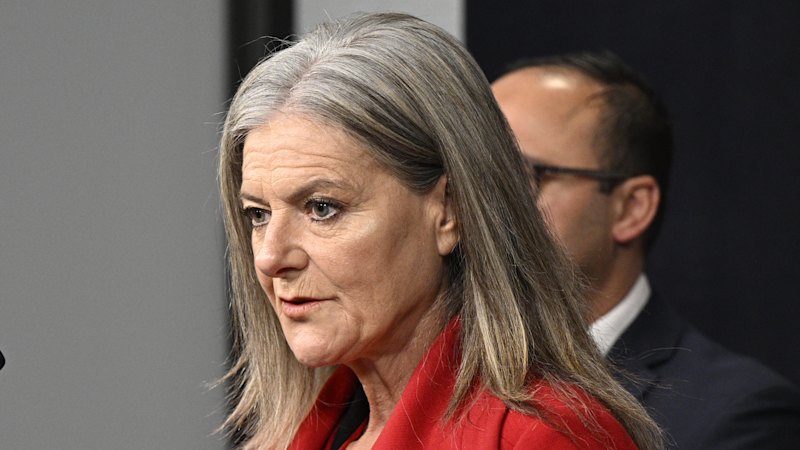
The former head of the federal Treasury will use a Brisbane speech on Wednesday to warn that the Albanese government’s planned environmental law reforms will fail to close “deforestation loopholes” that directly threaten Queensland’s Great Barrier Reef.
Australian Climate and Biodiversity Foundation chairman Ken Henry, who served as Treasury secretary from 2001 to 2011, will tell a Committee for Economic Development of Australia lunch that Labor’s planned reforms to the Environment Protection Biodiversity Conservation Act will fail to address one of the reef’s greatest threats.
While Henry welcomed the proposed reforms – which he said reaffirmed the Commonwealth’s role in asserting Australia’s national interests, and injected greater planning certainty and consistency – more needed to be done to improve the Howard-era Act, which had “failed miserably”.

Ken Henry says the need for national laws to address deforestation is clear.Credit: Alex Ellinghausen
“The inability of the reforms to deal with the ongoing large-scale clearing of native vegetation is a major problem, particularly when it poses a clear and well recognised threat to the health of one of Queensland’s greatest assets,” Henry will say in the speech, which was provided to this masthead in advance.
“Clearing in the catchments that empty into the Great Barrier Reef lagoon cause stress and damage to a system under grave threat from climate change. The runoff of soil, chemicals and fertilisers associated with deforestation have most recently been recognised by the World Heritage Committee of UNESCO as a significant threat to the health of the reef.”
Loading
Henry said it was “shocking to note” about 500,000 hectares had been cleared between 2019 and 2023 within the catchments running into the Great Barrier Reef.
“The need for the national laws to address this problem is clear on environmental grounds alone, and the case is only amplified by the reef being a significant generator of economic activity,” he said.
Henry said the Great Barrier Reef supported about 77,000 jobs and contributed about $9 billion a year to the Australian economy.
“If the reef were an employer, it would be Australia’s fifth-largest,” he said.
“Yet neither the present laws nor the proposed reforms, provide the Australian government with the ability to act to protect the reef from irresponsible clearing, due to a 25-year-old loophole.
“Of course, the climate case for closing the loophole is massive, with millions of tonnes of emissions released each year through both deforestation and native forest logging.”
Henry said “genuine co-operation” between the Australian and Queensland governments was needed, the starting point of which was a recognition of the Commonwealth’s power to intervene when the state was not living up to its responsibilities.
“Queensland doesn’t have to wait to be dictated to by the Commonwealth,” he said.
“This legislation offers another vehicle to facilitate co-operation – regional plans must be developed in a collaborative, inclusive and transparent process that respects the science.”
Loading
But despite his criticism of the EPBC reforms, Henry said “with further improvement” they offered hope of a better approach.
“The proposed reforms offer two substantial improvements. First, they reaffirm the Australian government’s role in protecting the national interest,” he said.
“Second, they inject greater certainty and consistency in the application of the laws.”
Henry said as demand for renewable energy soared, the average time for EPBC assessment and approval of wind or solar farms blew out from a little more than 500 days in 2018 to 831 days in 2021.
“All these projects, whether they be wind farms, solar farms, transmission lines, new housing developments, land-based carbon sequestration programs, new and enhanced transport corridors, or critical minerals extraction and processing facilities, must be delivered, and they must be delivered quickly,” he said.
“They must be delivered efficiently. Most importantly, they must be delivered in a way that not only protects but restores nature.”
The proposed reforms have received friendly fire from within Labor. Backbencher Ed Husic warned that reforms to expand so-called national interest powers could be open to abuse by future Coalition governments.
Start the day with a summary of the day’s most important and interesting stories, analysis and insights. Sign up for our Morning Edition newsletter.
Most Viewed in National
Loading