3 months ago
26
3 months ago
26
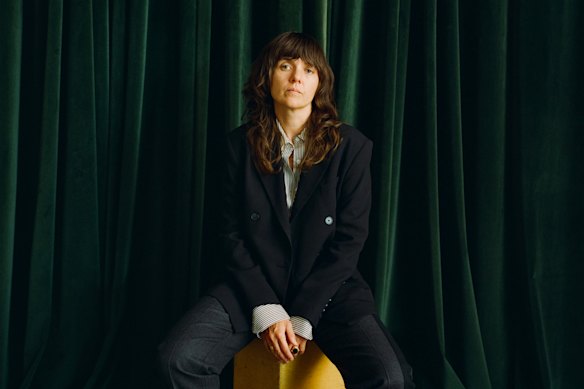
Courtney Barnett broke into the musical mainstream a little over a decade ago, with a distinctive deadpan delivery of songs both witty and rambling, evocative and melancholy. Raised on Sydney’s northern beaches and then, briefly, Hobart, before refining her chops in Melbourne’s music scene, Barnett is now a clear product of the wider world, receiving Grammy nominations and appearing on Saturday Night Live.
Currently based in Los Angeles, Barnett will release her fourth album, Creature of Habit, later this month.
You describe yourself as a guitarist, songwriter and singer. Let’s start with “guitarist”. Is it true you wanted to play the drums first? That is true! I wanted to play the drums as a kid but there was already a drummer in the school band, and then I started playing guitar not long after. I tried to teach myself saxophone and trumpet in school later on, but guitar was always the one.
Would you say that what successful people have in common is the good fortune of a great teacher giving them early enthusiasm? I was really lucky. There was a local guitar teacher across the road from my primary school, and we must have got a recommendation. I started lessons there and he was just so positive and supportive and fun. It never felt like work. I’ve heard other people talk about music lessons differently – even my dad, who played piano as a kid, said it was a chore, forced upon him.
What do you love about the guitar and the way it allows you to express yourself? I’ve never fully understood what it is, but it definitely feels good. Even the learning process – I’m still learning every time I pick up the guitar or try to do something new or different. And I love that about it. It goes back to that same feeling I got as a kid – learning three chords and being able to play a whole song. You feel this sense of accomplishment. It feels like I’ve climbed a mountain. That was the other good thing about my guitar teacher. He taught me the tools but he also said, “Now you can write your own songs.” He didn’t make it seem like this mysterious dark art. It didn’t seem scary or intimidating or out of my reach.
What does your day look like when you’re writing songs? It’s always a little different, but I do fall into some of the same patterns. For this new album, I sat down at the kitchen table at the start of 2023 with my notebook. Normally I start with guitar – with some chords or a riff – and I try not to think about it too much, and maybe a melody comes. I like those moments of not even considering what’s happening and trusting what’s coming from a subconscious place. Then I mumble lyrics – just nonsense – before coming up with a structure.
Stream-of-consciousness mumbling? Yeah, but also sometimes total mumbling. I’ll say the same phrase over and over, or just a word that doesn’t make logical sense. Sometimes something comes up – one of those phrases from the depths of my brain – and it might sound like it means nothing in the moment, but I try to record everything, because they might mean something or be on the way to something, like a dream. A few years ago I started writing down all my dreams, too, even if they didn’t seem interesting. It’s the same concept: trusting your body or your brain to see what’s hiding in there, and then to try to understand it. Sometimes it’s easier – I want to write about this thing that annoys me, and it comes out all in one go – but those moments are rare.
Melbourne folk musician Husky Gawenda once said that he likes to start his day by picking up something he’s already begun. Is it easier to start in the middle? Definitely. The other way I write a lot is with a loop pedal. I’ll come up with a chord structure, make a guitar loop and let it go, hit record and then flick through the pages of my notebooks or journals or just books off the shelf, and speak-sing along to the loop. It’s hard to explain, but sometimes something really interesting comes out of it, and it’s normally those unexpected things I trust the most, because they’re not coming from a place of real intention or expectation. I trust their innocence.
You’re in Donald Trump’s America – is there any compulsion to put what’s happening in the world into your art? I find it pretty difficult to silo myself away from that on an emotional level. But musically, or lyrically, I don’t quite know the answer. I think it creeps in, in a way that’s not really literal or obvious, but the heartbreak or overwhelm or fear is all in there. Sometimes over the years I’ve tried to put those feelings into words or into songs, and they often just don’t work. I wish I could write a great, uplifting, powerful song that changes the world, but it’s harder to do than say.
You’ve been open about anxiety and therapy. Is songwriting a valuable processing tool? It definitely is, even when I was younger and didn’t completely understand what I was doing. I think that’s a healthy thing to come back to and check in on. Songwriting – especially lyrically – helps me process thoughts and emotions and conversations I want to have with people. You’re writing letters to people that you’ll never send, but it’s that act of putting the words on paper and getting the ideas out.
Let’s go to “singer” now. Your voice is so distinctive, such a trademark. But you were a reluctant singer. Growing up, I wasn’t a singer. There were people who were singers – and I was not one. No one in my family sang. I was self-conscious without knowing why. It’s funny that so many of us feel that, but it’s kind of ingrained – the body protecting itself, because it’s such a vulnerable act. But at some point I finally learnt how to sing and play guitar at the same time, which is a huge accomplishment.
That sounds hard – like rubbing your belly while tapping your head … That’s what it felt like at that time – that I’m never going to be able to do it – because it didn’t make physical sense. But I was learning all these songs and I wanted to sing along, and once I achieved that goal it was this fun thing I could do in my room. But I don’t think I really sang in front of anyone until I was 18.
What do you do to stay grounded? You’ve said that you’ve tried everything from pottery to surfing, because it was humbling to be a beginner again. The humbling feeling wasn’t the intention, but it was definitely the feeling from attempting the thing. It is a nice feeling. Surfing’s one of those things I always wanted to do, but no one was in my life to show me how, so why not? It was the same with pottery. I’d always been curious, but I was always touring. So when I started to write this album, I signed up for a class and enjoyed it.
What do you make? Bowls and plates. Little bowls to put salt in. I’ve gifted a few of them. I guess it’s just trying to follow my curiosity – learn how things work – and allowing myself the time and space to study or look into it, to watch documentaries or read a book.
Just on books, I’m told you have a “persistent, low-grade obsession” with the American modernist painter, Georgia O’Keeffe, through her cookbook? I was living in Joshua Tree in California a little, and I started accumulating all these Georgia O’Keeffe coffee-table books, and I just really loved the cookbook. It’s written by a lady who helped her look after her house when she got older, and so each recipe is introduced with this little anecdote or story about O’Keeffe’s everyday life. It’s the kind of thing you wouldn’t get in a classic biography, it’s just really casual: “Georgia really liked to grow her own herbs, and these are the ones she had in her garden.”
People have divined all sorts of feelings in your work – malaise and self-doubt, but also affirmations and comfort. This album feels positive. Does it come from a good place? Yeah, it does. Each album documents a time and place and a number of conflicting feelings, and this album is more joyful and optimistic and positive. But there’s elements of sadness and darkness – maybe they’re just approached in a different way. It would be my dream to continue to change and evolve, and hopefully not do the same thing twice, and at least learn from my mistakes. I do like that an album documents a little era. It’s always interesting to continue to perform songs as years pass, and see how the songs change in meaning 10 or 15 years later. That continues to fascinate me.
I bet. Everyone knows that feeling of hearing an old song, and it transports them back to a moment in their life. I can’t imagine what it’s like to perform a song that you yourself wrote, and have it take you back to that memory. It’s something that I’m really grateful for, because it’s weird – as I’m singing a song – to be able to feel this 20-year-old version of myself, the people I was with, and the place I was when it was written. It’s like time travel. It’s very weird and wonderful.
This is an edited extract from a longer conversation on Good Weekend Talks.