
 1 month ago
55
1 month ago
55
The last time I saw Elsa, we were teenage girls in Melbourne, crying over a goodbye. Now, standing in a bustling square in France with my four daughters, I scan the crowd for a face I hope I will still recognise. What will it feel like to see each other again after all this time? More importantly, will our friendship still be there?
Then I spot her, making her way through the crowd. Time has changed us both, but her smile is unmistakable. She laughs, and I am transported back to the French village where we spent three months together, 35 years ago. Within seconds, we are in each other’s arms, talking over one another. There is an instant ease that feels both surprising and deeply familiar.
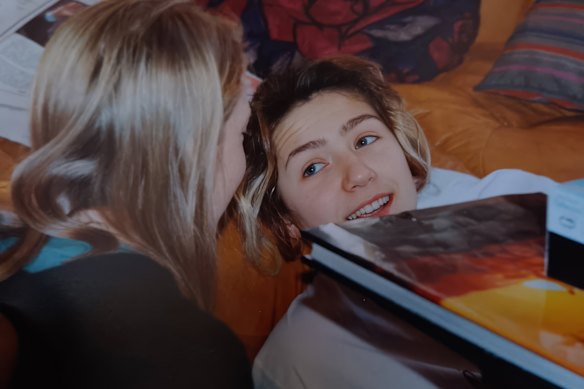
I was 15 when I went to France as an exchange student. I’d lobbied for the United States, but my Francophile parents were convinced France would be better for me. I, however, was terrified. My anxiety eased when I learnt my host family had a daughter my age. Coming from a family of five girls, I liked the idea of a ready-made sister. I collected brochures from a travel agency, imagining life in a French city … but they didn’t live in a city. After arriving in Paris, I took a train alone to a station in eastern France, where Elsa and her mother picked me up and took me to their tiny village. It was a shock. Rolling green hills and ancient stone houses in every direction. Elsa’s home was surrounded by dense pine forest and farms – a world away from the eastern suburbs of Melbourne.
The first few weeks were miserable. I was homesick, overwhelmed by a language I barely understood. Many nights I cried into my pillow. Starting school was particularly tough. One lunchtime, some boys in the cafeteria began teasing me. I couldn’t understand the words, but I recognised the tone. I just sat there, embarrassed, willing myself not to cry. Elsa quietly picked up my tray and moved us to another table.
The two of us bonded over music, chocolate, teenage crushes and badly dubbed episodes of the 1980s American TV soap series Santa Barbara. We laughed our way through conversations in a muddled mix of French and English. Elsa’s humour was wickedly dry. When I was served venison for Christmas lunch, she looked at my plate and said, completely deadpan, “Bambi’s father”. I was horrified. She dissolved into laughter.
Australia fascinated Elsa, who, at the time, had never been on a plane. She asked endless questions about its beaches, wildlife and culture. She loved horses and Harley-Davidsons, while I had posters of pop stars and tennis players on my bedroom walls. We seemed very different on paper, yet our friendship felt effortless.
When my three months ended, we cried and promised to meet again. From Melbourne, I wrote and received long letters on thin blue airmail paper that took weeks to arrive. A few years later, Elsa came to Australia and spent six months living with my family. But after that, the letters became less frequent and we drifted apart. Three decades passed before social media brought us back into each other’s orbit.
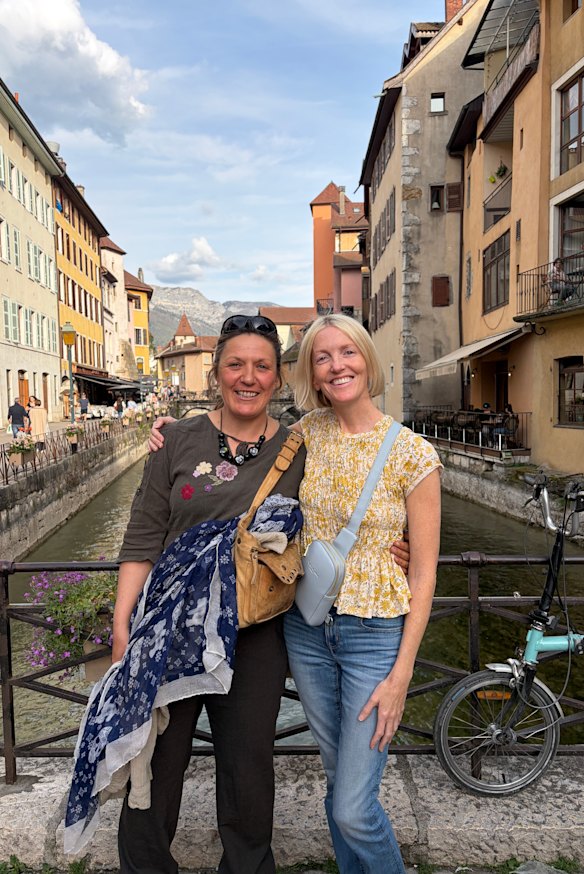
I arrange to meet Elsa in Annecy, a town I had visited with her family. While waiting, I don’t worry about whether I will recognise Elsa, I worry whether I will recognise the friendship. I needn’t have.
We wander alongside Annecy’s canals, talking and trying to make up for 35 years in a single afternoon. My daughters listen as Elsa and I trade stories (mainly in English, since my DuoLingo crash-course in French the month before our visit clearly wasn’t enough), interrupt one another and collapse with laughter. They are seeing something I had hoped still existed but wasn’t sure of until that moment: the friendship itself.
Over the next day, Elsa tells stories of riding across the US on a motorbike, becoming a martial arts champion and living in Russia as an ironworker. Her life has taken a different path from mine. Yet sitting beside her, I feel the same ease I experienced as a teenager. At one point she pauses and says quietly, “Meeting you changed the course of my life.” Hosting me all those years ago had sparked her curiosity to explore the world; her time with my family in Australia had consolidated her English, giving her the confidence to travel for work.
For years, I had thought of Elsa as the person who helped me navigate those difficult first weeks in France. I had never stopped to consider what our friendship meant to her.

















































