3 months ago
10
3 months ago
10
To celebrate the Serbian Orthodox community’s New Year’s Eve on Tuesday, punters at a hall in Melbourne’s inner north performed a dance that would test the hardiest partygoers.
It’s called the kolo, and it involves people holding hands in a circle with a chain of others, performing intricate steps sideways, faster and faster.
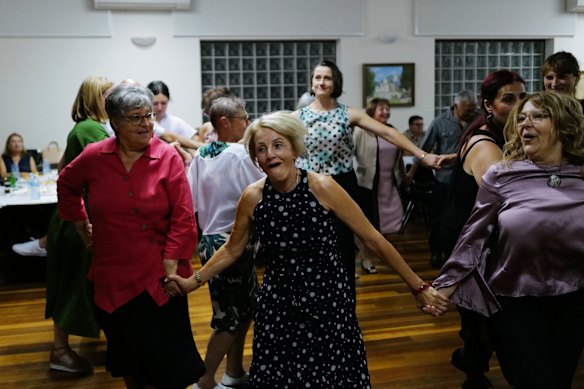
Fast pace: attendees dance at a Serbian Orthodox New Year’s Eve party in Brunswick East on Tuesday.Credit: Alex Coppel
The accompanying frenzied electric keyboard and accordion music at the Holy Trinity Church hall in Brunswick East never seemed to stop, and neither did the dancers.
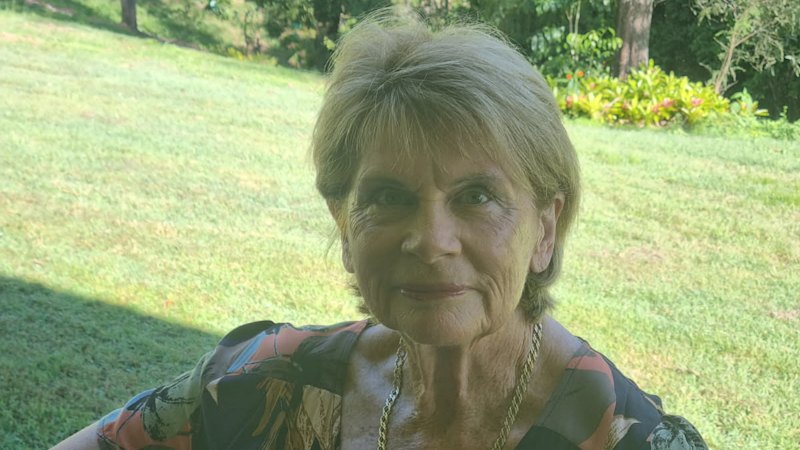
Srbijanka Stanisic, 84, a great-grandmother from Glenroy, outpaced many people much younger, saying she had always been a dancer and it made her feel good.
One exhausted, much younger participant named Tatjana explained it like this: “We ate a lot and we’re now burning it up.
“This is how our dances go. It’s survival of the fittest.”
Serbian Orthodox Christians celebrate their New Year’s Eve on January 13 and New Year’s Day on January 14, according to the old Julian calendar.
Their Christmas Day is January 7, rather than December 25.
On Tuesday night, patrons wished each other srecna nova godina (happy new year), and ziveli (cheers).
The slivovitz — plum brandy — and Jelen, a Serbian brand of beer flowed and guests ate cevapi (skinless sausage), podvarak (sour cabbage), and lamb chops followed by continental cakes.
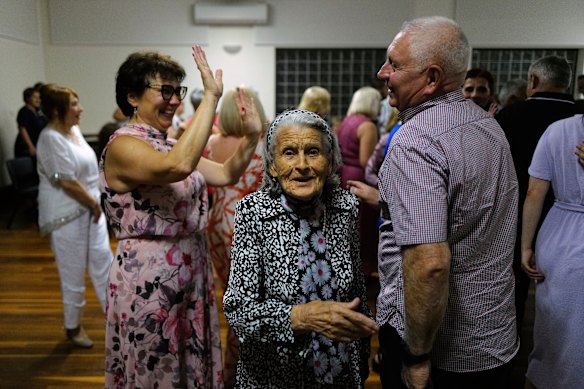
Cheers to the New Year: Srbijanka Stanisic celebrates at Holy Trinity Serbian Orthodox church hall.Credit: Alex Coppel
Serbian tennis star Novak Djokovic did not show up, but the rumours that he would had some substance to them — on previous visits to Melbourne, Djokovic has visited the church to pick up a badnjak or Christmas tree and met the priest.
Parish priest Father Bogdan Milic said Djokovic might visit during the Australian Open that starts in Melbourne next week, “to pray to God for his health during the tournament”.
The New Year’s Eve party organiser, Svetlana Jeremic, who migrated from Serbia aged 15 in 1967, said she celebrates Christmas and New Year twice each year to respect both her old and new countries.
In 2026, Holy Trinity congregants will celebrate 50 years since they bought the former Anglican church, funding it through donations, holding dances and cake stalls.
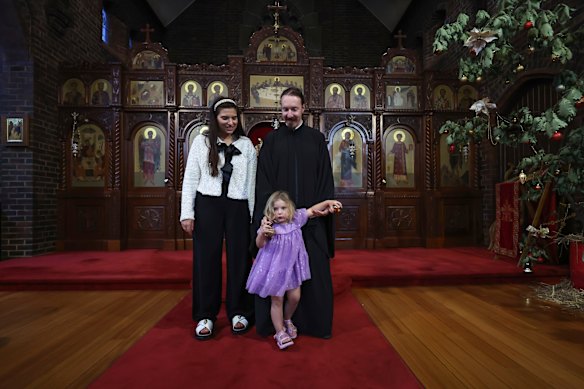
Priest Bogdan Milic inside Holy Trinity church in Brunswick East with his wife Radmila, and daughter Marta, 3.Credit: Alex Coppel
Ladies’ committee president Vera Kilibarda, of Gladstone Park, was enjoying the New Year’s Eve festivities, but recalled how when she was a young woman living in Mostar, in today’s Bosnia-Herzegovina, the night had special significance.
Under the-then religion-averse Communist regime, and with residents mostly either Muslim, Catholic or Orthodox Christian, New Year’s Eve was something everyone could celebrate.
Factories hosted Father Christmas, who gave workers’ children presents, and families held dinners, sang and danced, ate and drank.
“All three religions, we were all friends, we were all neighbours.”
Kilibarda and her three children — she was pregnant with her fourth — fled the bombardment of Mostar in 1993 during the vicious wars over control of the former Yugoslavia.
Kilibarda said that after her arrival as a refugee in Melbourne, Holy Trinity Church was a place she felt she belonged and New Year’s Eve was a time for celebrating and being among friends.
Most Viewed in National
Loading